Clinical Assessment & Protocol
Typical Presentation (HPI)
EN: Intense itching, dry skin, and recurrent skin infections. AR: حكة شديدة، جفاف الجلد، وتكرار التهابات الجلد.
General Examination
EN: Lichenification, excoriations, and distribution on flexural surfaces. AR: تسمك الجلد، الخدوش، والتوزع في ثنايا الجلد.
Treatment Protocol
EN: Topical emollients, corticosteroids, and calcineurin inhibitors. AR: المرطبات الموضعية، الكورتيكوستيرويدات، ومثبطات الكالسينيورين.
Patient Education
EN: Use fragrance-free moisturizers frequently to maintain the skin barrier. AR: استخدام مرطبات خالية من العطور بشكل متكرر للحفاظ على حاجز الجلد.
Systemic & Specialized Examinations
EN: S1, S2 present. No murmurs. AR: صوتا القلب الأول والثاني طبيعيان. لا توجد نفخات.
EN: Lungs clear to auscultation. AR: الرئتان صافيتان عند التسمع.
EN: Abdomen soft, non-tender. AR: البطن لين ولا يوجد ألم.
EN: Alert, oriented x3. No focal deficits. AR: المريض واعي ومدرك. لا يوجد عجز عصبي بؤري.
EN: Unremarkable or not routinely indicated. AR: طبيعي أو غير مطلوب روتينياً.
EN: Unremarkable or not routinely indicated. AR: طبيعي أو غير مطلوب روتينياً.
EN: Unremarkable or not routinely indicated. AR: طبيعي أو غير مطلوب روتينياً.
EN: Unremarkable or not routinely indicated. AR: طبيعي أو غير مطلوب روتينياً.
EN: Unremarkable or not routinely indicated. AR: طبيعي أو غير مطلوب روتينياً.
Orthopedic & Trauma Assessments
EN: Unremarkable or not routinely indicated. AR: طبيعي أو غير مطلوب روتينياً.
EN: Unremarkable or not routinely indicated. AR: طبيعي أو غير مطلوب روتينياً.
Comprehensive Clinical Guide: Atopic Dermatitis (AD)
Atopic dermatitis (AD), commonly referred to as eczema, is a chronic, relapsing, inflammatory skin condition characterized by intense pruritus and skin barrier dysfunction. As a cornerstone of the "atopic triad"—which also includes allergic rhinitis and asthma—AD is a significant global health burden, affecting up to 20% of children and 3% of adults worldwide. This guide provides an exhaustive clinical overview for medical professionals, detailing the pathophysiological, diagnostic, and therapeutic landscape of this multifaceted condition.
1. Clinical Definition and Etiology
Atopic dermatitis is defined as a genetically predisposed, inflammatory skin disease that typically manifests in early childhood. It is not merely a "dry skin" condition; it is a systemic immune-mediated disorder characterized by a complex interplay between genetic susceptibility, environmental triggers, and immunological dysregulation.
The Etiological Triad
The development of AD is generally attributed to the convergence of three primary factors:
* Genetic Predisposition: Mutations in the FLG (filaggrin) gene, which encodes a protein crucial for skin barrier formation, are found in roughly 30-50% of patients with moderate-to-severe AD.
* Environmental Triggers: Exposure to allergens (dust mites, pollen, pet dander), irritants (soaps, detergents, synthetic fibers), and climate extremes.
* Immunological Dysregulation: A shift toward a Th2-cell-mediated immune response, leading to the release of pro-inflammatory cytokines such as IL-4, IL-13, and IL-31.
2. Pathophysiology: The Mechanisms of Disease
The pathophysiology of AD is best understood through the "outside-in" and "inside-out" hypotheses.
The Outside-In Hypothesis
This theory posits that a primary defect in the epidermal barrier (e.g., filaggrin deficiency) leads to increased transepidermal water loss (TEWL) and the entry of environmental antigens. This exposure triggers an inflammatory response in the underlying dermis.
The Inside-Out Hypothesis
This theory suggests that initial systemic immune activation (Th2 polarization) leads to the downregulation of barrier proteins, subsequently compromising the skin’s structural integrity.
Key Molecular Drivers
| Molecule | Role in AD Pathophysiology |
|---|---|
| IL-4 / IL-13 | Primary drivers of Th2 inflammation and IgE production. |
| IL-31 | The "itch cytokine," responsible for the chronic pruritus-scratch cycle. |
| TSLP | Thymic stromal lymphopoietin; acts as an alarm signal for the immune system. |
| Filaggrin | Essential protein for maintaining the acidic pH and structural integrity of the stratum corneum. |
3. Clinical Staging and Presentation
AD follows a distinct clinical course that varies by age. Diagnosis is primarily clinical, based on the Hanifin and Rajka criteria.
Clinical Presentation by Age Group
- Infantile Phase (0-2 years): Typically involves the cheeks, forehead, and extensor surfaces of the extremities. Often exudative or crusting.
- Childhood Phase (2-12 years): Often shifts to flexural areas (antecubital and popliteal fossae), wrists, and ankles. Lesions are usually lichenified due to chronic scratching.
- Adulthood Phase (12+ years): Characterized by localized lichenification, particularly on the hands, feet, face, and eyelids.
Grading Severity (SCORAD Index)
The Scoring Atopic Dermatitis (SCORAD) tool is the gold standard for clinical assessment:
* A: Extent (0-100): Percentage of body surface area involved.
* B: Intensity (0-18): Erythema, edema/papulation, oozing/crusting, excoriation, lichenification, and dryness.
* C: Subjective Symptoms (0-20): Pruritus and sleep loss.
4. Differential Diagnosis
Distinguishing AD from other dermatoses is critical to preventing therapeutic failure.
- Seborrheic Dermatitis: Usually presents with greasy, yellow scales; typically involves the scalp, nasolabial folds, and chest.
- Psoriasis: Characterized by well-demarcated erythematous plaques with silvery scales; typically involves extensor surfaces, scalp, and nails.
- Contact Dermatitis: Requires history of exposure to an allergen or irritant; distribution is usually localized to the site of contact.
- Scabies: Must be considered in cases of refractory pruritus; look for burrows in interdigital spaces.
- Cutaneous T-cell Lymphoma (Mycosis Fungoides): Should be suspected in adults with recalcitrant, scaly patches that do not respond to standard AD therapy.
5. Diagnostic Testing and Workup
While AD is a clinical diagnosis, specific tests may be indicated for atypical presentations or to rule out comorbidities.
- Patch Testing: Indicated if allergic contact dermatitis is suspected as a secondary or primary driver.
- Skin Biopsy: Rarely needed unless the diagnosis is ambiguous (e.g., to rule out lymphoma).
- Total/Specific IgE: While often elevated, it is not diagnostic of AD. It may be used to identify sensitization to environmental allergens.
- Staphylococcal Culture: Useful if secondary bacterial infection is suspected (common in AD due to S. aureus colonization).
6. Risks, Side Effects, and Contraindications
Effective management requires balancing efficacy with safety, particularly with long-term topical steroid use.
Risks of Topical Corticosteroids (TCS)
- Skin Atrophy: Thinning of the epidermis and dermis.
- Telangiectasia: Permanent dilation of superficial blood vessels.
- Striae: Stretch marks caused by collagen degradation.
- Systemic Absorption: Rare, but possible with high-potency agents used over large surface areas.
Contraindications for Phototherapy
- History of melanoma or non-melanoma skin cancer.
- Photosensitivity disorders (e.g., lupus erythematosus).
- Use of immunosuppressive medications that increase photocarcinogenesis risk.
7. Management Strategies
Management is tiered based on severity:
1. Baseline: Emollients (ceramide-containing) and gentle skin care.
2. Mild: Low-potency TCS or topical calcineurin inhibitors (TCI).
3. Moderate: Medium-to-high potency TCS, topical PDE4 inhibitors (e.g., crisaborole), and phototherapy.
4. Severe: Systemic immunosuppressants (cyclosporine, methotrexate) or biologics (dupilumab, tralokinumab) and JAK inhibitors.
8. Frequently Asked Questions (FAQ)
1. Is Atopic Dermatitis contagious?
No. AD is an immune-mediated condition with genetic and environmental components. It cannot be spread through skin-to-skin contact.
2. Does diet play a role in AD?
In children, food allergies (e.g., egg, milk, peanut) may exacerbate AD. However, broad dietary elimination is not recommended without documented IgE-mediated allergy.
3. Why does the skin itch so much?
The itch in AD is multifactorial, driven by inflammatory cytokines (IL-31), barrier disruption, and dryness. Scratching further damages the skin barrier, creating the "itch-scratch cycle."
4. What is the role of bleach baths?
Dilute bleach baths (0.005%) can help reduce S. aureus colonization on the skin, which is often a trigger for exacerbations.
5. Can AD be cured?
There is no "cure," but it is highly manageable. Many children "outgrow" the condition, while others experience a chronic, relapsing course into adulthood.
6. What is the "Atopic March"?
This refers to the progression from AD in infancy to the development of food allergies, asthma, and allergic rhinitis later in life.
7. Are biologics safe for long-term use?
Biologics like Dupilumab target specific inflammatory pathways (IL-4/13) and have shown excellent safety profiles in clinical trials compared to traditional systemic immunosuppressants.
8. Should I avoid bathing?
No. Daily bathing with lukewarm water is recommended to hydrate the skin, provided it is immediately followed by the application of an emollient (the "soak and seal" method).
9. Does stress make AD worse?
Yes. Stress triggers the release of neuropeptides and cortisol, which can modulate the immune system and exacerbate inflammatory skin conditions.
10. When should a patient see a dermatologist?
Patients should seek specialist care if their AD is unresponsive to topical therapy, affects large body surface areas, causes sleep disruption, or shows signs of recurrent infection.
9. Long-term Prognosis
The prognosis for AD is generally favorable, though it requires lifelong commitment to skin barrier maintenance.
* Pediatric Outlook: Approximately 60-70% of children show significant improvement or resolution of symptoms by adolescence.
* Adult Outlook: Adults with persistent AD often require a more aggressive, multi-modal approach, including systemic therapies, to maintain quality of life and prevent complications like lichen simplex chronicus or secondary infections.
Effective management is defined not by the total absence of lesions, but by the reduction of pruritus, improvement in sleep quality, and the stabilization of the skin barrier to prevent recurrent "flares." Clinicians must emphasize that patient education and adherence to a daily skincare regimen are the most powerful tools in the therapeutic arsenal.
Related Clinical Integration
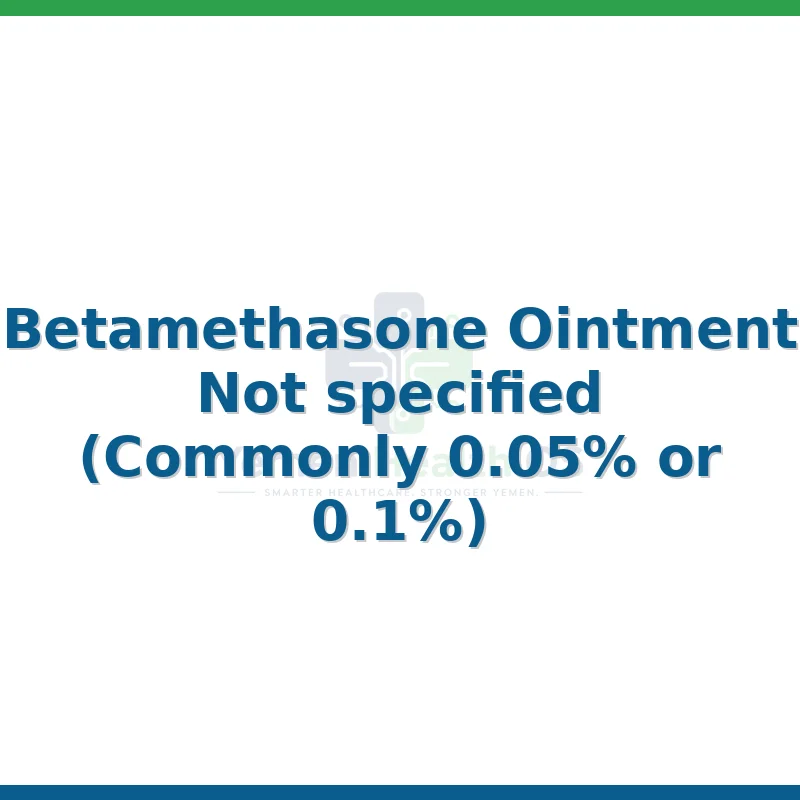
In the modern clinical management of atopic dermatitis, the primary therapeutic objective is to reduce inflammation and restore the epidermal barrier function through a structured, evidence-based approach. As a potent topical corticosteroid, Betamethasone Ointment / مرهم بيتاميثازون Not specified (Commonly 0.05% or 0.1%) is frequently integrated into treatment protocols to rapidly suppress acute flares, alleviate pruritus, and mitigate the inflammatory cascade characteristic of the condition. By incorporating Betamethasone Ointment / مرهم بيتاميثازون Not specified (Commonly 0.05% or 0.1%) into our hospital’s electronic prescribing guidelines, clinicians can ensure standardized, safe, and effective symptom control, thereby improving patient adherence and long-term dermatological outcomes.