Clinical Assessment & Protocol
Typical Presentation (HPI)
EN: Patient has had red, scaly skin since infancy. AR: يعاني المريض من جلد أحمر متقشر منذ الطفولة.
General Examination
EN: Unremarkable or not routinely indicated. AR: طبيعي أو غير مطلوب روتينياً.
Treatment Protocol
EN: Oral retinoids and intensive moisturizing. AR: الرتينويدات الفموية والترطيب المكثف.
Patient Education
EN: Regular dermatology follow-ups required. AR: مطلوب متابعة دورية مع طبيب الجلدية.
Systemic & Specialized Examinations
EN: S1, S2 present. No murmurs. AR: صوتا القلب الأول والثاني طبيعيان. لا توجد نفخات.
EN: Lungs clear to auscultation. AR: الرئتان صافيتان عند التسمع.
EN: Abdomen soft, non-tender. AR: البطن لين ولا يوجد ألم.
EN: Alert, oriented x3. No focal deficits. AR: المريض واعي ومدرك. لا يوجد عجز عصبي بؤري.
EN: Erythematous, hyperkeratotic plaques covering large areas of the body. AR: لويحات حمامية مفرطة التقرن تغطي مساحات واسعة من الجسم.
EN: Unremarkable or not routinely indicated. AR: طبيعي أو غير مطلوب روتينياً.
EN: Unremarkable or not routinely indicated. AR: طبيعي أو غير مطلوب روتينياً.
EN: Unremarkable or not routinely indicated. AR: طبيعي أو غير مطلوب روتينياً.
EN: Unremarkable or not routinely indicated. AR: طبيعي أو غير مطلوب روتينياً.
Comprehensive Clinical Guide: Erythrokeratodermia
1. Introduction and Overview
Erythrokeratodermia (EKD) refers to a group of rare, heterogeneous genetic disorders of keratinization characterized by the persistent presence of erythematous (red) plaques and hyperkeratotic (thickened, scaly) skin lesions. These conditions are primarily classified under the umbrella of ichthyoses. Because EKD manifests early in life and often persists throughout adulthood, it represents a significant challenge in dermatology and clinical genetics.
Unlike common forms of ichthyosis, which often involve generalized scaling, EKD is defined by its localized or patterned distribution of fixed, well-demarcated erythematous plaques with associated hyperkeratosis. The condition is broadly categorized into two major clinical entities: Erythrokeratodermia Variabilis et Progressiva (EKVP) and Progressive Symmetric Erythrokeratodermia (PSEK).
2. Etiology and Pathophysiology
The pathophysiology of EKD is rooted in the dysfunction of gap junction proteins, specifically those belonging to the connexin family. The skin relies on these proteins for intercellular communication, which is vital for the regulation of keratinocyte proliferation, differentiation, and apoptosis.
Genetic Mechanisms
- Connexin Mutations: The majority of EKD cases are caused by mutations in the GJB3 (Connexin 31), GJB4 (Connexin 30.3), and GJA1 (Connexin 43) genes.
- Autosomal Dominant Inheritance: EKD typically follows an autosomal dominant pattern of inheritance with variable penetrance.
- Gap Junction Dysfunction: Mutations lead to the improper formation of hemichannels or gap junction plaques. This disruption alters the intracellular calcium signaling pathways, leading to an abnormal hyper-proliferative state of the epidermis.
Pathophysiological Table: Molecular Basis
| Gene | Protein | Clinical Correlation |
|---|---|---|
| GJB3 | Connexin 31 | Common in EKVP; variable presentation. |
| GJB4 | Connexin 30.3 | Often linked to PSEK; localized, symmetrical plaques. |
| GJA1 | Connexin 43 | Associated with more severe, syndromic presentations. |
3. Clinical Staging and Presentation
Erythrokeratodermia is characterized by high clinical variability. The presentation is generally divided into two clinical phenotypes.
Erythrokeratodermia Variabilis et Progressiva (EKVP)
- Transient Erythema: Patients often experience fleeting, migratory erythematous patches that can change shape and location within hours or days.
- Fixed Hyperkeratosis: In addition to the migratory redness, there are "fixed" plaques that remain present, characterized by thick, yellowish-brown scales.
- Distribution: Often involves the extremities, buttocks, and sometimes the face.
Progressive Symmetric Erythrokeratodermia (PSEK)
- Symmetry: Plaques are strictly symmetrical and tend to be static (non-migratory).
- Morphology: Sharply demarcated, hyperkeratotic, erythematous plaques.
- Distribution: Primarily affects the extensor surfaces of the limbs, dorsal aspects of the hands and feet, and occasionally the face.
- Staging:
- Early Childhood: Appearance of isolated plaques.
- Adolescence: Often the stage of peak severity.
- Adulthood: Plaques may remain stable or slowly expand; they rarely resolve spontaneously.
4. Differential Diagnosis
Distinguishing EKD from other inflammatory and keratinizing skin disorders is critical. Misdiagnosis is common due to the overlapping features of various ichthyoses.
- Psoriasis Vulgaris: While psoriasis presents with erythematous plaques and scale, it is usually not present at birth and lacks the specific genetic mutations of EKD.
- Loricrin Keratoderma: Presents with pseudo-ainhum (constriction bands) and palmoplantar keratoderma, which are less common in classic EKVP.
- Vohwinkel Syndrome: Involves hearing loss and honeycomb palmoplantar keratoderma; requires genetic differentiation from EKD.
- Ichthyosis Hystrix: Characterized by "porcupine-like" spines; histologically distinct from the plaque-like lesions of EKD.
5. Diagnostic Testing
Diagnosis is primarily clinical, supported by histology and molecular confirmation.
- Clinical Examination: Assessment of plaque distribution, migration patterns, and family history.
- Skin Biopsy (Histopathology):
- Hyperkeratosis (thickening of the stratum corneum).
- Hypergranulosis (thickening of the granular layer).
- Acanthosis (thickening of the epidermis).
- Mild perivascular inflammatory infiltrate in the dermis.
- Molecular Genetic Testing: The "gold standard." Sequencing of GJB3, GJB4, and GJA1 genes to confirm the diagnosis and provide accurate genetic counseling for families.
- Dermoscopy: Often reveals a "cracked" or "map-like" pattern in the hyperkeratotic plaques, which aids in distinguishing EKD from inflammatory plaques like those seen in Psoriasis.
6. Clinical Management and Therapeutic Strategies
There is no curative treatment for EKD. Management focuses on symptom reduction and improving the cosmetic appearance of the skin.
Topical Therapies
- Keratolytics: Urea-based creams (10%–40%), salicylic acid, and alpha-hydroxy acids (lactic acid) are used to soften and remove the hyperkeratotic scales.
- Topical Retinoids: Tazarotene or tretinoin can help regulate keratinocyte differentiation but may cause irritation.
- Emollients: Essential for maintaining skin barrier integrity and reducing transepidermal water loss (TEWL).
Systemic Therapies
- Oral Retinoids (Acitretin/Isotretinoin): These are the most effective treatments for severe, refractory cases. They significantly reduce hyperkeratosis and erythema.
- Monitoring: Long-term use requires monitoring of liver function, lipid profiles, and bone health (in pediatric patients).
7. Risks, Side Effects, and Contraindications
When treating EKD with systemic retinoids, clinicians must be aware of the following:
- Teratogenicity: Acitretin is strictly contraindicated in women of childbearing potential unless a rigorous contraception program is in place.
- Mucocutaneous Side Effects: Cheilitis, xerosis (dry skin), and epistaxis are common.
- Hyperlipidemia: Periodic blood tests are mandatory to monitor for elevations in triglycerides and cholesterol.
- Skeletal Changes: Long-term systemic retinoid use in children carries a risk of premature epiphyseal closure or ossification of ligaments.
8. Long-Term Prognosis
EKD is a lifelong condition. While it is not typically life-threatening, it significantly impacts the patient's quality of life.
- Stability: In most patients, the condition persists into adulthood.
- Psychosocial Impact: Visible plaques on the face or hands can lead to social anxiety and self-esteem issues.
- Genetic Counseling: Crucial for families, as the autosomal dominant nature of the condition implies a 50% risk of transmission to offspring.
9. Frequently Asked Questions (FAQ)
Q1: Is Erythrokeratodermia contagious?
A: No. It is a strictly genetic, non-infectious condition caused by mutations in gap junction proteins.
Q2: Does diet affect the severity of EKD?
A: There is no evidence that diet cures EKD. However, maintaining good hydration and overall skin health is beneficial.
Q3: Can EKD be cured with laser therapy?
A: Laser therapy has limited evidence in EKD. While some studies suggest potential for improving appearance, it is not a standard, curative treatment.
Q4: Will the redness go away on its own?
A: In EKVP, the redness can be transient, but the hyperkeratotic plaques are typically fixed and require ongoing management.
Q5: Is genetic testing necessary for everyone?
A: Genetic testing is recommended to confirm the diagnosis, facilitate genetic counseling, and rule out other, more severe syndromic ichthyoses.
Q6: Are there any specific triggers for flare-ups?
A: Mechanical friction, cold weather, and stress are often reported by patients as factors that exacerbate the redness and scaling.
Q7: Can EKD lead to skin cancer?
A: While there is no direct, high-risk association, any chronic inflammatory skin condition should be monitored for changes, especially if the patient is on long-term systemic therapies.
Q8: Can children with EKD attend school normally?
A: Yes. The condition is not contagious, and children should be encouraged to participate in all activities, provided their skin is protected with adequate emollients.
Q9: What is the main difference between EKVP and PSEK?
A: The primary difference is the nature of the erythema. EKVP presents with transient, migratory red patches, whereas PSEK presents with fixed, symmetrical plaques.
Q10: Are there support groups for EKD?
A: Yes, many patients find support through organizations dedicated to ichthyosis and rare skin diseases, such as the Foundation for Ichthyosis & Related Skin Types (FIRST).
10. Conclusion
Erythrokeratodermia represents a complex clinical challenge that requires a multidisciplinary approach involving dermatologists, geneticists, and primary care providers. While the molecular basis is well-understood, the clinical management remains focused on symptom control. Through the use of targeted emollients and systemic retinoids, patients can achieve significant improvements in their skin texture and overall quality of life. Ongoing research into gene therapy and topical signaling modulators offers hope for more precise treatments in the future.
Related Clinical Integration
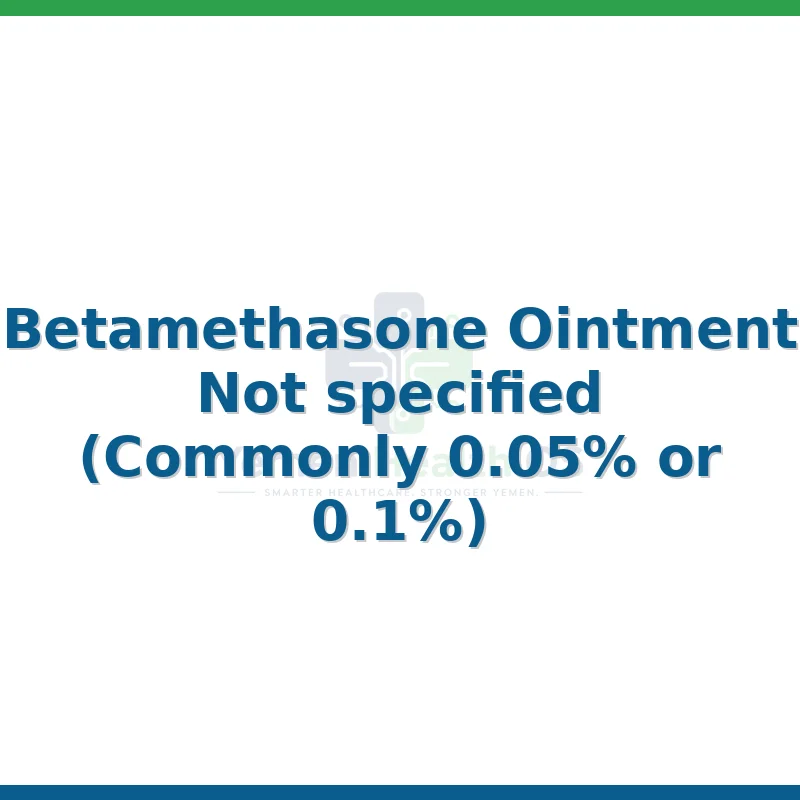
In the clinical management of erythrokeratodermia, therapeutic strategies primarily focus on mitigating hyperkeratosis and associated inflammation to improve patient comfort and skin barrier function. While systemic retinoids remain the gold standard for severe cases, topical Corticosteroids / الكورتيكوستيرويدات Standard are frequently utilized in a hospital setting to address acute inflammatory flares and pruritus. Specifically, Betamethasone Ointment / مرهم بيتاميثازون Not specified (Commonly 0.05% or 0.1%) is often prescribed for its potent anti-inflammatory and vasoconstrictive properties, providing targeted relief for localized erythematous plaques. Clinicians must carefully monitor the application of these agents to avoid potential side effects associated with prolonged use, ensuring that the treatment plan is integrated into a broader, multidisciplinary dermatological care pathway.