
Comprehensive Overview of Alendronate
Alendronate, commonly marketed under brand names such as Fosamax, is a potent nitrogen-containing bisphosphonate medication primarily utilized in the management and prevention of osteoporosis. As an orthopedic specialist, I view Alendronate as a cornerstone of metabolic bone health, specifically in cases where bone mineral density (BMD) has been compromised due to aging, hormonal changes, or corticosteroid usage.
Osteoporosis is a systemic skeletal disorder characterized by low bone mass and micro-architectural deterioration of bone tissue. This leads to increased bone fragility and a subsequent rise in the risk of fractures—particularly in the hip, spine, and wrist. Alendronate functions by inhibiting the cells responsible for bone resorption, effectively shifting the balance of bone remodeling toward formation.
Technical Specifications and Mechanism of Action
To understand the efficacy of Alendronate, one must grasp the physiological process of bone remodeling. Bone is a dynamic tissue that undergoes constant turnover via a cycle involving osteoclasts (bone-resorbing cells) and osteoblasts (bone-forming cells).
The Mechanism of Action
Alendronate acts as a structural analog of pyrophosphate. Its primary pharmacological mechanism involves the inhibition of the farnesyl pyrophosphate synthase (FPPS) enzyme within the mevalonate pathway of osteoclasts.
- Inhibition of Osteoclasts: By binding to hydroxyapatite crystals in the bone matrix, Alendronate is internalized by osteoclasts during the process of bone resorption.
- Disruption of Protein Prenylation: The inhibition of the mevalonate pathway prevents the prenylation of small GTPase signaling proteins (like Ras, Rho, and Rac).
- Apoptosis: The loss of these essential signaling proteins leads to the loss of osteoclast cytoskeleton integrity, resulting in the inhibition of bone resorption and the induction of osteoclast apoptosis (programmed cell death).
Pharmacokinetics
- Absorption: Alendronate has very poor oral bioavailability (approximately 0.6% to 0.7% in humans). Absorption is further reduced by food, beverages (other than water), and calcium or mineral supplements.
- Distribution: Once absorbed, it rapidly distributes to the skeleton or is excreted in urine. It binds to the bone matrix with high affinity.
- Metabolism: There is no evidence that Alendronate is metabolized in humans.
- Elimination: It is excreted exclusively by the kidneys. The terminal half-life is estimated to be over 10 years, reflecting the slow release of the drug from the skeleton.
Clinical Indications and Usage
Alendronate is indicated for several conditions where bone turnover is accelerated or bone density is critically low.
Primary Indications
| Indication | Description |
|---|---|
| Postmenopausal Osteoporosis | Treatment to increase bone mass and reduce fracture risk. |
| Glucocorticoid-Induced Osteoporosis | Prevention and treatment in patients using daily prednisone or equivalents. |
| Male Osteoporosis | Increasing bone mass in men with osteoporosis. |
| Paget’s Disease of Bone | Treatment in patients with elevated alkaline phosphatase or symptomatic bone pain. |
Dosing Guidelines
Adherence to strict dosing protocols is critical to ensure both efficacy and the prevention of esophageal irritation.
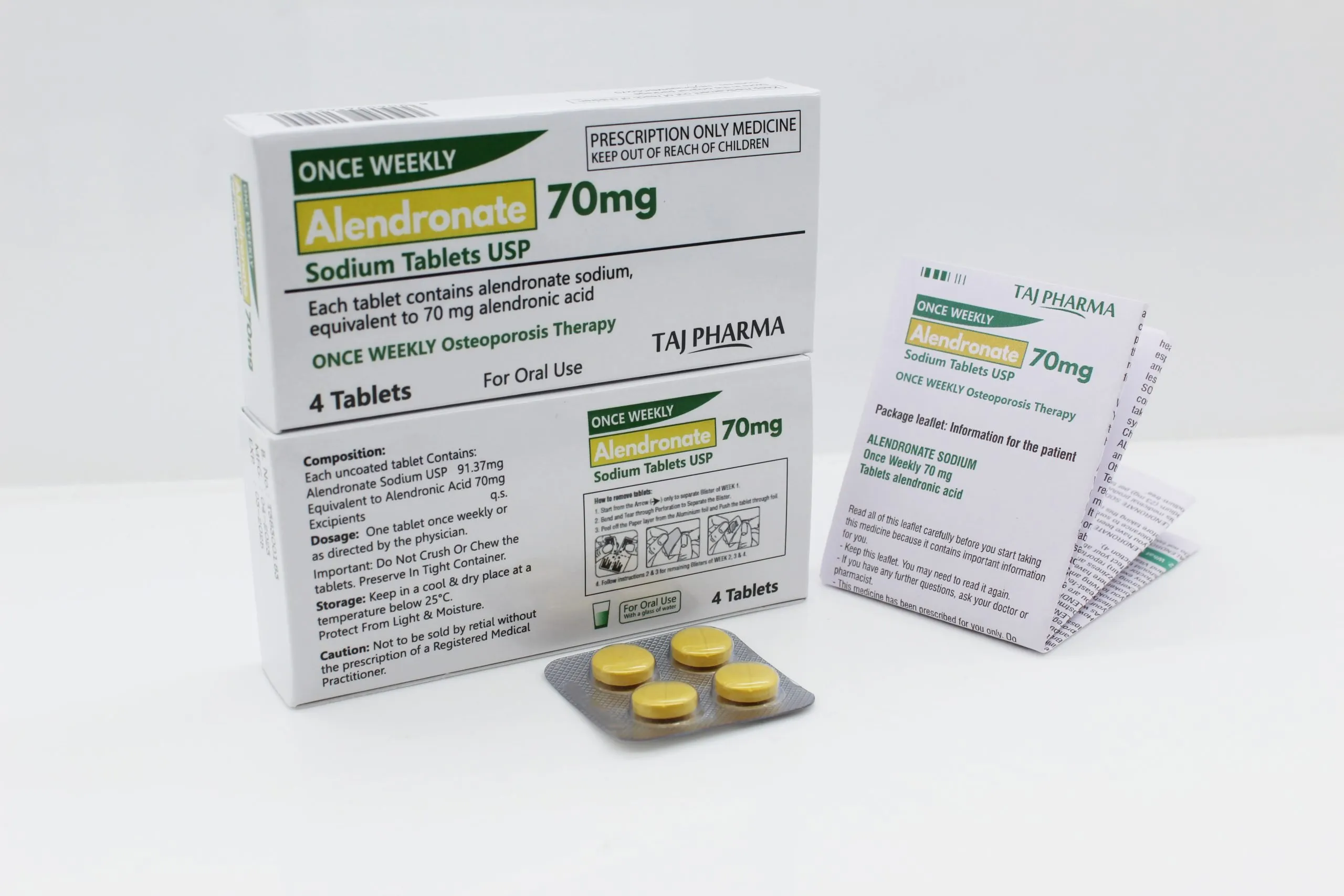
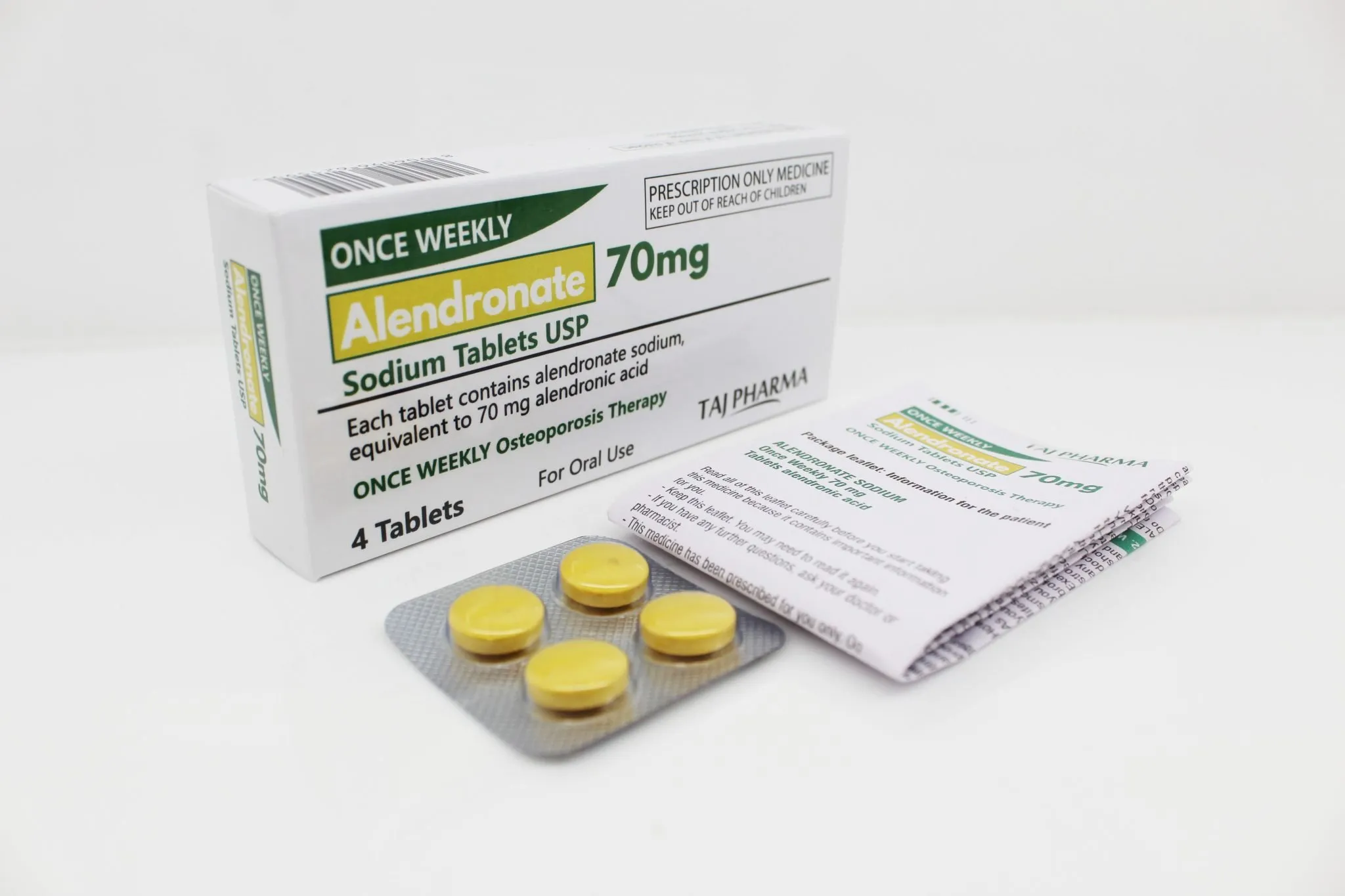
- For Osteoporosis (Treatment): Typically 70 mg once weekly, or 10 mg daily.
- For Paget’s Disease: 40 mg daily for six months.
- Administration Rules:
- Take upon waking for the day.
- Take only with a full glass of plain water (6-8 oz).
- Do not lie down for at least 30 minutes after taking the dose.
- Do not eat or drink anything else for at least 30 minutes.
Risks, Side Effects, and Contraindications
While highly effective, Alendronate requires careful clinical oversight due to potential adverse effects.
Common Adverse Effects
- Gastrointestinal Distress: Esophageal ulcers, erosions, and esophagitis are the most significant risks if the medication is not taken with sufficient water or if the patient lies down prematurely.
- Musculoskeletal Pain: Some patients report transient bone, joint, or muscle pain.
Serious Risks
- Osteonecrosis of the Jaw (ONJ): Rare but serious. Risk is higher in patients undergoing invasive dental procedures.
- Atypical Femoral Fractures (AFF): Long-term use (typically >5 years) has been associated with stress fractures in the subtrochanteric or diaphyseal region of the femur.
Contraindications
- Esophageal Abnormalities: Patients with esophageal stricture or achalasia.
- Inability to Stand/Sit Upright: For at least 30 minutes.
- Hypocalcemia: Must be corrected before starting therapy.
- Severe Renal Impairment: Not recommended for patients with a creatinine clearance <35 mL/min.
Pregnancy and Lactation
Alendronate is categorized as Pregnancy Category C. It should be used during pregnancy only if the potential benefit justifies the potential risk to the fetus. It is not recommended for nursing mothers as the excretion of the drug into breast milk is unknown.
Overdose Management
In the event of an overdose, signs may include hypocalcemia, hypophosphatemia, and upper gastrointestinal adverse events.
* Management: Administer milk or antacids to bind Alendronate. Because of the risk of esophageal irritation, do not induce emesis, and keep the patient fully upright.
Frequently Asked Questions (FAQ)
1. Why must I stay upright after taking Alendronate?
To prevent the tablet from lodging in the esophagus, which can cause severe mucosal irritation, ulceration, or erosion.
2. Can I take Alendronate with my morning coffee?
No. Coffee, tea, juice, and mineral water significantly inhibit the absorption of Alendronate. It must be taken with plain water only.
3. How long should I take Alendronate?
Most clinicians suggest a "drug holiday" after 3 to 5 years of stable bone density, though this must be decided based on individual fracture risk assessments.
4. Does Alendronate build new bone?
It does not "build" bone in the way anabolic agents (like Teriparatide) do; rather, it stops the breakdown of existing bone, allowing the body’s natural remodeling process to improve density.
5. What if I miss a dose?
If you take the weekly dose, take it the next morning. Do not take two tablets on the same day.
6. Is Alendronate safe for patients with kidney issues?
It is generally contraindicated for patients with severe renal impairment (CrCl <35 mL/min) due to the risk of accumulation.
7. Should I take calcium supplements with Alendronate?
Yes, but not at the same time. Take calcium and Vitamin D supplements at a different time of day to avoid absorption interference.
8. What is the risk of "Jaw Bone Death"?
Osteonecrosis of the Jaw (ONJ) is rare but is more common in patients with poor dental hygiene or those undergoing tooth extractions while on high-dose bisphosphonates.
9. Will I feel different when I start taking it?
Most patients feel no physical change. The effectiveness is measured through DEXA scans, which track changes in bone density over 12–24 months.
10. Can I exercise while on Alendronate?
Yes, weight-bearing exercise is strongly encouraged to promote bone health alongside pharmacological treatment.
Clinical Summary
Alendronate remains a gold-standard treatment for osteoporosis. By significantly reducing the rate of bone resorption, it prevents the structural degradation of the skeleton. However, its success relies heavily on patient compliance regarding administration protocols and consistent monitoring for long-term side effects. Always consult with your orthopedic surgeon or endocrinologist to tailor a bone health regimen specific to your diagnostic profile.