


Comprehensive Guide to Arthrotec (Diclofenac and Misoprostol)
Arthrotec is a specialized pharmaceutical formulation designed to provide potent anti-inflammatory relief while simultaneously protecting the gastrointestinal (GI) tract. It is a fixed-dose combination medication consisting of Diclofenac sodium, a non-steroidal anti-inflammatory drug (NSAID), and Misoprostol, a synthetic prostaglandin E1 analog. This guide provides an exhaustive clinical overview of the drug’s pharmacological profile, indications, and safety parameters.
1. Mechanism of Action: The Dual-Action Synergy
The efficacy of Arthrotec lies in its dual-component design. Understanding how these substances interact is critical for clinicians and patients alike.
Diclofenac Sodium (The NSAID Component)
Diclofenac functions primarily as an inhibitor of the cyclooxygenase (COX) enzymes, specifically COX-1 and COX-2. By inhibiting these enzymes, diclofenac prevents the conversion of arachidonic acid into prostaglandins. Prostaglandins are key mediators in the inflammatory response, pain signaling, and fever induction. By reducing systemic prostaglandin levels, diclofenac effectively manages pain and inflammation in chronic musculoskeletal conditions.
Misoprostol (The Gastroprotective Component)
Chronic NSAID use is notoriously associated with gastric mucosal injury, including ulcers and erosions, due to the suppression of protective prostaglandins in the stomach lining. Misoprostol acts as a replacement therapy. It binds to prostaglandin receptors on the parietal cells of the stomach, inhibiting gastric acid secretion and increasing the production of protective mucus and bicarbonate. This mitigates the risk of NSAID-induced gastropathy.
2. Pharmacokinetics and Metabolism
| Feature | Diclofenac | Misoprostol |
|---|---|---|
| Absorption | Rapidly and completely absorbed | Rapidly absorbed after oral administration |
| Protein Binding | >99% (mostly albumin) | ~80-90% |
| Metabolism | Hepatic (CYP2C9) | Extensive de-esterification to Misoprostol acid |
| Half-Life | 1–2 hours | 20–40 minutes (active metabolite) |
| Excretion | Renal (primarily) | Renal (as metabolites) |
3. Clinical Indications and Usage
Arthrotec is indicated for patients who require the anti-inflammatory and analgesic effects of diclofenac but are at high risk of developing NSAID-induced gastric ulcers.
Primary Indications
- Osteoarthritis: Management of signs and symptoms of chronic joint degeneration.
- Rheumatoid Arthritis: Treatment of inflammatory joint disease and associated systemic symptoms.
- Ankylosing Spondylitis: Reduction of pain and stiffness in the spinal column.
Dosage Guidelines
Dosage must be individualized based on the patient’s clinical status and tolerance.
* Standard Adult Dose: One tablet (50mg diclofenac/200mcg misoprostol) administered two to three times daily.
* Administration: Tablets should be swallowed whole with fluid, preferably during or after a meal to further enhance GI tolerance.
* Dose Adjustment: In patients with moderate renal impairment, dose titration should be handled with extreme caution.
4. Risks, Contraindications, and Safety Warnings
Arthrotec carries significant warnings common to all NSAIDs, plus specific warnings related to its prostaglandin component.
Absolute Contraindications
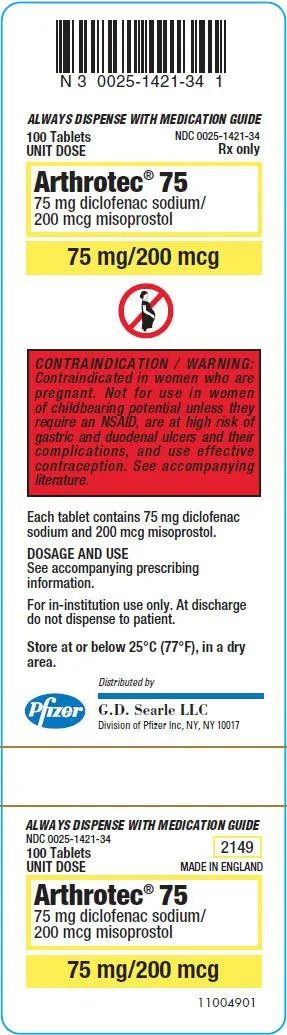
- Pregnancy: Misoprostol induces uterine contractions and is strictly contraindicated in pregnancy due to the risk of miscarriage or uterine rupture.
- Active Peptic Ulceration: While protective, it should not be used to treat existing active ulcers.
- Hypersensitivity: Known allergy to diclofenac, aspirin, or other NSAIDs.
- Established Cardiovascular Disease: Patients with established ischemic heart disease, peripheral arterial disease, or cerebrovascular disease.
Major Warnings
- Gastrointestinal Risk: Despite misoprostol, GI bleeding or perforation can still occur, particularly in elderly patients.
- Cardiovascular Risk: NSAIDs may increase the risk of serious thrombotic events, myocardial infarction, and stroke.
- Renal Impact: Long-term use can lead to renal papillary necrosis and other forms of renal injury.
- Hepatic Impact: Elevation of liver enzymes may occur; monitoring is recommended for long-term therapy.
5. Drug Interactions
Clinical care must account for the following potential interactions:
1. Anticoagulants (Warfarin, Heparin): Increased risk of hemorrhage.
2. ACE Inhibitors/Diuretics: Diclofenac may diminish the antihypertensive effect and increase risk of nephrotoxicity.
3. Lithium/Methotrexate: NSAIDs may decrease renal clearance, leading to toxic plasma concentrations.
4. Corticosteroids: Increased risk of gastrointestinal ulceration.
5. SSRIs: Increased risk of GI bleeding when combined with NSAIDs.
6. Pregnancy and Lactation
- Pregnancy: Category X. Use of Arthrotec during pregnancy is strictly forbidden. It is known to cause uterine contractions, which may lead to the expulsion of the fetus.
- Lactation: Diclofenac passes into breast milk in small amounts. Misoprostol metabolites may also be excreted. Generally, use is not recommended during breastfeeding unless the benefit outweighs the potential risk.
7. Overdose Management
Symptoms of overdose include lethargy, drowsiness, nausea, vomiting, and epigastric pain. Serious cases may involve hypertension, acute renal failure, and respiratory depression.
Management Protocol:
* Decontamination: Gastric lavage or activated charcoal if the ingestion is recent.
* Supportive Care: Monitor vital signs closely. Maintain airway and manage seizures or hypotension symptomatically.
* Dialysis: Forced diuresis or hemodialysis is generally ineffective due to high protein binding.
8. Frequently Asked Questions (FAQ)
1. Why does Arthrotec contain two different medicines?
Arthrotec combines diclofenac (for pain/inflammation) and misoprostol (to protect the stomach lining from NSAID-induced ulcers).
2. Can I break the tablet in half?
No. Arthrotec tablets should be swallowed whole to ensure the active components are released correctly and to prevent mucosal irritation in the throat.
3. What should I do if I miss a dose?
Take the missed dose as soon as you remember. If it is nearly time for your next dose, skip the missed one. Do not take a double dose.
4. Is Arthrotec safe for patients with high blood pressure?
NSAIDs can increase blood pressure. Patients with hypertension should be monitored closely by their physician while on this medication.
5. Can I drink alcohol while taking Arthrotec?
Alcohol increases the risk of stomach irritation and bleeding, which may counteract the protective benefits of the misoprostol component. Avoid alcohol.
6. Does Arthrotec cause diarrhea?
Yes, diarrhea is a common side effect of the misoprostol component. It is often mild and transient, but you should consult a doctor if it becomes persistent.
7. How long can I stay on Arthrotec?
It is intended for chronic conditions, but the lowest effective dose should be used for the shortest duration necessary to minimize cardiovascular and GI risks.
8. Is this medication available over the counter?
No, Arthrotec is a prescription-only medication due to the potential for significant side effects and the specific contraindications regarding pregnancy.
9. What are the signs of a serious allergic reaction?
Seek emergency help if you experience hives, swelling of the face/throat, difficulty breathing, or severe skin rashes.
10. Does Arthrotec interact with herbal supplements?
Certain supplements like Ginkgo biloba or St. John’s Wort can interact with NSAIDs, potentially increasing bleeding risks or altering drug metabolism. Always disclose all supplements to your doctor.
Disclaimer: This guide is for informational purposes only and does not constitute medical advice. Always consult with a licensed healthcare professional before starting, stopping, or changing any medication regimen. If you suspect a medical emergency, contact your local emergency services immediately.