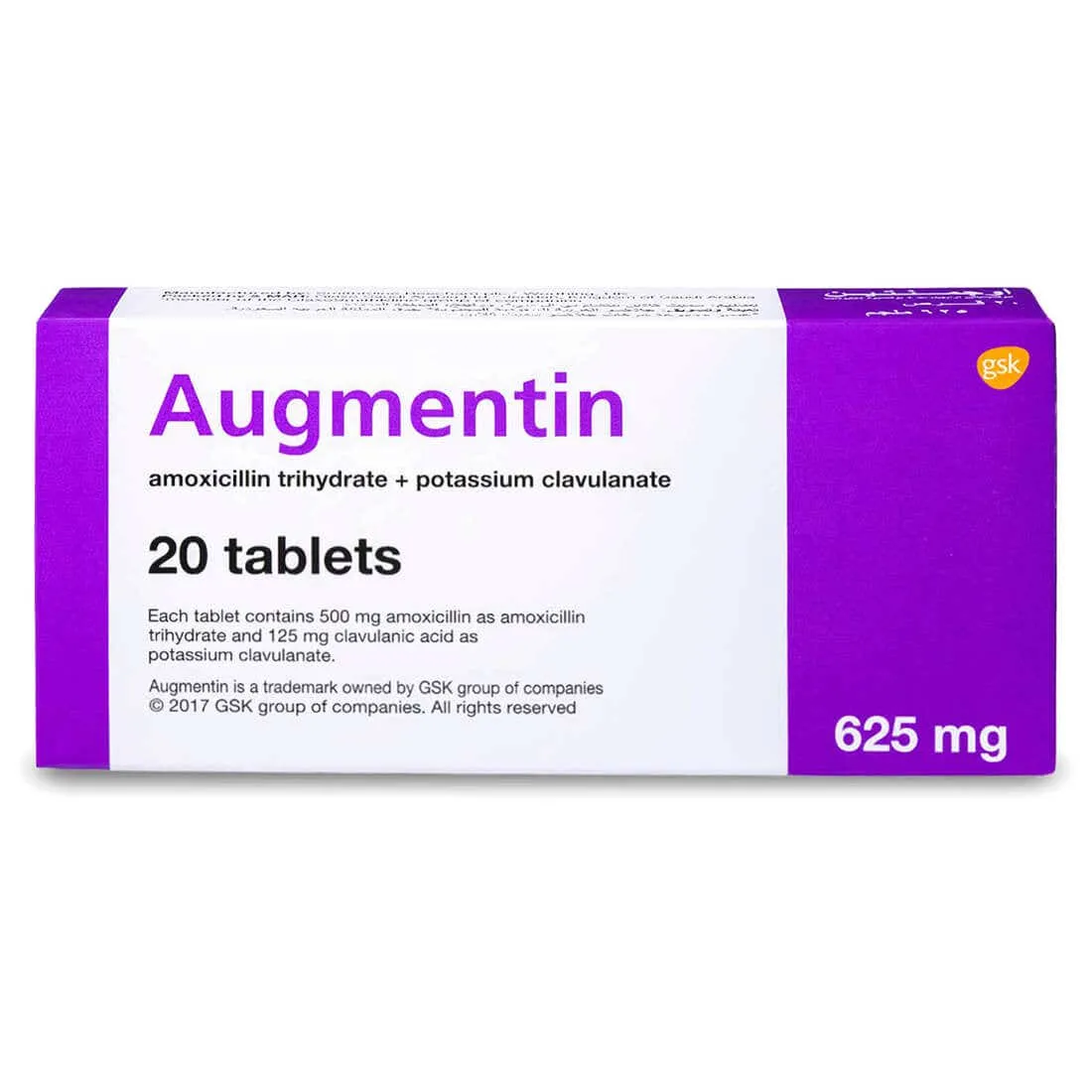
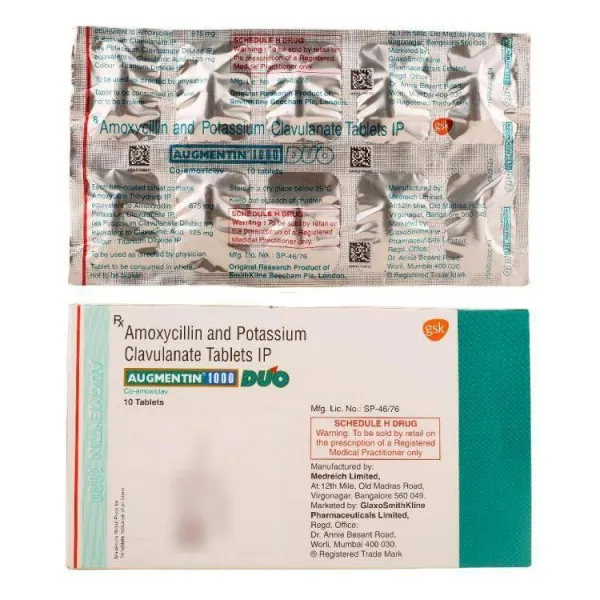

Comprehensive Overview of Augmentin 875 mg/125 mg Tablet
Augmentin 875 mg/125 mg is a potent, broad-spectrum combination antibiotic designed to combat bacterial infections that have developed resistance to standard penicillin-based therapies. It is a fixed-dose combination of Amoxicillin (a beta-lactam antibiotic) and Clavulanate Potassium (a beta-lactamase inhibitor).
In the orthopedic and general medical landscape, this formulation is often prioritized for its ability to cover a wide array of Gram-positive and Gram-negative aerobic and anaerobic bacteria. By inhibiting the bacterial enzyme beta-lactamase, Clavulanate protects Amoxicillin from degradation, effectively extending its spectrum of activity.
Deep-Dive: Mechanism of Action and Pharmacokinetics
Mechanism of Action
The synergy between the two components is the hallmark of Augmentin’s efficacy:
- Amoxicillin: Acts by inhibiting the synthesis of bacterial cell walls. It binds to penicillin-binding proteins (PBPs) located inside the bacterial cell wall, preventing the cross-linking of peptidoglycan chains, which is essential for cell wall integrity. This leads to cell lysis and bacterial death.
- Clavulanate Potassium: While it possesses weak antibacterial activity on its own, it functions as a "suicide inhibitor" of beta-lactamase enzymes. Many bacteria produce these enzymes to neutralize penicillins; Clavulanate binds irreversibly to these enzymes, preventing them from destroying the Amoxicillin molecule.
Pharmacokinetics
- Absorption: Both components are well-absorbed following oral administration. Peak serum concentrations are typically reached within 1 to 2 hours.
- Distribution: Amoxicillin and Clavulanate distribute readily into body tissues and fluids, including synovial fluid, pleural fluid, and peritoneal fluid.
- Metabolism & Excretion: Amoxicillin is primarily excreted unchanged via the kidneys. Clavulanate undergoes extensive metabolism in the liver before renal excretion.
Extensive Clinical Indications
Augmentin 875 mg/125 mg is indicated for the treatment of infections caused by susceptible organisms. In clinical practice, this includes:
| Infection Site | Common Clinical Applications |
|---|---|
| Respiratory Tract | Sinusitis, community-acquired pneumonia, acute exacerbations of chronic bronchitis. |
| Skin and Soft Tissue | Infected animal/human bites, cellulitis, abscesses, and deep-seated skin infections. |
| Genitourinary | Recurrent urinary tract infections (UTIs) resistant to first-line antibiotics. |
| Bone and Joint | Osteomyelitis (as part of a multi-drug regimen) and post-operative orthopedic prophylaxis. |
| Dental | Severe dental abscesses and post-extraction prophylaxis. |
Dosage Guidelines and Administration
The 875/125 mg tablet is a "high-dose" formulation and is intended for adult use. It is crucial to follow the prescribed regimen to prevent antibiotic resistance.
Adult Dosage Table
| Condition | Dosage | Frequency |
|---|---|---|
| Mild to Moderate Infections | 875 mg/125 mg | Every 12 hours |
| Severe Infections | 875 mg/125 mg | Every 8 to 12 hours (as directed) |
Administration Tips:
1. With Food: To minimize potential gastrointestinal (GI) side effects, always take the tablet at the start of a meal.
2. Consistency: Complete the full course of therapy, even if symptoms subside, to prevent relapse and resistance.
3. Renal Impairment: Patients with significant renal impairment (CrCl < 30 mL/min) should avoid this high-dose formulation as it may lead to drug accumulation.
Risks, Side Effects, and Contraindications
Contraindications
- Hypersensitivity: Known allergy to any penicillin or cephalosporin.
- Cholestatic Jaundice: History of hepatic dysfunction or jaundice associated with previous Augmentin use.
- Severe Renal Impairment: Patients on dialysis or with severely compromised kidney function.
Common Side Effects
- Gastrointestinal: Diarrhea (most common), nausea, vomiting, and abdominal pain.
- Dermatological: Mild skin rashes or urticaria.
- Secondary Infections: Overgrowth of non-susceptible organisms, such as oral or vaginal candidiasis (thrush).
Warning: Clostridium difficile
Like most broad-spectrum antibiotics, Augmentin can alter the normal flora of the colon, potentially leading to Clostridium difficile-associated diarrhea (CDAD). If severe or persistent diarrhea occurs, contact your healthcare provider immediately.
Pregnancy and Lactation
- Pregnancy: Augmentin is generally considered Category B. It should be used only if clearly needed. Caution is advised, particularly in the third trimester, due to a theoretical risk of necrotizing enterocolitis in the neonate.
- Lactation: Both components are excreted in breast milk. While generally safe, monitor the infant for potential diarrhea or allergic sensitization.
Overdose Management
In the event of an overdose, the patient may experience abdominal pain, diarrhea, or in extreme cases, crystalluria or seizures. Treatment is primarily symptomatic and supportive. Gastric lavage may be performed, and the patient should be monitored for electrolyte imbalances. Hemodialysis can be used to remove both Amoxicillin and Clavulanate from the circulation.
Frequently Asked Questions (FAQ)
1. Is Augmentin 875/125 mg effective against viral infections like the flu?
No. Augmentin is an antibiotic and is only effective against bacterial infections. It will have no effect on viruses like the common cold or influenza.
2. Can I break the 875 mg/125 mg tablet in half?
It is generally recommended to swallow the tablet whole to ensure the correct release profile. Consult your pharmacist if you have difficulty swallowing pills.
3. What should I do if I miss a dose?
Take the missed dose as soon as you remember. However, if it is almost time for your next dose, skip the missed one. Do not take a double dose to make up for a forgotten one.
4. Why does Augmentin cause diarrhea?
Antibiotics can disrupt the healthy balance of bacteria in your gut. Taking the medication with food and using a high-quality probiotic (separated by 2-3 hours from the antibiotic) may help mitigate this.
5. Can I drink alcohol while on this medication?
While alcohol does not directly interact with the metabolism of Augmentin, it can worsen GI side effects and dehydrate the body, which may hinder your recovery. It is best to avoid alcohol during treatment.
6. How long does it take for Augmentin to start working?
Most patients feel improvement within 48 to 72 hours of starting treatment. If symptoms worsen or do not improve after 3 days, notify your doctor.
7. Does Augmentin interact with birth control pills?
Yes, there is a possibility that antibiotics may decrease the effectiveness of hormonal contraceptives. Use a backup method of contraception (like condoms) while taking this course and for 7 days after completion.
8. Is it safe for children?
The 875 mg/125 mg tablet is formulated for adults. Pediatric dosages are usually calculated by weight and provided in a liquid suspension format.
9. What is the difference between Amoxicillin and Augmentin?
Amoxicillin is a stand-alone antibiotic. Augmentin adds Clavulanate, which acts as a "shield" to prevent bacteria from breaking down the Amoxicillin.
10. Can I stop taking the medicine if I feel better?
No. Stopping early can lead to incomplete treatment, allowing the strongest bacteria to survive, multiply, and become resistant to future antibiotic treatments.
Disclaimer: This guide is for informational purposes only and does not constitute professional medical advice, diagnosis, or treatment. Always seek the advice of your physician or qualified health provider with any questions regarding a medical condition or medication.