
Comprehensive Guide to Boniva (Ibandronate Sodium)
Boniva (generic name: ibandronate sodium) is a potent, nitrogen-containing bisphosphonate medication used extensively in orthopedic and rheumatological medicine. It is primarily indicated for the treatment and prevention of osteoporosis in postmenopausal women. By inhibiting bone resorption, Boniva plays a critical role in maintaining bone mineral density (BMD) and reducing the risk of fragility fractures.
This guide provides an exhaustive clinical overview of Boniva, intended for educational purposes and medical reference.
Technical Specifications and Mechanism of Action
Pharmacodynamics
Boniva belongs to the bisphosphonate class of drugs. Unlike non-nitrogenous bisphosphonates, ibandronate acts by inhibiting the enzyme farnesyl pyrophosphate synthase (FPPS) within the mevalonate pathway of osteoclasts.
- Osteoclast Inhibition: By suppressing FPPS, ibandronate prevents the prenylation of small GTPase proteins (like Ras, Rho, and Rac). These proteins are essential for the structural integrity and function of the osteoclast cytoskeleton.
- Apoptosis: The loss of these proteins leads to the detachment of the osteoclast from the bone surface and triggers programmed cell death (apoptosis).
- Bone Resorption: The net result is a significant decrease in bone turnover and resorption, allowing bone formation by osteoblasts to outpace resorption, thereby increasing net bone mass.
Pharmacokinetics
- Absorption: Following oral administration, ibandronate is rapidly absorbed in the upper gastrointestinal tract. Absorption is highly sensitive to food and beverages; therefore, it must be taken on an empty stomach.
- Distribution: It has a high affinity for bone mineral and is rapidly distributed to the skeleton.
- Metabolism: There is no evidence of systemic metabolism in humans.
- Excretion: The portion that does not bind to bone is excreted unchanged in the urine. The terminal half-life is long, ranging from 10 to 60 hours, reflecting its binding to bone tissue.
Clinical Indications and Usage
Boniva is clinically indicated for the following:
| Indication | Target Population | Goal |
|---|---|---|
| Treatment of Osteoporosis | Postmenopausal women | Increase BMD, reduce fracture risk |
| Prevention of Osteoporosis | Postmenopausal women | Maintain BMD, prevent bone loss |
Dosage Guidelines
Adherence to strict dosing protocols is essential to ensure efficacy and minimize the risk of esophageal irritation.
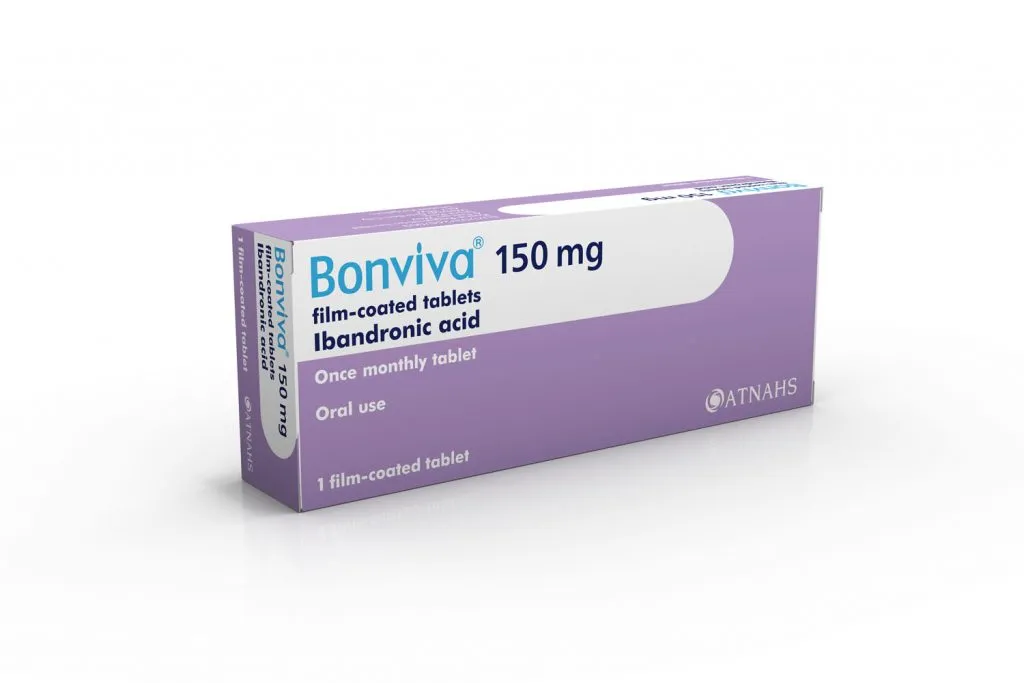
- Oral Tablet (150 mg): Taken once monthly. Must be taken on the same day each month.
- Intravenous (IV) Injection (3 mg): Administered every 3 months by a healthcare professional.
Critical Administration Rules for Oral Tablets:
1. Take the tablet with a full glass (6–8 oz) of plain water.
2. Do not take with mineral water, coffee, tea, or juice.
3. Stay upright (sitting or standing) for at least 60 minutes after taking the medication.
4. Do not eat or drink anything for at least 60 minutes post-dose.
Risks, Side Effects, and Contraindications
Common Adverse Reactions
- Gastrointestinal: Dyspepsia, esophagitis, abdominal pain, and diarrhea.
- Musculoskeletal: Back pain, arthralgia (joint pain), and myalgia (muscle pain).
- General: Flu-like symptoms (common after the first dose, especially with IV administration).
Serious Risks
- Osteonecrosis of the Jaw (ONJ): Rare but serious, particularly in patients undergoing invasive dental procedures.
- Atypical Femur Fractures (AFF): Long-term use (typically >5 years) has been associated with subtrochanteric and diaphyseal femoral fractures.
- Esophageal Ulcers: Primarily associated with improper oral administration (e.g., lying down immediately after taking the pill).
Contraindications
- Hypocalcemia: Must be corrected before starting therapy.
- Esophageal Abnormalities: Patients with esophageal stricture or achalasia that delays emptying.
- Inability to Stand/Sit: Patients unable to remain upright for 60 minutes.
- Severe Renal Impairment: Not recommended for patients with a creatinine clearance <30 mL/min.
Pregnancy, Lactation, and Special Populations
Pregnancy
Boniva is classified as Pregnancy Category C. Animal studies have shown reproductive toxicity. It should not be used during pregnancy unless the potential benefit justifies the potential risk to the fetus.
Lactation
It is not known whether ibandronate is excreted in human milk. Given the potential for serious adverse reactions in nursing infants, breastfeeding is generally discouraged while on therapy.
Overdose Management
There is no specific antidote for ibandronate overdose.
* Oral Overdose: Administer milk or antacids to bind the drug and reduce gastrointestinal absorption. Do not induce vomiting.
* General Management: Monitor for hypocalcemia and hypophosphatemia. Provide supportive care as needed.
Frequently Asked Questions (FAQ)
1. How long does it take for Boniva to work?
Boniva begins to reduce bone turnover markers within days, but significant changes in bone mineral density (BMD) are typically measurable on a DEXA scan after 6–12 months of consistent therapy.
2. Can I take Boniva with other medications?
You should space out Boniva with calcium supplements, antacids, or iron preparations by at least 60 minutes, as these can significantly decrease the absorption of the drug.
3. What should I do if I miss a monthly dose?
If you miss a 150 mg monthly dose, take it the next morning, provided there are at least 7 days until your next scheduled dose. If there are fewer than 7 days, skip the dose and wait until your next scheduled day.
4. Why must I stay upright after taking the tablet?
Ibandronate is highly irritating to the esophageal mucosa. Remaining upright prevents the tablet or gastric reflux from causing esophageal erosion or ulceration.
5. Is Boniva safe for men with osteoporosis?
While Boniva is FDA-approved for postmenopausal women, off-label use in men is sometimes considered by endocrinologists, though other bisphosphonates (like alendronate) are more commonly studied for this demographic.
6. Do I need to take calcium and Vitamin D while on Boniva?
Yes. Boniva works best when there is adequate calcium and Vitamin D available in the body. Your doctor will likely prescribe supplements if your dietary intake is insufficient.
7. What is "Drug Holiday" for Boniva?
Because bisphosphonates accumulate in the bone, some patients may be candidates for a "drug holiday" (a temporary pause in therapy) after 3–5 years of treatment, depending on their fracture risk profile. This must be decided by a physician.
8. Is the IV injection better than the pill?
The IV form bypasses the gastrointestinal tract, making it ideal for patients with sensitive stomachs or esophageal issues. Both forms are equally effective at increasing bone density.
9. Can I have dental work while on Boniva?
Ideally, complete major dental work before starting therapy. If you require surgery while on the drug, inform your dentist/oral surgeon that you are taking a bisphosphonate to manage the risk of ONJ.
10. Does Boniva cause bone pain?
Some patients report transient bone, joint, or muscle pain. This is usually mild and often subsides with continued use, but you should report persistent pain to your healthcare provider to rule out atypical fractures.
Conclusion
Boniva remains a cornerstone in the pharmacological management of osteoporosis. By significantly lowering the rate of bone resorption, it provides a vital shield against the debilitating consequences of bone loss. However, its effectiveness is strictly tethered to adherence—both in terms of the dosing schedule and the specific administration requirements. Patients should maintain open communication with their orthopedic or rheumatology specialists to monitor bone health progress and mitigate the risks of long-term use.
Disclaimer: This guide is for informational purposes only and does not constitute medical advice. Always consult with a licensed healthcare professional before beginning or modifying any medication regimen.