

Understanding Buprenorphine Transdermal Patch (Butrans)
The Buprenorphine Transdermal Patch, marketed under the brand name Butrans, represents a significant advancement in the management of chronic pain. Unlike traditional oral opioids that undergo extensive first-pass metabolism in the liver, the transdermal delivery system provides a continuous, stable release of the medication directly into the systemic circulation.
Butrans is indicated for the management of pain severe enough to require an opioid analgesic and for which alternative treatment options (such as non-opioid analgesics or immediate-release opioids) are inadequate. As a Schedule III controlled substance, it requires rigorous clinical oversight and careful patient selection.
Technical Specifications and Mechanism of Action
To understand the efficacy of Butrans, one must look at its unique pharmacological profile. Buprenorphine is a partial agonist at the mu-opioid receptor (MOR) and an antagonist at the kappa-opioid receptor (KOR).
Pharmacodynamics
- Partial Agonism: Unlike full agonists (e.g., morphine or oxycodone), buprenorphine has a "ceiling effect" on respiratory depression at therapeutic doses, which theoretically improves the safety profile regarding overdose risk.
- High Affinity: It binds with high affinity to the mu-opioid receptor, meaning it can displace other opioids, potentially precipitating withdrawal in opioid-tolerant patients if not managed correctly.
- Slow Dissociation: It dissociates slowly from the receptor, which contributes to its long duration of action.
Pharmacokinetics
The transdermal patch utilizes a matrix-based delivery system. Once applied to the skin, buprenorphine is absorbed through the stratum corneum.
* Onset: Plasma concentrations increase gradually, reaching steady-state levels within approximately 24 to 72 hours.
* Metabolism: Primarily metabolized in the liver via CYP3A4 to norbuprenorphine, a metabolite with minimal analgesic activity.
* Elimination: Excreted primarily through the feces (biliary) and urine.
Clinical Indications and Dosage Guidelines
Butrans is intended for patients who require around-the-clock opioid analgesia. It is not indicated for PRN (as-needed) use or for acute pain management.
Dosage Strengths
The patch is available in various strengths, delivering the drug over 7 days:
* 5 mcg/hour
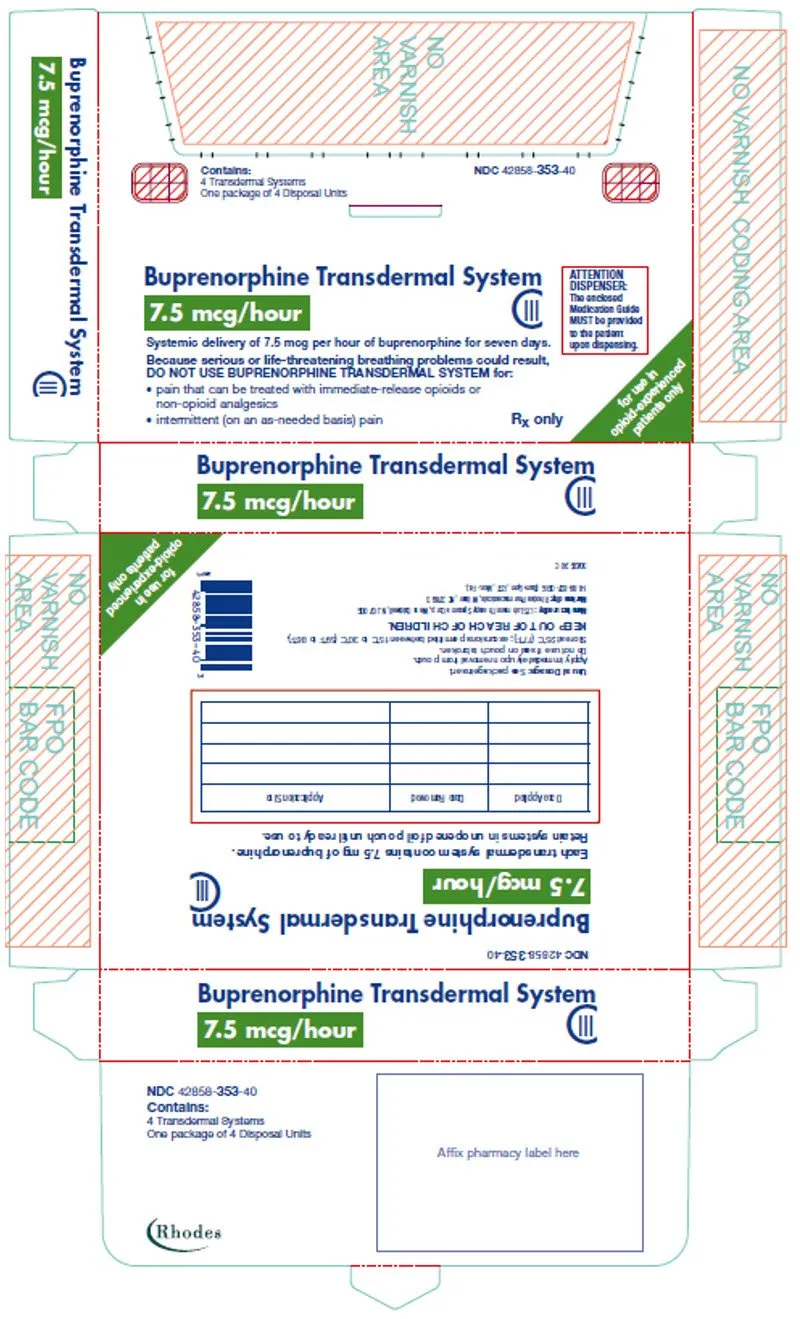
* 7.5 mcg/hour
* 10 mcg/hour
* 15 mcg/hour
* 20 mcg/hour
Conversion from Other Opioids
Patients transitioning from other opioids must be carefully titrated. The following table summarizes the general clinical approach:
| Patient Status | Clinical Strategy |
|---|---|
| Opioid-Naïve | Not recommended as the first-line therapy. |
| Current Opioid Users | Taper current opioid to <30 mg morphine equivalents/day before initiating Butrans. |
| Dose Titration | Allow at least 72 hours between dosage adjustments due to the slow pharmacokinetic profile. |
Note: Never exceed the 20 mcg/hour dose due to the increased risk of QT interval prolongation.
Risks, Contraindications, and Safety
The use of Butrans carries inherent risks associated with opioid therapy, including addiction, abuse, and misuse.
Contraindications
- Acute/Post-operative Pain: Not for use in mild or intermittent pain.
- Severe Respiratory Depression: Contraindicated in patients with unmonitored respiratory issues.
- Paralytic Ileus: Known or suspected mechanical obstruction.
- Hypersensitivity: Known allergy to buprenorphine or adhesive components.
Adverse Effects
Common side effects include:
1. Application Site Reactions: Erythema, pruritus, or rash at the patch site.
2. Gastrointestinal: Nausea, constipation, and vomiting.
3. Neurological: Dizziness, somnolence, and headache.
4. Cardiac: Potential for QT prolongation at higher doses.
Pregnancy, Lactation, and Special Populations
- Pregnancy: Prolonged use of opioids during pregnancy can result in neonatal opioid withdrawal syndrome (NOWS). Use only if the benefit outweighs the potential risk to the fetus.
- Lactation: Buprenorphine passes into breast milk. Monitor infants for sedation or respiratory depression.
- Hepatic Impairment: Because buprenorphine is heavily metabolized by the liver, patients with severe hepatic impairment should be monitored closely; lower starting doses may be required.
Overdose Management
In the event of an overdose, the primary goals are airway management and hemodynamic support.
* Naloxone: While buprenorphine has a high affinity for the mu-receptor, high doses of naloxone (often requiring repeated administration or continuous infusion) may be necessary to reverse respiratory depression.
* Patch Removal: If an overdose is suspected, remove the patch immediately to prevent further absorption.
Frequently Asked Questions (FAQ)
1. How long does a single Butrans patch last?
Each patch is designed to be worn for exactly 7 days. It should be replaced on the same day each week.
2. Can I cut the Butrans patch to adjust the dose?
No. Cutting the patch destroys the delivery matrix and may cause a rapid, potentially toxic release of the medication.
3. What should I do if the patch falls off?
If the patch becomes loose or falls off, apply a new patch immediately to a clean, dry, hairless skin site. Ensure the new patch is replaced on your original schedule.
4. Can I go swimming or take a shower with the patch on?
Yes, the Butrans patch is designed to be waterproof. However, avoid exposing the patch to direct external heat sources like heating pads or saunas, as heat increases absorption rates.
5. Why is there a 20 mcg/hour maximum dose?
Clinical studies have shown that doses above 20 mcg/hour are associated with an increased risk of QT interval prolongation, which can lead to serious cardiac arrhythmias.
6. Will Butrans show up on a drug test?
Yes. Buprenorphine is an opioid and will be detected in standard opioid urine screenings, though it may require a specific test to distinguish it from other opioids.
7. Can I use other pain medications with Butrans?
Non-opioid analgesics (NSAIDs, acetaminophen) can often be used adjunctively. Consult your physician before adding any other opioid or CNS depressant, as this increases the risk of respiratory depression.
8. What is the "ceiling effect" of buprenorphine?
The ceiling effect refers to the observation that at a certain point, increasing the dose of buprenorphine does not result in a proportional increase in respiratory depression, providing a safety margin compared to full agonists.
9. How should I dispose of a used patch?
Used patches still contain significant amounts of medication. They should be folded in half with the sticky sides together and flushed down the toilet or placed in a medication drop-box to prevent accidental exposure to children or pets.
10. Does Butrans cause withdrawal symptoms?
If you stop using the patch abruptly, you may experience withdrawal symptoms such as restlessness, muscle aches, insomnia, and gastrointestinal distress. Always taper the dose under medical supervision.
Conclusion
The Buprenorphine Transdermal Patch (Butrans) serves as a potent tool for chronic pain management, offering a unique pharmacological profile that balances efficacy with a controlled delivery system. By adhering to strict clinical guidelines, monitoring for side effects, and ensuring proper patient education, healthcare providers can utilize Butrans to significantly improve the quality of life for patients suffering from persistent pain.
Disclaimer: This guide is for informational purposes only and does not constitute medical advice. Always consult with a licensed healthcare professional for diagnosis and treatment of pain conditions.