
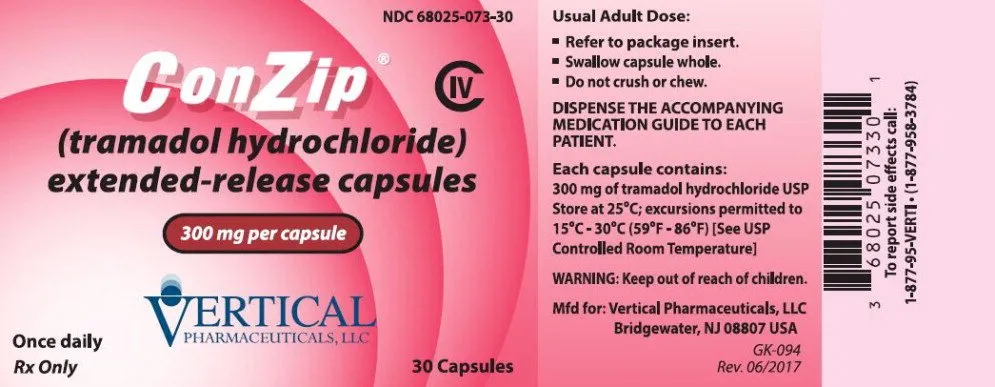


Understanding Conzip (Tramadol Extended-Release)
Conzip is a brand-name prescription medication containing tramadol hydrochloride, specifically formulated as an extended-release (ER) capsule. It is classified as an opioid analgesic intended for the management of pain severe enough to require an opioid treatment and for which alternative treatment options are inadequate. As an orthopedic specialist, it is vital to understand that Conzip is designed for around-the-clock, long-term pain management rather than PRN (as-needed) use.
Clinical Profile Summary
| Feature | Description |
|---|---|
| Drug Class | Centrally acting opioid analgesic |
| Formulation | Extended-Release (ER) Capsule |
| Mechanism | Mu-opioid receptor agonist & monoamine reuptake inhibitor |
| Controlled Substance | Schedule IV (DEA) |
| Primary Use | Chronic pain management |
Mechanism of Action and Pharmacokinetics
The therapeutic efficacy of Conzip is derived from a dual-action mechanism. Unlike traditional opioids that act solely on opioid receptors, Conzip offers a multifaceted approach to analgesia.
1. Mu-Opioid Receptor Agonism
Tramadol and its active metabolite, O-desmethyltramadol (M1), bind to mu-opioid receptors in the central nervous system. This binding inhibits the ascending pain pathways, altering the perception of and emotional response to pain.
2. Monoamine Reuptake Inhibition
Conzip inhibits the reuptake of norepinephrine and serotonin. By increasing the concentration of these neurotransmitters in the synaptic cleft, the medication enhances the descending inhibitory pain pathways, providing an additive analgesic effect.
Pharmacokinetics
- Absorption: Conzip utilizes a unique delivery system that ensures a steady release of the active ingredient, resulting in a smoother plasma concentration profile compared to immediate-release formulations.
- Metabolism: Primarily hepatic via the cytochrome P450 enzyme system (specifically CYP2D6 and CYP3A4).
- Excretion: Primarily renal; dose adjustments are mandatory for patients with significant renal impairment.
Detailed Clinical Indications and Usage
Conzip is indicated for the management of pain severe enough to require an opioid analgesic and for which alternative treatment options (non-opioid analgesics or immediate-release opioids) are inadequate.
Clinical Considerations for Orthopedic Specialists
- Chronic Pain Management: Ideal for patients with severe osteoarthritis, degenerative disc disease, or chronic post-surgical pain where 24-hour coverage is necessary.
- Patient Selection: Before initiating therapy, clinicians must perform a thorough evaluation of the patient’s risk for opioid misuse, abuse, and addiction.
- Dosing Guidelines:
- Initiation: The starting dose is typically 100 mg once daily.
- Titration: Dosage may be adjusted based on the patient’s clinical response and tolerability, usually in 100 mg increments every 3 to 5 days, not to exceed 300 mg daily.
- Administration: Capsules must be swallowed whole. Do not crush, chew, or dissolve, as this can lead to rapid release and potentially fatal overdose.
Risks, Side Effects, and Contraindications
Contraindications
Conzip is strictly contraindicated in patients with:
* Known hypersensitivity to tramadol or any excipients.
* Significant respiratory depression.
* Acute or severe bronchial asthma.
* Known or suspected gastrointestinal obstruction, including paralytic ileus.
* Use of MAO inhibitors within the last 14 days.
Serious Warnings
- Addiction, Abuse, and Misuse: Even at recommended doses, Conzip carries a risk of opioid addiction.
- Respiratory Depression: The most significant risk; patients must be monitored closely, especially during initiation or following a dose increase.
- Seizure Risk: Tramadol can increase the risk of seizures. Patients with a history of epilepsy or those taking medications that lower the seizure threshold (e.g., SSRIs, TCAs) are at higher risk.
- Serotonin Syndrome: Due to its effect on serotonin reuptake, there is a risk of serotonin syndrome, especially when combined with other serotonergic drugs.
Common Adverse Reactions
- Nausea and vomiting
- Constipation
- Dizziness and vertigo
- Somnolence
- Headache
- Dry mouth
Pregnancy and Lactation Warnings
- Pregnancy: Prolonged use of opioid analgesics during pregnancy may result in neonatal opioid withdrawal syndrome (NOWS). Conzip should only be used if the potential benefit justifies the potential risk to the fetus.
- Lactation: Tramadol and its metabolites are excreted in human milk. Because of the risk of serious adverse reactions in breastfed infants (including respiratory depression), breastfeeding is not recommended during Conzip therapy.
Overdose Management
Overdose of Conzip can be life-threatening. Symptoms include respiratory depression, somnolence progressing to stupor or coma, skeletal muscle flaccidity, cold and clammy skin, constricted pupils, and sometimes pulmonary edema, bradycardia, or hypotension.
Management Steps:
- Airway Management: Secure a patent airway and assist ventilation if necessary.
- Opioid Antagonists: Administer naloxone. Note that because Conzip is an extended-release formulation, repeated doses or a continuous infusion of naloxone may be required, as the duration of action of the opioid may exceed that of the antagonist.
- Supportive Care: Monitor vital signs, fluid and electrolyte balance, and provide oxygen therapy.
- Seizure Management: If seizures occur, administer benzodiazepines intravenously.
Frequently Asked Questions (FAQ)
1. Is Conzip a narcotic?
Yes, Conzip (tramadol) is a centrally acting synthetic opioid analgesic and is classified as a Schedule IV controlled substance in the United States.
2. Can I crush or chew Conzip capsules?
No. Conzip is an extended-release medication. Crushing, chewing, or dissolving the capsule can release the entire dose at once, which can lead to a dangerous or fatal overdose.
3. What should I do if I miss a dose?
If you miss a dose, take it as soon as you remember. If it is almost time for your next scheduled dose, skip the missed dose and resume your regular schedule. Do not take two doses at once.
4. Can I drink alcohol while taking Conzip?
No. Consuming alcohol while taking Conzip can increase the risk of respiratory depression, sedation, and coma, and may lead to a dangerous surge in tramadol levels.
5. Does Conzip interact with antidepressants?
Yes. Conzip interacts with various antidepressants, particularly SSRIs, SNRIs, and TCAs. Combining these can increase the risk of seizures and life-threatening serotonin syndrome.
6. How long does it take for Conzip to work?
Because it is an extended-release formulation, Conzip provides steady pain relief over 24 hours. It is not intended for rapid pain relief; it may take several days of consistent use to achieve a stable steady-state concentration.
7. Is Conzip suitable for children?
Conzip is not indicated for use in pediatric patients. The safety and efficacy of tramadol ER in patients under 18 years of age have not been established.
8. What are the signs of serotonin syndrome?
Symptoms include agitation, hallucinations, tachycardia, labile blood pressure, fever, muscle rigidity, tremor, incoordination, nausea, vomiting, and diarrhea. Seek immediate medical attention if these occur.
9. Why is there a seizure risk with Conzip?
Tramadol can lower the seizure threshold. This risk is dose-dependent and is increased in patients with a history of seizures, head trauma, or those taking other drugs that lower the seizure threshold.
10. How should I store Conzip?
Store Conzip at room temperature (20°C to 25°C) away from moisture and heat. Keep it in a secure location where it cannot be accessed by children or individuals for whom it was not prescribed.
Conclusion
Conzip remains a valuable tool in the orthopedic pain management armamentarium when used judiciously. Its dual-action mechanism provides a distinct profile that can be highly effective for chronic pain patients. However, the prescriber must balance this efficacy against the inherent risks of opioid therapy. Rigorous patient monitoring, adherence to dosage guidelines, and a comprehensive understanding of drug interactions are the cornerstones of safe Conzip administration. Always consult with a pharmacist or clinical specialist if you have concerns regarding a patient's specific drug regimen.