
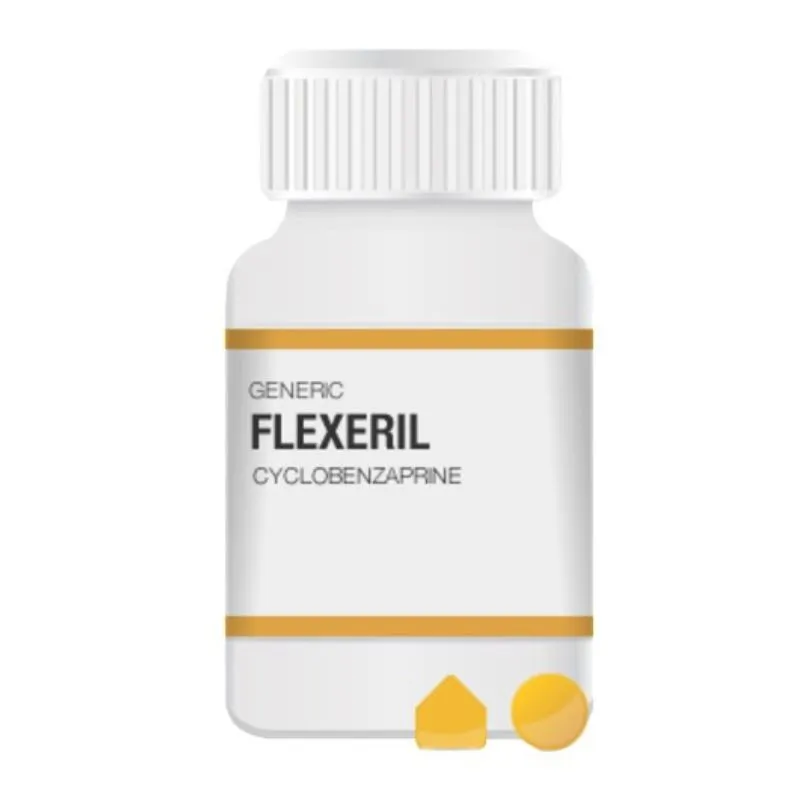
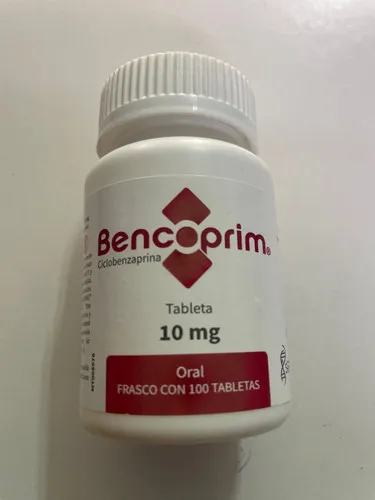

Comprehensive Overview of Flexeril (Cyclobenzaprine)
Flexeril, the brand name for the active pharmaceutical ingredient cyclobenzaprine hydrochloride, is a skeletal muscle relaxant frequently prescribed in orthopedic and primary care settings. It is primarily indicated for the short-term treatment of muscle spasms associated with acute, painful musculoskeletal conditions. Unlike neuromuscular blocking agents, Flexeril does not act directly on the muscle tissue; rather, it exerts its therapeutic effects through the central nervous system (CNS).
As an orthopedic specialist, it is vital to understand that Flexeril is intended to be used as an adjunct to rest and physical therapy. It is not a substitute for proper rehabilitation, stretching, or structural correction of the underlying injury. Given its sedative properties, it is typically reserved for short-term use—usually no longer than two to three weeks.
Mechanism of Action and Pharmacokinetics
Mechanism of Action
Cyclobenzaprine is structurally related to tricyclic antidepressants (TCAs), such as amitriptyline, though it lacks significant antidepressant activity. Its precise mechanism of action is not entirely understood, but it is believed to act at the brainstem level.
- CNS Modulation: It acts as a CNS depressant, reducing tonic somatic motor activity.
- Inhibition of Descending Pathways: It influences both gamma and alpha motor neurons by inhibiting the descending serotonergic and noradrenergic pathways in the spinal cord.
- Muscle Spasm Relief: By modulating these pathways, it reduces the hyperactive muscle reflexes that lead to painful spasms.
Pharmacokinetics
Understanding how the body processes Flexeril is essential for clinical dosing:
| Feature | Description |
|---|---|
| Absorption | Well-absorbed after oral administration. |
| Protein Binding | Highly bound to plasma proteins (approx. 93%). |
| Metabolism | Extensive hepatic metabolism via cytochrome P450 enzymes (CYP3A4, CYP1A2, and CYP2D6). |
| Half-life | Variable, typically ranging from 8 to 37 hours (average 18 hours). |
| Excretion | Primarily excreted in urine as glucuronide-conjugated metabolites. |
Clinical Indications and Dosage Guidelines
Indications
Flexeril is indicated for the relief of muscle spasms associated with acute, painful musculoskeletal conditions. It is most effective when combined with physical therapy, rest, and appropriate analgesic support (such as NSAIDs). It is not indicated for the treatment of spasticity associated with cerebral or spinal cord disease or pediatric cerebral palsy.
Dosage Guidelines
Dosage must be individualized based on the patient’s response and tolerance.
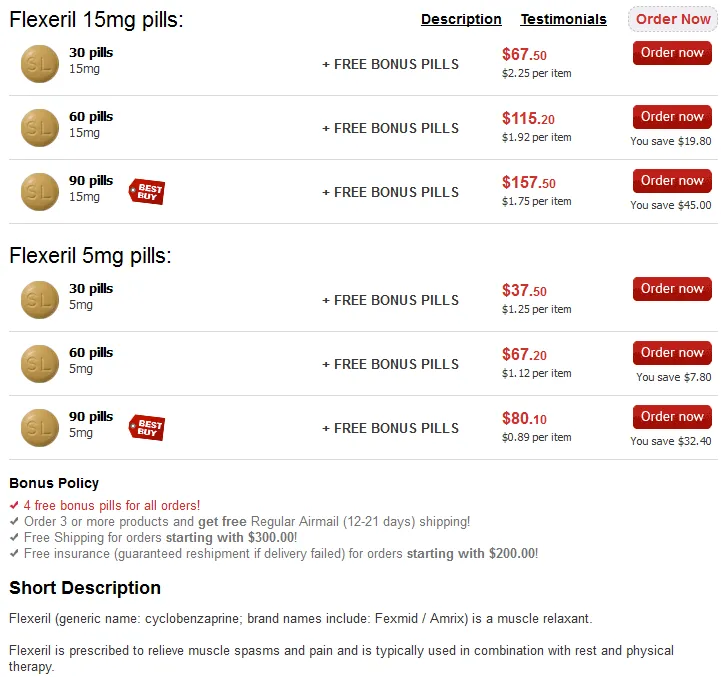
- Standard Adult Dosage: The typical dose is 5 mg orally three times daily.
- Dosage Adjustment: Depending on the patient's response, the dose may be increased to 10 mg three times daily.
- Duration: Use should be limited to 2-3 weeks.
- Geriatric Considerations: Older adults are more susceptible to adverse effects, particularly confusion, sedation, and anticholinergic effects. A lower starting dose is recommended.
- Hepatic Impairment: Use is contraindicated in patients with moderate to severe hepatic impairment.
Risks, Contraindications, and Drug Interactions
Contraindications
Flexeril should not be used in the following scenarios:
1. Hypersensitivity: Known allergy to cyclobenzaprine or any component of the formulation.
2. Hyperthyroidism: Risk of cardiac arrhythmias.
3. Cardiac Conditions: Recent myocardial infarction, heart block, or cardiac arrhythmias.
4. MAO Inhibitors: Concurrent use or use within 14 days of MAO inhibitor therapy (risk of serotonin syndrome).
5. Hepatic Impairment: Significant liver disease.
Adverse Effects
Common side effects are largely related to the drug's anticholinergic properties:
- Common: Drowsiness, dry mouth, dizziness, fatigue.
- Less Common: Blurred vision, tachycardia, confusion, constipation, nausea, and urinary retention.
- Serious (Rare): Serotonin syndrome, cardiac arrhythmias, and seizures.
Drug Interactions
Because of its structural similarity to TCAs, Flexeril has significant interaction potential:
* CNS Depressants: Alcohol, opioids, and benzodiazepines will have additive sedative effects.
* Serotonergic Agents: SSRIs, SNRIs, and triptans increase the risk of Serotonin Syndrome.
* Anticholinergics: Concurrent use with other anticholinergic drugs can exacerbate dry mouth, urinary retention, and confusion.
Pregnancy and Lactation Warnings
- Pregnancy: Flexeril is classified as FDA Pregnancy Category B. While animal studies have shown no evidence of impaired fertility or harm to the fetus, there are no adequate and well-controlled studies in pregnant women. It should be used only if clearly needed.
- Lactation: It is not known whether cyclobenzaprine is excreted in human milk. Because of the potential for serious adverse reactions in nursing infants, a decision should be made whether to discontinue nursing or discontinue the drug, taking into account the importance of the drug to the mother.
Overdose Management
An overdose of Flexeril can be life-threatening and requires immediate medical attention. Clinical manifestations of overdose include:
- CNS Effects: Severe drowsiness, hallucinations, agitation, tremors, and seizures.
- Cardiac Effects: Tachycardia, arrhythmias, and hypotension.
- Anticholinergic Toxicity: Dilated pupils, dry skin, and hyperthermia.
Management:
1. Decontamination: Gastric lavage or activated charcoal if ingestion was recent.
2. Supportive Care: Monitor cardiac function, vital signs, and airway.
3. Antidote: There is no specific antidote. Physostigmine may be used in severe anticholinergic toxicity, but only under expert guidance due to the risk of seizures and cardiac arrest.
Frequently Asked Questions (FAQ)
1. Can I drink alcohol while taking Flexeril?
No. Alcohol significantly increases the sedative effects of Flexeril, which can lead to dangerous levels of impairment, dizziness, and respiratory depression.
2. How long does it take for Flexeril to start working?
Most patients begin to feel the effects within 60 minutes of the first dose.
3. Is Flexeril addictive?
While it does not have the same abuse profile as opioids or benzodiazepines, it can be habit-forming if misused. It is intended for short-term use only.
4. Can I drive while on Flexeril?
You should avoid driving or operating heavy machinery until you know how the medication affects you, as it often causes significant drowsiness.
5. What should I do if I miss a dose?
Take the dose as soon as you remember. If it is nearly time for your next dose, skip the missed dose. Do not take two doses at once.
6. Does Flexeril help with chronic back pain?
Flexeril is generally indicated for acute muscle spasms. It is rarely effective for chronic pain management and is not recommended for long-term use.
7. Why is it contraindicated with MAO inhibitors?
The combination of cyclobenzaprine and MAO inhibitors can cause a severe, life-threatening condition known as Serotonin Syndrome.
8. Is Flexeril a controlled substance?
In the United States, Flexeril is not a federally controlled substance, though it is a prescription-only medication.
9. Can I take Flexeril with ibuprofen?
Yes, it is common to prescribe Flexeril alongside NSAIDs like ibuprofen for synergistic relief of both pain and muscle spasm.
10. What is the maximum duration of treatment?
Flexeril is typically prescribed for no longer than two to three weeks. If symptoms persist beyond this, a re-evaluation of the diagnosis is necessary.
Disclaimer: This guide is for educational purposes only and does not constitute medical advice. Always consult with a licensed healthcare provider or orthopedic specialist before starting or changing any medication regimen. If you suspect an overdose, contact emergency services or a poison control center immediately.