
Understanding Forteo (Teriparatide): An Overview
Forteo, known generically as teriparatide, represents a significant breakthrough in the treatment of severe osteoporosis. Unlike traditional antiresorptive medications—which primarily work by slowing down the rate at which bone is broken down—Forteo is a potent anabolic agent. It is a recombinant human parathyroid hormone (PTH 1-34) that actively stimulates new bone formation by increasing the activity of osteoblasts, the cells responsible for building bone matrix.
By mimicking the physiological action of the body’s endogenous parathyroid hormone, Forteo effectively increases bone mineral density (BMD) and improves bone microarchitecture. This guide provides an exhaustive clinical overview of the drug’s pharmacological profile, indications, and safety considerations.
Mechanism of Action and Pharmacokinetics
Mechanism of Action
The therapeutic effect of teriparatide is derived from its unique ability to stimulate bone remodeling. When administered intermittently, teriparatide binds to the PTH type 1 receptor on the surface of osteoblasts. This binding triggers a signaling cascade that:
* Promotes osteoblast differentiation and survival.
* Increases the rate of bone formation on both trabecular and cortical bone surfaces.
* Enhances the coupling of bone formation to bone resorption, favoring net bone gain.
Pharmacokinetics
Understanding how Forteo behaves within the human body is essential for clinicians to optimize dosing and minimize systemic exposure.
| Feature | Pharmacokinetic Profile |
|---|---|
| Bioavailability | Approximately 95% following subcutaneous injection. |
| Distribution | Volume of distribution is roughly 1.7 L/kg. |
| Metabolism | Metabolized by non-specific peptidases in the liver and kidneys. |
| Excretion | Primarily renal; clearance is approximately 62 mL/min. |
| Half-Life | Approximately 1 hour after subcutaneous administration. |
Clinical Indications and Usage
Forteo is indicated for patients at high risk for fracture. It is typically reserved for those who have failed or are intolerant to other osteoporosis therapies.
Primary Indications
- Postmenopausal Osteoporosis: Treatment of postmenopausal women with osteoporosis who are at high risk for fracture.
- Primary or Hypogonadal Osteoporosis: Treatment to increase bone mass in men with primary or hypogonadal osteoporosis who are at high risk for fracture.
- Glucocorticoid-Induced Osteoporosis: Treatment of patients with osteoporosis associated with sustained systemic glucocorticoid therapy (e.g., prednisone) who are at high risk for fracture.
Dosage and Administration Guidelines
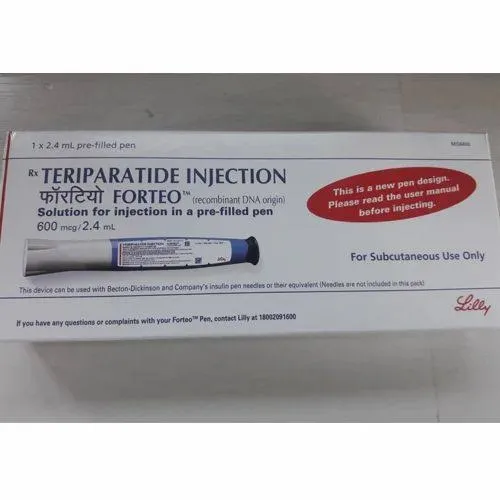
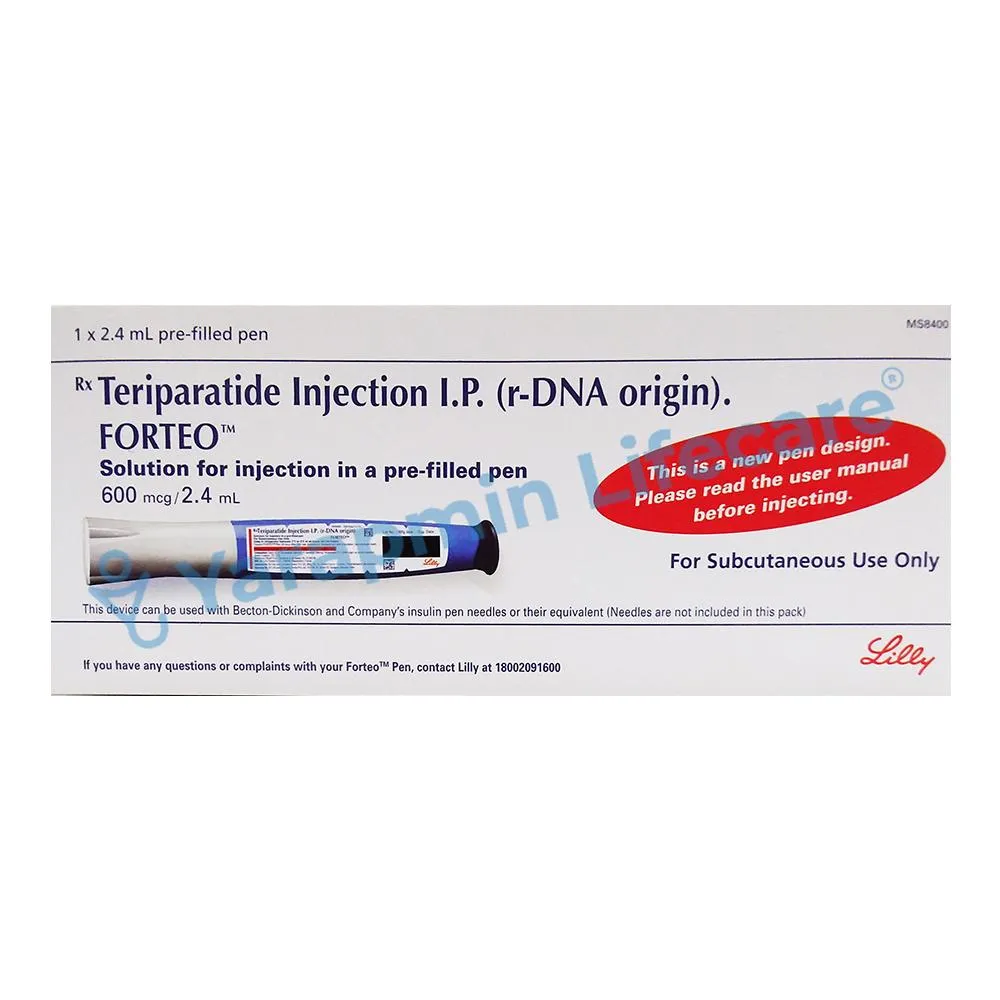
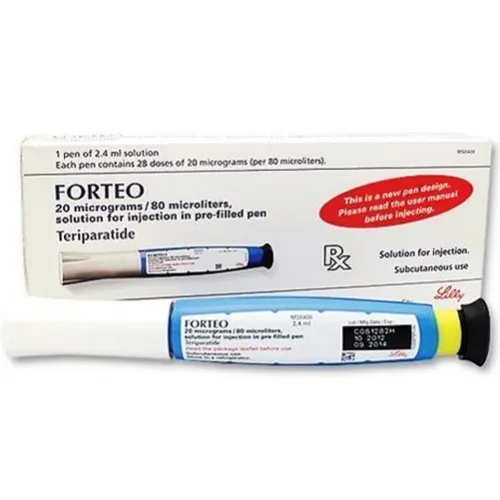
Forteo is supplied as a pre-filled delivery device (pen) designed for subcutaneous injection.
- Standard Dose: 20 mcg administered once daily.
- Injection Site: Preferred sites include the thigh or the abdominal wall.
- Duration: Due to the potential risk of osteosarcoma observed in rat studies, the total duration of treatment with teriparatide (including all versions) should not exceed 2 years over a patient's lifetime.
- Storage: The pen must be refrigerated at 36°F to 46°F (2°C to 8°C). It should be discarded 28 days after the first use.
Risks, Side Effects, and Contraindications
Safety Warnings
The most critical safety warning associated with Forteo is the potential risk of osteosarcoma. In preclinical trials involving rats, chronic administration of high doses led to an increased incidence of bone cancer. While this has not been observed in human clinical trials, the FDA mandates a 2-year cumulative limit on therapy.
Common Side Effects
- Nausea and gastrointestinal upset.
- Joint pain or arthralgia.
- Pain at the injection site.
- Dizziness or orthostatic hypotension (often occurring shortly after injection).
- Leg cramps.
Contraindications
- Hypercalcemia: Pre-existing high levels of calcium in the blood.
- Skeletal Malignancies: Patients with bone metastases or a history of skeletal malignancies.
- Paget’s Disease: Patients with metabolic bone disease other than osteoporosis.
- Radiation Therapy: Patients who have undergone prior external beam or implant radiation involving the skeleton.
- Pediatric Patients: Contraindicated in children or young adults with open epiphyses due to the risk of osteosarcoma.
Drug Interactions
While Forteo has a relatively clean interaction profile, clinicians must be aware of the following:
- Digoxin: Teriparatide may cause transient hypercalcemia. In patients taking digoxin, this can increase the risk of digitalis toxicity.
- Calcium/Vitamin D Supplements: These are often prescribed concurrently to ensure adequate substrate for bone formation; however, the dosage of supplements must be monitored to avoid hypercalcemia.
Pregnancy and Lactation
Forteo is not indicated for use during pregnancy or lactation. Animal studies have shown developmental toxicity. If a patient becomes pregnant, the medication should be discontinued immediately.
Overdose Management
There is no specific antidote for a Forteo overdose. In the event of an accidental overdose, the patient should be monitored for signs of hypercalcemia, including nausea, vomiting, confusion, and cardiac arrhythmias. Supportive care, including hydration and temporary discontinuation of the medication, is standard practice.
Frequently Asked Questions (FAQ)
1. How is Forteo different from bisphosphonates?
Bisphosphonates are antiresorptive agents that stop bone breakdown. Forteo is an anabolic agent that actively builds new bone.
2. Can I use Forteo for more than two years?
No. Due to the potential risk of osteosarcoma, clinical guidelines restrict the cumulative use of teriparatide to 24 months in a patient’s lifetime.
3. What happens after I finish my 2-year course of Forteo?
Most patients are transitioned to an antiresorptive medication (like a bisphosphonate or denosumab) to "lock in" the bone density gains achieved during teriparatide therapy.
4. Does Forteo cause bone cancer in humans?
To date, there has been no causal link established between therapeutic use of Forteo in humans and osteosarcoma. The warning is based strictly on rodent study data.
5. How should I store my Forteo pen?
Always store the pen in the refrigerator. Do not freeze it, and ensure it is kept away from the cooling element.
6. Can I inject Forteo in the arm?
The recommended injection sites are the abdomen or the thigh. Consult your healthcare provider if you require an alternative site.
7. What should I do if I miss a dose?
If you miss a dose, take it as soon as you remember that day. Do not take two doses on the same day to make up for a missed one.
8. Will I feel pain at the injection site?
Some patients experience minor stinging or redness at the injection site. Rotating the injection site daily can help minimize this.
9. Is Forteo safe for patients with kidney disease?
Patients with severe renal impairment should be monitored closely, as teriparatide is cleared primarily by the kidneys.
10. Can I drive after taking my injection?
Some patients experience transient dizziness shortly after injection. If you feel lightheaded, avoid driving or operating heavy machinery until the sensation passes.
Conclusion
Forteo (teriparatide) remains a gold-standard treatment for patients facing the severe consequences of osteoporosis. By harnessing the body's natural bone-building processes, it offers hope for those at high risk of fragility fractures. However, its use requires strict adherence to dosing protocols, careful patient selection, and a clear transition plan post-therapy. As with any potent medical intervention, collaboration between the patient and their orthopedic or endocrinology specialist is paramount to ensuring the best possible health outcomes.
Disclaimer: This guide is for educational purposes only and does not constitute medical advice. Always consult with a licensed healthcare professional before starting or altering any medication regimen.