
Comprehensive Guide to Fosamax (Alendronate Sodium)
Fosamax, known generically as alendronate sodium, is a cornerstone medication in the management of metabolic bone disorders. As a potent bisphosphonate, it has revolutionized the treatment of osteoporosis by inhibiting bone resorption and increasing bone mineral density (BMD). This guide provides an exhaustive clinical overview for healthcare professionals and patients seeking detailed information regarding its pharmacological profile and therapeutic application.
1. Introduction and Overview
Osteoporosis remains a silent epidemic, characterized by low bone mass and structural deterioration of bone tissue, leading to an increased risk of fragility fractures. Fosamax is a second-generation nitrogen-containing bisphosphonate that has been extensively studied in large-scale clinical trials, such as the Fracture Intervention Trial (FIT). It is indicated for the treatment and prevention of osteoporosis in postmenopausal women, the treatment of osteoporosis in men, and the management of glucocorticoid-induced osteoporosis.
2. Deep-Dive: Mechanism of Action and Pharmacokinetics
Mechanism of Action
Fosamax functions by binding to hydroxyapatite crystals in the bone matrix. Its primary mechanism involves the inhibition of osteoclast-mediated bone resorption.
- Pathway: It specifically targets the mevalonate pathway within the osteoclast. By inhibiting the enzyme farnesyl pyrophosphate (FPP) synthase, Fosamax prevents the prenylation of small GTPase proteins (such as Ras, Rho, and Rac).
- Result: The failure to prenylate these proteins leads to the loss of osteoclast cytoskeleton integrity and function, ultimately inducing osteoclast apoptosis and reducing bone turnover.
Pharmacokinetics
The bioavailability of oral alendronate is notoriously low, necessitating strict adherence to administration protocols.
| Parameter | Clinical Profile |
|---|---|
| Oral Bioavailability | Approximately 0.6% to 0.7% (fasting state) |
| Protein Binding | ~78% |
| Distribution | Rapidly cleared from plasma, sequestered in bone |
| Metabolism | None (not metabolized in humans) |
| Elimination | Renal excretion (unaltered drug) |
3. Clinical Indications and Usage
Fosamax is clinically indicated for several bone density-related conditions. The primary goal is the reduction of vertebral and hip fracture incidence.
Primary Indications
- Postmenopausal Osteoporosis: Treatment to increase bone mass and reduce the risk of fractures.
- Prevention of Postmenopausal Osteoporosis: Used in patients at high risk of bone loss.
- Male Osteoporosis: Treatment to increase bone mass.
- Glucocorticoid-Induced Osteoporosis: Treatment in patients receiving systemic glucocorticoids (prednisone equivalent ≥7.5 mg/day).
- Paget’s Disease of Bone: Treatment for patients with elevated alkaline phosphatase or symptoms.
Dosage Guidelines
Adherence to the "Fosamax Protocol" is critical to prevent esophageal irritation and ensure absorption.
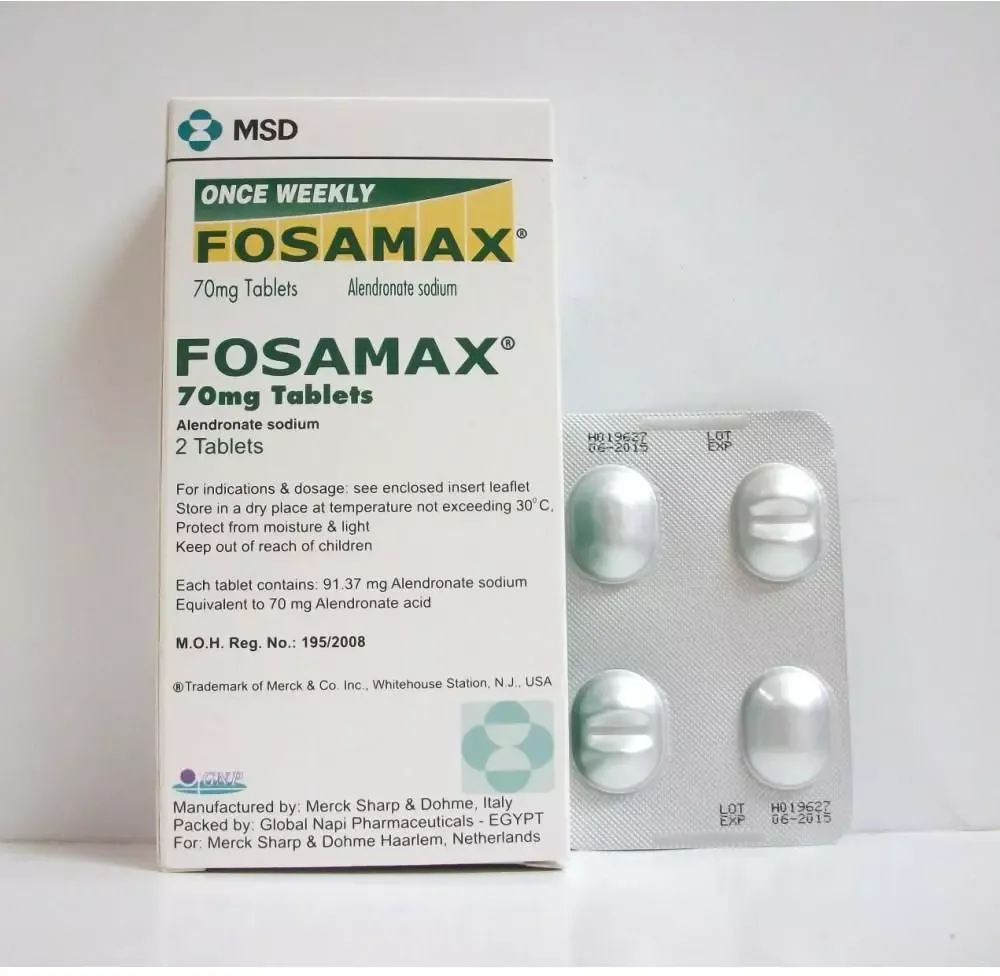
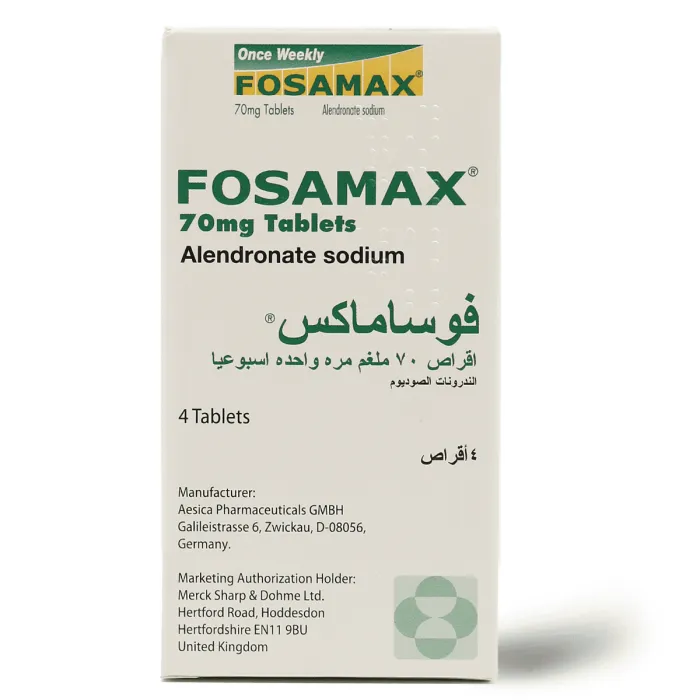
- Standard Osteoporosis Treatment: 10 mg daily or 70 mg once-weekly.
- Paget’s Disease: 40 mg daily for six months.
- Administration Rules:
- Take upon arising for the day with a full glass (6–8 oz) of plain water.
- Do not eat, drink, or take other medications for at least 30 minutes post-dose.
- Remain upright (sitting or standing) for at least 30 minutes to prevent esophageal reflux.
4. Risks, Side Effects, and Contraindications
Contraindications
- Esophageal Abnormalities: Strictures or achalasia that delay esophageal emptying.
- Inability to Stand/Sit: Patients unable to remain upright for 30 minutes.
- Hypocalcemia: Must be corrected before starting therapy.
- Renal Impairment: Not recommended for patients with creatinine clearance <35 mL/min.
Adverse Reactions
While generally well-tolerated, clinicians must monitor for specific adverse events:
- Gastrointestinal (GI): Esophagitis, esophageal ulcers, and erosions. These are the most common and clinically significant side effects.
- Musculoskeletal: Severe bone, joint, or muscle pain.
- Osteonecrosis of the Jaw (ONJ): Rare but serious, particularly in patients undergoing invasive dental procedures.
- Atypical Femoral Fractures: Long-term use (>5 years) has been associated with subtrochanteric or diaphyseal femoral shaft fractures.
Pregnancy and Lactation
- Pregnancy: Category C. Animal studies show potential fetal harm. Should only be used if the potential benefit justifies the risk to the fetus.
- Lactation: It is unknown if alendronate is excreted in human milk. Caution is advised.
5. Drug Interactions and Overdose Management
Drug Interactions
- Calcium/Antacids/Supplements: These significantly reduce absorption. Wait at least 30–60 minutes after taking Fosamax before consuming these.
- NSAIDs: Use with caution, as both can cause gastric irritation, increasing the risk of ulceration.
Overdose Management
Symptoms of overdose include hypocalcemia, hypophosphatemia, and upper GI adverse events.
* Management: Administer milk or antacids to bind the alendronate.
* Caution: Do not induce emesis, and ensure the patient remains upright to avoid esophageal irritation.
6. Massive FAQ Section
Q1: What happens if I miss a dose of Fosamax?
If you miss a weekly dose, take it the next morning. Do not take two doses on the same day. Resume your regular schedule the following week.
Q2: Why must I stay upright after taking Fosamax?
Because Fosamax is highly corrosive to the esophageal lining. Staying upright uses gravity to ensure the pill reaches the stomach quickly, preventing local irritation.
Q3: Can I take Fosamax with coffee or tea?
No. Coffee, tea, juice, and mineral water significantly inhibit the absorption of alendronate. Use only plain water.
Q4: How long should I take Fosamax?
The duration is determined by your physician. Recent studies suggest "drug holidays" may be appropriate after 3–5 years for patients at low risk of fracture.
Q5: Is there a risk of breaking a bone while on Fosamax?
While it reduces fracture risk, it does not eliminate it. Atypical femoral fractures are a rare risk associated with long-term use.
Q6: Can I take calcium supplements while on Fosamax?
Yes, but they must be taken at a different time of day, ideally at least 2 hours after your Fosamax dose.
Q7: What are the early signs of esophageal irritation?
Difficulty swallowing, pain upon swallowing, or worsening heartburn. Discontinue use and contact your doctor immediately.
Q8: Should I have a dental check-up before starting?
Yes. Invasive dental procedures while on bisphosphonates are linked to ONJ. It is best to complete dental work before initiating treatment.
Q9: Does Fosamax treat back pain?
Fosamax treats the underlying bone density issues that cause vertebral fractures (which cause back pain), but it is not an analgesic and will not provide immediate pain relief.
Q10: How do I know if the medication is working?
Your doctor will likely order a DEXA scan every 1–2 years to monitor changes in your bone mineral density.
Disclaimer: This guide is intended for informational purposes only and does not constitute medical advice. Always consult with a licensed healthcare provider regarding medication and treatment plans.