
Comprehensive Guide to Fosamax Plus: Bone Health and Osteoporosis Management
Fosamax Plus is a combination pharmaceutical product primarily indicated for the treatment and prevention of osteoporosis in postmenopausal women and to increase bone mass in men with osteoporosis. By combining Alendronate Sodium—a potent bisphosphonate—with Cholecalciferol (Vitamin D3), this medication provides a dual-action approach to skeletal health.
As an orthopedic specialist, I emphasize that bone density management is not merely about preventing fractures; it is about maintaining structural integrity to ensure long-term mobility and quality of life. This guide offers an exhaustive look at the clinical profile of Fosamax Plus.
1. Mechanism of Action: How Fosamax Plus Works
The efficacy of Fosamax Plus relies on the synergistic relationship between its two active components.
Alendronate Sodium
Alendronate acts as a potent inhibitor of osteoclast-mediated bone resorption. In a healthy bone remodeling cycle, osteoclasts break down old bone while osteoblasts build new bone. In patients with osteoporosis, this balance is disrupted. Alendronate localizes to sites of bone resorption, specifically under osteoclasts, and interferes with their ability to break down the bone matrix. By inhibiting the farnesyl pyrophosphate synthase enzyme within the osteoclast, it effectively slows the turnover rate of bone, leading to a net increase in bone mineral density (BMD).
Vitamin D3 (Cholecalciferol)
Vitamin D is essential for the efficient absorption of calcium from the gastrointestinal tract. A significant portion of the elderly population suffering from osteoporosis also presents with Vitamin D insufficiency. By including Cholecalciferol, Fosamax Plus ensures that the body has the necessary substrate to support bone mineralization, preventing secondary hyperparathyroidism which could otherwise exacerbate bone loss.
2. Pharmacokinetics and Technical Specifications
Understanding how the body processes Fosamax Plus is critical for clinical success.
| Feature | Alendronate Pharmacokinetics |
|---|---|
| Bioavailability | Very low (approx. 0.6% to 0.7% in fasting state) |
| Protein Binding | Approx. 78% |
| Distribution | Transiently in plasma; rapidly redistributes to bone |
| Metabolism | Not metabolized in humans |
| Excretion | Renal; elimination half-life is estimated at >10 years due to bone retention |
Clinical Implications of Pharmacokinetics
Because of the extremely low oral bioavailability, the administration of Fosamax Plus must be strictly timed. Food, beverages (other than water), and other medications significantly interfere with absorption.
3. Clinical Indications and Usage
Fosamax Plus is indicated for several specific orthopedic and endocrine conditions:
- Postmenopausal Osteoporosis: Used to prevent hip and vertebral fractures and to increase bone mass.
- Osteoporosis in Men: Indicated to increase bone mass in men with primary or hypogonadal osteoporosis.
- Glucocorticoid-Induced Osteoporosis: Used in patients receiving daily prednisone or equivalent doses of glucocorticoids.
- Maintenance of Vitamin D Levels: Specifically designed for patients who require both bisphosphonate therapy and Vitamin D supplementation.
Dosing Guidelines
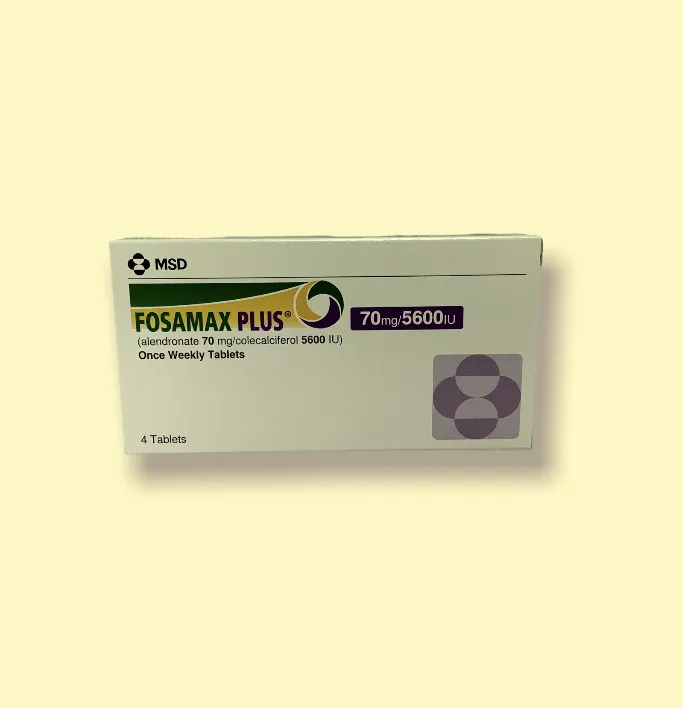
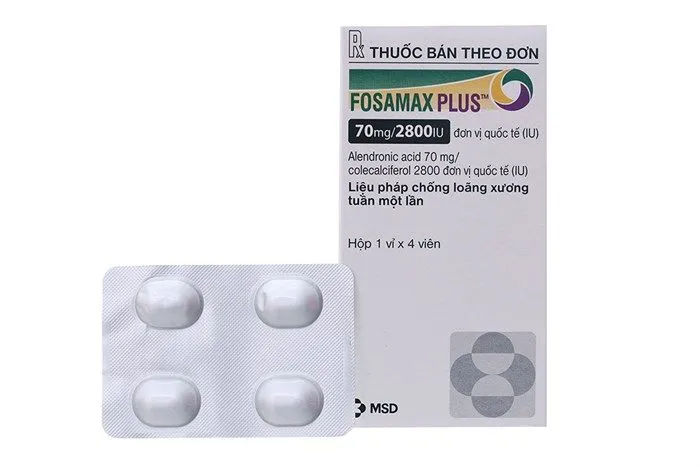
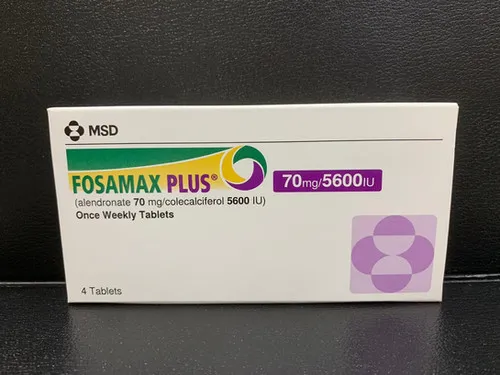
The standard dosage for Fosamax Plus is typically one tablet (70 mg Alendronate / 2800 IU or 5600 IU Vitamin D3) administered once weekly.
Administration Protocol:
* Timing: Must be taken upon arising for the day, at least 30 minutes before the first food, beverage, or medication.
* Hydration: Take only with a full glass of plain water (6–8 oz).
* Post-Administration: The patient must remain in an upright position (sitting or standing) for at least 30 minutes to prevent esophageal irritation.
4. Risks, Side Effects, and Contraindications
While highly effective, Fosamax Plus carries specific risks that clinicians and patients must monitor.
Contraindications
- Esophageal Abnormalities: Patients with esophageal stricture, achalasia, or other conditions that delay esophageal emptying.
- Inability to Stand/Sit Upright: Patients unable to stand or sit upright for at least 30 minutes.
- Hypocalcemia: Must be corrected before starting therapy.
- Renal Impairment: Not recommended for patients with creatinine clearance <35 mL/min.
Common Side Effects
- Gastrointestinal: Abdominal pain, dyspepsia, acid reflux, and esophageal ulcers.
- Musculoskeletal: Bone, joint, or muscle pain (can be severe).
- Rare but Serious: Osteonecrosis of the jaw (ONJ) and atypical femoral fractures (long-term use).
5. Pregnancy, Lactation, and Special Populations
- Pregnancy: Fosamax Plus is classified as Pregnancy Category C. There are no adequate studies in pregnant women. Bisphosphonates are incorporated into the bone matrix and are released over years; therefore, they should not be used in women who are pregnant or planning to become pregnant.
- Lactation: It is unknown whether alendronate is excreted in human milk. Caution should be exercised.
- Pediatric Use: Safety and effectiveness in pediatric patients have not been established.
6. Drug Interactions
To ensure maximum efficacy and safety, patients should be aware of the following interactions:
- Calcium Supplements/Antacids: These interfere with the absorption of alendronate. They should be taken at least 30–60 minutes after the Fosamax Plus dose.
- NSAIDs: Concomitant use with aspirin or NSAIDs may increase the risk of gastrointestinal irritation.
7. Overdose Management
Symptoms of overdose may include hypocalcemia, hypophosphatemia, and upper gastrointestinal adverse events (upset stomach, heartburn, esophagitis, gastritis, or ulcer).
Management Strategy:
1. Gastric Lavage: Administer milk or antacids to bind alendronate.
2. Avoid Emesis: Due to the risk of esophageal irritation, do not induce vomiting.
3. Patient Positioning: Keep the patient in an upright position to prevent reflux.
4. Monitoring: Monitor serum calcium and phosphate levels.
8. Frequently Asked Questions (FAQ)
1. Why must I remain upright for 30 minutes after taking Fosamax Plus?
Alendronate can be highly irritating to the lining of the esophagus. Remaining upright prevents the medication from refluxing back into the esophagus, which reduces the risk of esophageal ulcers or erosions.
2. Can I take my coffee with Fosamax Plus?
No. Coffee, tea, juice, and mineral water significantly reduce the absorption of the medication. It must be taken with plain water only.
3. What if I miss my weekly dose?
If you miss your weekly dose, take it on the next morning after you remember. Do not take two tablets on the same day. Resume your regular schedule of one tablet once a week on your chosen day.
4. Is Fosamax Plus a permanent cure for osteoporosis?
No. Osteoporosis is a chronic condition. Fosamax Plus helps manage bone density, but it is not a "cure." Long-term therapy is often required, though "drug holidays" may be discussed with your doctor after 3–5 years of use.
5. Does this medication cause jaw problems?
Rarely, bisphosphonates are associated with osteonecrosis of the jaw (ONJ), particularly in patients undergoing invasive dental procedures. It is recommended to have a dental exam before starting treatment.
6. Do I still need to take extra calcium while on this medication?
Yes. Fosamax Plus provides Vitamin D, but you must ensure your dietary intake of calcium is adequate, as the medication works by utilizing calcium to build bone.
7. How long does it take to see results?
Bone mineral density increases are typically measured via DEXA scans, usually performed every 1 to 2 years. Patients should not expect immediate changes in bone strength.
8. Is muscle pain a normal side effect?
Some patients experience bone, joint, or muscle pain. If this pain becomes severe or debilitating, contact your healthcare provider immediately.
9. Can children take Fosamax Plus?
No, it is not approved for use in the pediatric population.
10. Why is the Vitamin D included in the tablet?
Many osteoporosis patients have underlying Vitamin D deficiency. By combining it with the bisphosphonate, the medication ensures the patient has the necessary nutritional support to facilitate bone mineralization.
Disclaimer: This guide is for educational purposes and does not substitute professional medical advice. Always consult your orthopedic surgeon or primary care physician regarding your specific health needs and medication regimen.