
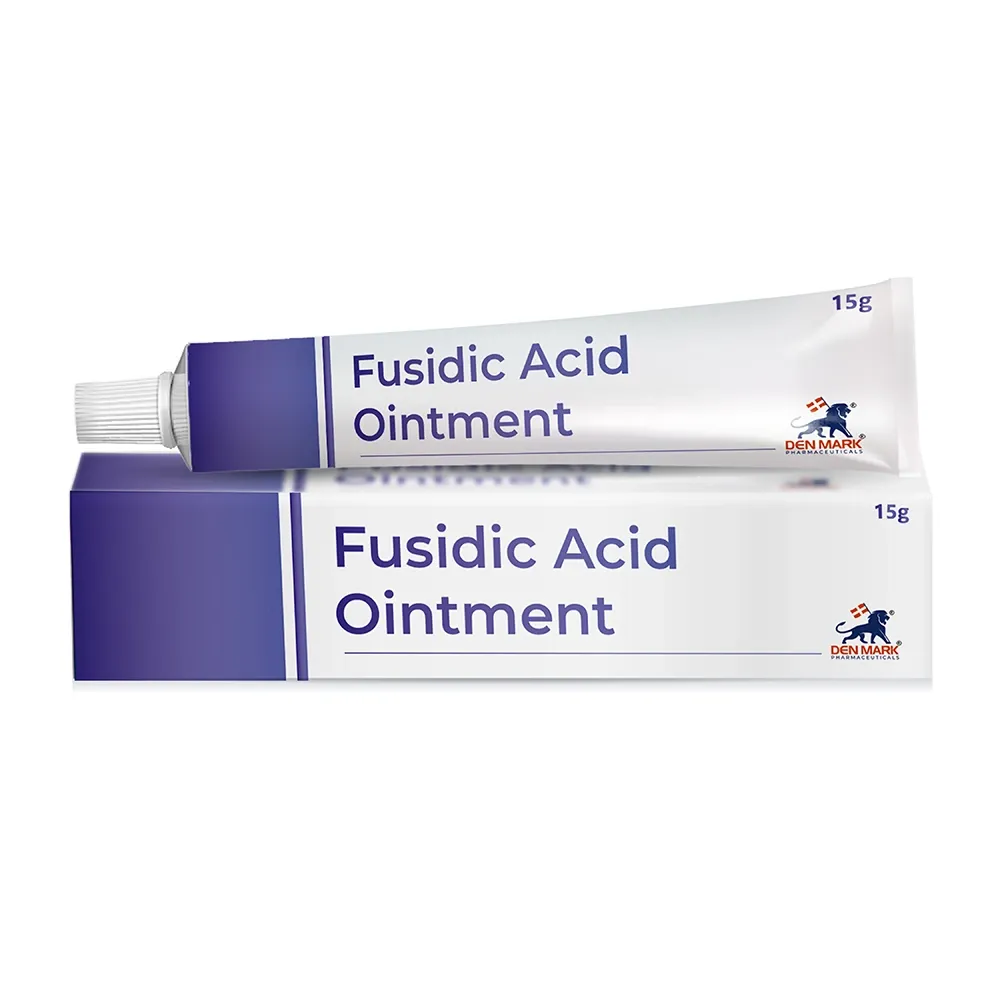

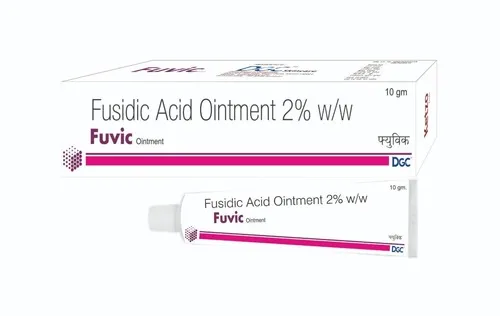

Comprehensive Overview of Fusidic Acid Ointment
Fusidic acid is a potent bacteriostatic antibiotic derived from the fungus Fusidium coccineum. It is primarily utilized in topical formulations, such as ointments and creams, to manage localized bacterial skin infections. Unlike many broad-spectrum antibiotics, fusidic acid possesses a highly specific mechanism of action that makes it particularly effective against Gram-positive cocci, most notably Staphylococcus aureus, including methicillin-resistant strains (MRSA).
In the clinical setting, fusidic acid ointment is a cornerstone of dermatological therapy for impetigo, infected wounds, and folliculitis. Due to its unique structure—a steroid-like backbone—it exhibits excellent skin penetration, allowing it to reach deep-seated infections that topical agents with lower lipophilicity might fail to address.
Mechanism of Action: The Science of Inhibition
The therapeutic efficacy of fusidic acid lies in its ability to inhibit bacterial protein synthesis. Understanding this mechanism is vital for appreciating why it remains a gold standard in orthopedic and dermatological practice.
1. Inhibition of Protein Synthesis
Fusidic acid functions by binding to the Elongation Factor G (EF-G). By forming a complex with EF-G and guanosine diphosphate (GDP), the antibiotic prevents the translocation of the ribosome along the mRNA strand.
2. The Translocation Block
During the elongation phase of protein synthesis, the ribosome moves along the messenger RNA to decode the next codon. Fusidic acid prevents the release of EF-G from the ribosome after the translocation step. Consequently, the ribosome becomes "stuck," and the bacterial cell cannot synthesize the proteins necessary for survival and replication.
3. Bacteriostatic vs. Bactericidal
While technically classified as a bacteriostatic agent at standard concentrations, fusidic acid can exhibit bactericidal activity at high concentrations, particularly against highly sensitive organisms.
Pharmacokinetics and Tissue Penetration
Fusidic acid is characterized by its high lipophilicity, which is the key determinant of its effectiveness in topical applications.
| Property | Description |
|---|---|
| Absorption | Excellent penetration through intact and damaged skin. |
| Distribution | High concentration achieved in the epidermis and dermis. |
| Metabolism | Minimal systemic metabolism when applied topically. |
| Excretion | Primarily excreted via bile; minimal renal clearance. |
Because the systemic absorption of topical fusidic acid is negligible, the risk of systemic side effects is significantly lower compared to oral administration. This makes it an ideal choice for localized infections in both pediatric and adult populations.
Clinical Indications and Therapeutic Usage
Fusidic acid ointment is indicated for the treatment of primary and secondary skin infections caused by susceptible organisms.
Primary Indications:
- Impetigo: Both bullous and non-bullous forms.
- Folliculitis: Inflammation of the hair follicles, often caused by S. aureus.
- Erythrasma: A superficial infection caused by Corynebacterium minutissimum.
- Infected Wounds: Including surgical site infections or minor trauma wounds.
- Paronychia: Infections around the nail bed.
Dosage Guidelines
For most dermatological infections, the recommended regimen is:
1. Application: Apply a thin layer to the affected area.
2. Frequency: 2 to 3 times daily.
3. Duration: Typically 7 to 10 days.
4. Occlusion: The use of an occlusive dressing may be recommended by a physician for stubborn or deep-seated infections to enhance penetration, though it is not required for standard superficial cases.
Contraindications and Risks
While generally well-tolerated, clinical vigilance is required to avoid misuse.
Contraindications
- Hypersensitivity: Known allergy to fusidic acid or its salts (e.g., sodium fusidate).
- Fungal/Viral Infections: Fusidic acid has no activity against fungi or viruses. Application to such lesions can mask symptoms and exacerbate the primary condition.
Side Effects
- Local Irritation: Mild stinging, burning, or redness at the application site.
- Dermatitis: Rarely, contact dermatitis may occur.
- Hypersensitivity Reactions: Rash, urticaria, or angioedema (discontinue immediately if observed).
Pregnancy, Lactation, and Special Populations
Pregnancy
There is limited clinical data regarding the use of topical fusidic acid during pregnancy. However, because systemic absorption is minimal, it is generally considered safe if the clinical benefit outweighs the potential risk. Consultation with an obstetrician is recommended.
Lactation
Fusidic acid is not expected to be excreted in breast milk in significant amounts due to low systemic absorption. Nevertheless, care should be taken to avoid applying the ointment to the breast area to prevent direct ingestion by the infant.
Pediatric Use
It is widely used in children for impetigo and other skin infections. No dose adjustment is typically required, though the duration of treatment should be kept to the minimum necessary to achieve clinical resolution to prevent the development of resistant strains.
Drug Interactions and Resistance Management
Interactions
There are no significant known drug-drug interactions with topical fusidic acid. However, it should not be applied simultaneously with other topical agents to the same site, as this may alter the absorption profile or cause physical incompatibility.
Resistance Prevention
- Do not use for viral infections.
- Complete the full course: Stopping treatment early can promote the selection of resistant bacterial populations.
- Avoid prophylactic use: Use only when a confirmed or highly suspected bacterial infection is present.
Massive FAQ Section
1. Can I use Fusidic Acid Ointment for acne?
While it has anti-staphylococcal activity, it is not a first-line treatment for acne vulgaris. There are more effective topical agents specifically formulated for acne.
2. Is it safe for the face?
Yes, it is commonly used for facial impetigo. However, avoid contact with the eyes, as it can cause irritation.
3. Does it expire quickly?
Most tubes have a shelf life of 2–3 years, but once opened, it should typically be discarded after 6–12 months, depending on the manufacturer's instructions.
4. What if I miss a dose?
Apply the missed dose as soon as you remember. If it is close to the time for your next dose, skip the missed one and resume your regular schedule.
5. Can I use it on open wounds?
Yes, it is effective for infected lacerations, but it should not be applied to deep, surgical, or internal wounds without direct medical supervision.
6. Will it interact with my oral medications?
Topical fusidic acid has negligible systemic absorption, so it is unlikely to interact with oral medications. Always inform your doctor of your current regimen.
7. Why is my skin red after applying it?
Mild redness can be a side effect. If the redness is accompanied by swelling, itching, or blisters, you may be experiencing a contact allergy; stop use and consult a physician.
8. Can I use it on my pets?
No. Human-grade medications should never be used on animals without veterinary guidance, as the dosage and formulation may be inappropriate or toxic to pets.
9. Does it stain the skin?
Fusidic acid ointment is generally non-staining, but it may leave a greasy residue on clothing.
10. How do I know if it’s working?
You should notice a reduction in inflammation, pus, and pain within 48 to 72 hours. If there is no improvement after 5 days, seek professional medical evaluation.
Conclusion
Fusidic acid ointment remains a vital tool in the medical arsenal for managing bacterial skin infections. Its targeted mechanism, combined with an excellent safety profile due to limited systemic absorption, ensures it remains a preferred choice for clinicians. By adhering to proper application protocols and being mindful of the risks of antibiotic resistance, patients can effectively resolve skin infections while minimizing the potential for adverse outcomes. Always consult with a healthcare professional or pharmacist if you are unsure about the suitability of this medication for your specific condition.