
Comprehensive Guide to the Hard Cervical Collar: Clinical Standards
The hard cervical collar, often referred to as a rigid cervical orthosis, is a cornerstone of orthopedic intervention in the management of cervical spine trauma, post-operative stabilization, and specific degenerative conditions. Unlike soft collars, which provide minimal support and are primarily used for comfort or proprioceptive feedback, the hard cervical collar is a medical-grade device engineered for structural immobilization.
This guide provides an exhaustive clinical overview of the hard cervical collar, detailing its mechanical properties, indications, and the critical safety parameters required for professional orthopedic application.
1. Mechanism of Action and Technical Specifications
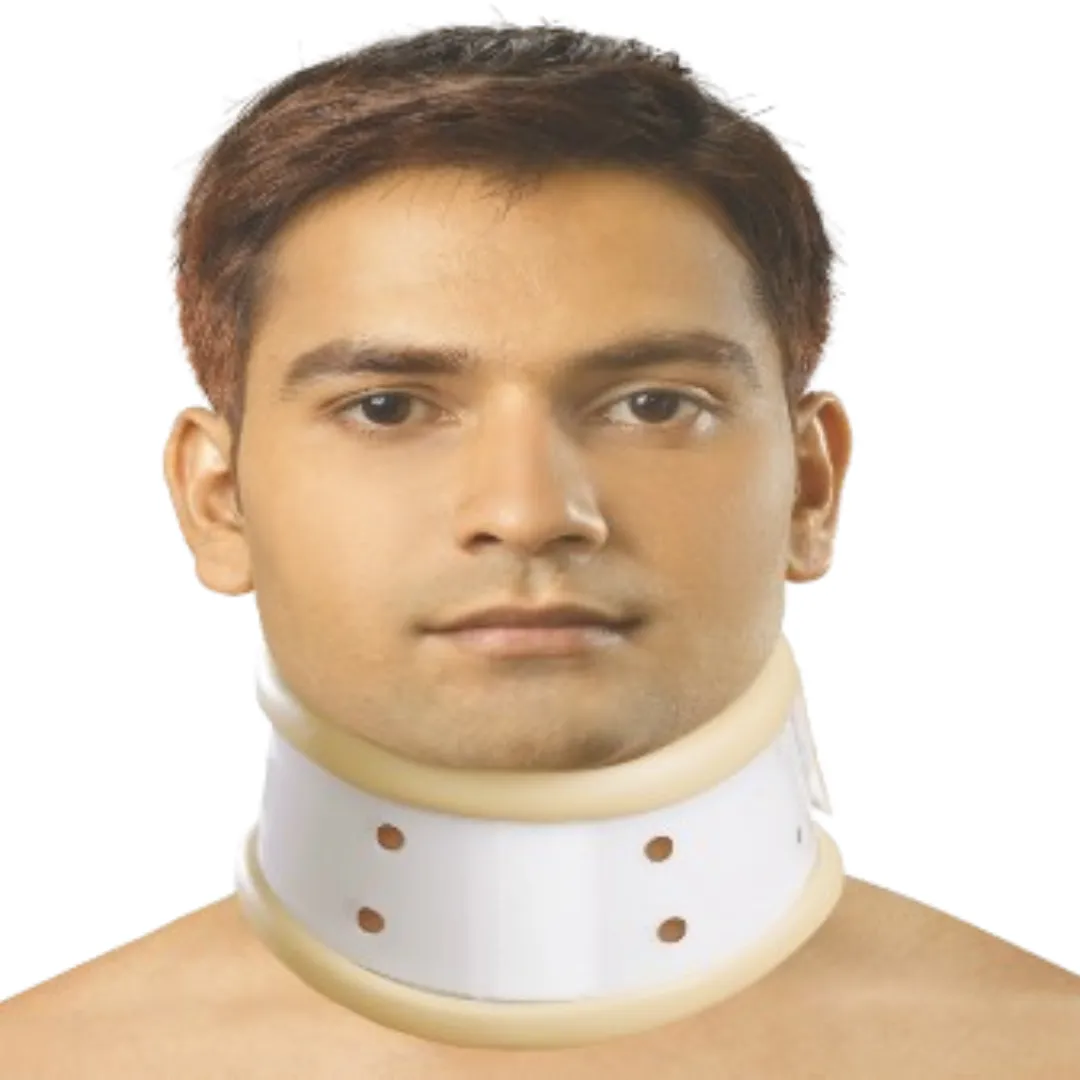
The hard cervical collar functions through the principle of restricted kinetic motion. By bracing the chin, occiput, and sternum, the device creates a rigid external frame that limits the range of motion (ROM) in all three planes: sagittal, frontal, and transverse.
Biomechanical Principles
- Kinematic Restriction: The primary goal is to minimize vertebral displacement in unstable fractures or post-surgical segments.
- Load Bearing: By transferring the weight of the cranium to the thoracic cage, the collar reduces the axial load on the cervical intervertebral discs and vertebral bodies.
- Proprioceptive Limitation: The rigidity of the frame forces the patient to maintain neutral neck alignment, preventing the "chin-tuck" or "forward-head" postures that exacerbate cervical strain.
Technical Composition
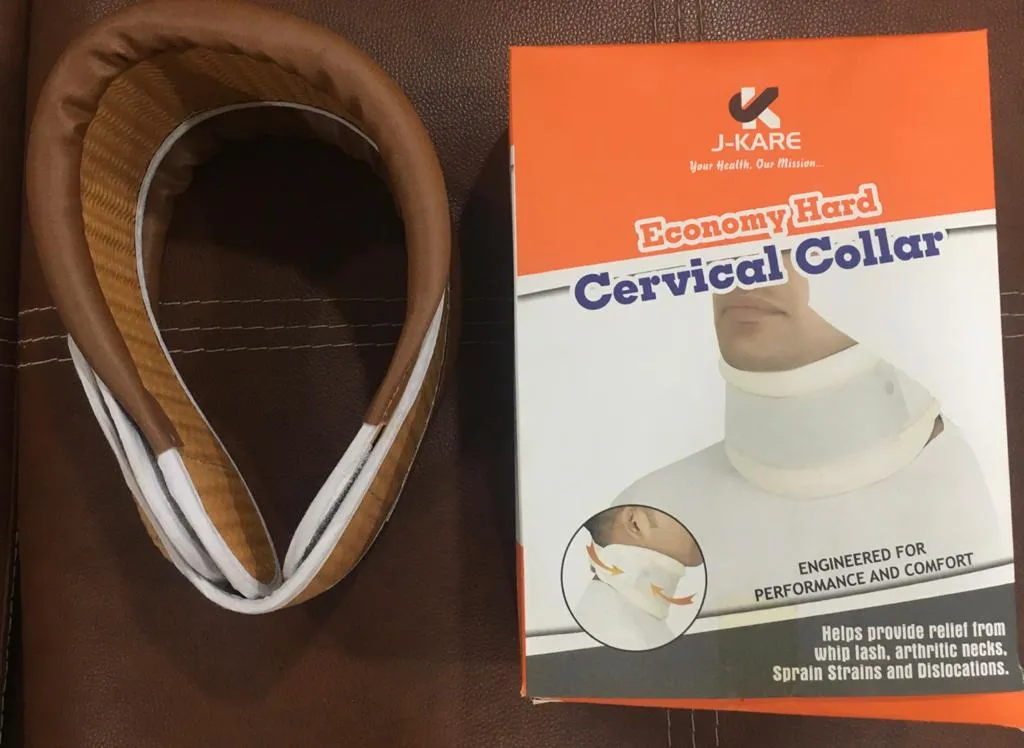
Hard cervical collars are typically constructed from high-density polyethylene or rigid thermoplastic materials, often lined with hypoallergenic, closed-cell foam to prevent skin maceration and pressure ulcers.
| Feature | Specification |
|---|---|
| Material | High-density polyethylene (HDPE) |
| Lining | Closed-cell, moisture-wicking foam |
| Closure | Hook-and-loop (Velcro) straps |
| Weight | Lightweight for long-term compliance |
| Adjustment | Multi-level height adjustment for cervical lordosis |
2. Clinical Indications and Usage Guidelines
A hard cervical collar is not a prophylactic device; it is a clinical intervention. Its use must be dictated by a clear diagnosis provided by an orthopedic surgeon, neurosurgeon, or trauma specialist.
Primary Indications
- Cervical Spine Trauma: Used in the acute phase for stable fractures (e.g., C2 odontoid fractures) to prevent neurological deterioration.
- Post-Operative Stabilization: Following procedures such as anterior cervical discectomy and fusion (ACDF) or laminectomy, to protect hardware and facilitate bone graft fusion.
- Cervical Spondylosis with Radiculopathy: Used to alleviate nerve root impingement by maintaining alignment and reducing motion-induced inflammation.
- Atlanto-Axial Instability: Providing rigid support to the C1-C2 complex in patients with rheumatoid arthritis or congenital anomalies.
Dosage and Duration of Use
"Dosage" in the context of orthotics refers to the time-in-brace (TIB) protocol.
* Acute Trauma: Typically 24/7 wear for 6–12 weeks, depending on radiological evidence of fusion or healing.
* Post-Operative: Usually 6–8 weeks, with gradual weaning as prescribed by the surgeon.
* Chronic Degeneration: Intermittent use, often restricted to periods of activity or exacerbation, to prevent muscle atrophy.
3. Contraindications and Safety Warnings
The use of a hard cervical collar is not without risk. Prolonged immobilization can lead to secondary complications that must be managed by the clinical team.
Absolute Contraindications
- Unstable fractures requiring surgical fixation: The collar is an adjunct, not a replacement for surgery in unstable injuries.
- Severe respiratory compromise: In patients with underlying COPD or asthma, the collar must be fitted to ensure no restriction of the trachea or breathing mechanics.
- In-situ neurological deterioration: If symptoms worsen while in the collar, immediate removal and re-evaluation are required.
Potential Side Effects
- Pressure Ulcers: Common at the chin and occipital regions. Regular skin checks are mandatory.
- Muscle Atrophy: Prolonged disuse of cervical musculature can lead to weakness, necessitating physical therapy post-weaning.
- Skin Maceration: Caused by sweat accumulation under the foam lining.
- Temporomandibular Joint (TMJ) Pain: Excessive pressure on the mandible can cause jaw discomfort.
4. Drug Interactions and Pharmacological Considerations
While the collar is a physical device, its use is often paired with pharmacological management. Clinicians must be aware of how the device interacts with the patient's medication regimen.
- NSAIDs: Often prescribed for pain/inflammation. Note that NSAIDs may inhibit bone fusion; patients on long-term NSAID therapy after spinal fusion must be monitored closely.
- Muscle Relaxants: Frequently used to manage spasms during the initial phase of bracing. These may increase dizziness, which, when combined with the restricted field of vision caused by the collar, increases fall risk.
- Topical Analgesics: Use caution when applying creams under the collar, as they may irritate the skin or degrade the foam lining.
5. Pregnancy and Lactation Warnings
There are no direct pharmacological contraindications for the use of a hard cervical collar during pregnancy. However, the following physiological considerations apply:
* Postural Changes: The shift in the center of gravity during pregnancy may alter cervical curvature, requiring a professional refitting of the device.
* Edema: Pregnancy-related fluid retention can cause the neck to swell, making the collar tight. Frequent adjustment is necessary to ensure the collar does not impede venous return or breathing.
6. Overdose and Improper Usage Management
"Overdose" in the context of an orthosis refers to "Over-bracing." This occurs when a patient wears the collar longer than required, leading to permanent muscle weakness (cervical dystonia) or psychological dependence on the device.
Management of Improper Usage:
- Graduated Weaning: Never discontinue the collar abruptly. Reduce wear by 1–2 hours per day over a period of 2 weeks.
- Isometric Strengthening: Initiate a physical therapy program focused on isometric cervical stabilization once the spine is cleared for movement.
- Skin Integrity Protocol: If redness appears, the patient must be instructed to clean the skin with mild soap, pat dry, and adjust the collar tension. If skin breakdown occurs, the device must be modified by an orthotist.
7. Extensive FAQ Section
Q1: Can I sleep with my hard cervical collar on?
Yes, if prescribed for 24/7 use. However, use a firm pillow to maintain neutral alignment to prevent the collar from pushing the head into an uncomfortable position.
Q2: How do I clean my hard cervical collar?
Wipe the plastic shell with a damp cloth and mild soap. The foam lining should be cleaned with a damp cloth and air-dried. Do not submerge the foam in water.
Q3: Why does my chin hurt?
The chin piece may be too tight or the collar too high. Consult your orthotist to adjust the height or add padding to redistribute pressure.
Q4: Can I drive while wearing a hard cervical collar?
Generally, no. The collar restricts peripheral vision and the ability to rotate the neck, which is essential for safe driving. Consult your physician before returning to the road.
Q5: How tight should the collar be?
It should be firm enough to prevent significant neck motion but loose enough to allow for swallowing and breathing without restriction. You should be able to fit one finger comfortably between the chin and the collar.
Q6: Will I get addicted to the collar?
Psychological dependence is possible. This is why a structured weaning program is essential to transition the patient back to full range of motion.
Q7: Can I take the collar off to shower?
Only if cleared by your doctor. If you are permitted, keep your neck in a neutral position (looking straight ahead) and avoid any flexion or rotation during the process.
Q8: What if the collar is causing me to gag?
The collar may be positioned too far anteriorly or the chin piece may be too high. Seek professional adjustment immediately.
Q9: Does the hard cervical collar weaken neck muscles?
Yes, prolonged use leads to muscle atrophy. This is a known trade-off for spinal stability. Physical therapy is required post-treatment to regain strength.
Q10: How do I know if my collar is the right size?
A professional orthotist should measure the distance from the sternal notch to the chin to ensure proper fit. An ill-fitting collar can cause more harm than good by placing undue pressure on the mandible or clavicle.
Conclusion
The hard cervical collar is a vital medical tool that, when used correctly, provides the necessary stability for healing and recovery. Its application requires a balance of mechanical support and careful monitoring of the patient's skin, muscle tone, and psychological well-being. Always follow the specific instructions provided by your clinical team and ensure that any discomfort is addressed promptly to prevent complications.