

Comprehensive Guide to Ibandronic Acid: Clinical Overview and Therapeutic Application
Ibandronic acid (often administered as ibandronate sodium) is a potent, nitrogen-containing bisphosphonate medication primarily utilized in the management and prevention of osteoporosis. By inhibiting osteoclast-mediated bone resorption, it plays a vital role in maintaining skeletal integrity, particularly in postmenopausal women who are at elevated risk for fragility fractures.
This guide provides an exhaustive review of ibandronic acid, designed for healthcare professionals, clinical researchers, and patients seeking a deep understanding of its pharmacodynamics, clinical utility, and safety profile.
Technical Specifications and Mechanism of Action
Ibandronic acid belongs to the third generation of bisphosphonates. Its chemical structure features a nitrogen-containing side chain, which significantly enhances its potency compared to early-generation bisphosphonates like etidronate.
Pharmacodynamics (Mechanism of Action)
The primary action of ibandronic acid is the inhibition of bone resorption. The mechanism can be broken down into the following steps:
- Binding Affinity: Upon administration, ibandronic acid binds with high affinity to hydroxyapatite crystals in the bone matrix.
- Internalization: As osteoclasts (cells responsible for bone breakdown) begin to resorb bone, they ingest the ibandronic acid.
- Enzyme Inhibition: Once inside the osteoclast, the drug inhibits farnesyl pyrophosphate synthase (FPPS), an enzyme in the mevalonate pathway.
- Cellular Disruption: The inhibition of this pathway prevents the prenylation of small GTPase proteins (such as Ras, Rho, and Rac), which are essential for the structural integrity and survival of the osteoclast.
- Apoptosis: Deprived of these critical proteins, the osteoclast undergoes apoptosis (programmed cell death), leading to a significant reduction in bone turnover and a net increase in bone mineral density (BMD).
Pharmacokinetics
- Absorption: Oral bioavailability is low (approximately 0.6% to 1.1%). It is highly sensitive to food and drink (excluding plain water), which can drastically reduce absorption.
- Distribution: Rapidly distributes into bone or is excreted via the kidneys. Plasma protein binding is approximately 85%–99%.
- Metabolism: Ibandronic acid does not undergo hepatic metabolism.
- Elimination: Excreted unchanged via the kidneys. The terminal half-life ranges from 10 to 72 hours, though the bone-bound fraction remains for much longer.
Clinical Indications and Usage
Ibandronic acid is indicated for the treatment and prevention of osteoporosis in postmenopausal women. The primary goal is to reduce the incidence of vertebral fractures.
Indications Summary
| Indication | Target Population | Clinical Goal |
|---|---|---|
| Treatment | Postmenopausal women with osteoporosis | Increase BMD, reduce fracture risk |
| Prevention | Postmenopausal women with osteopenia | Maintain BMD, prevent progression |
Dosage Guidelines
Dosage regimens are strictly defined to ensure efficacy and minimize gastrointestinal irritation.
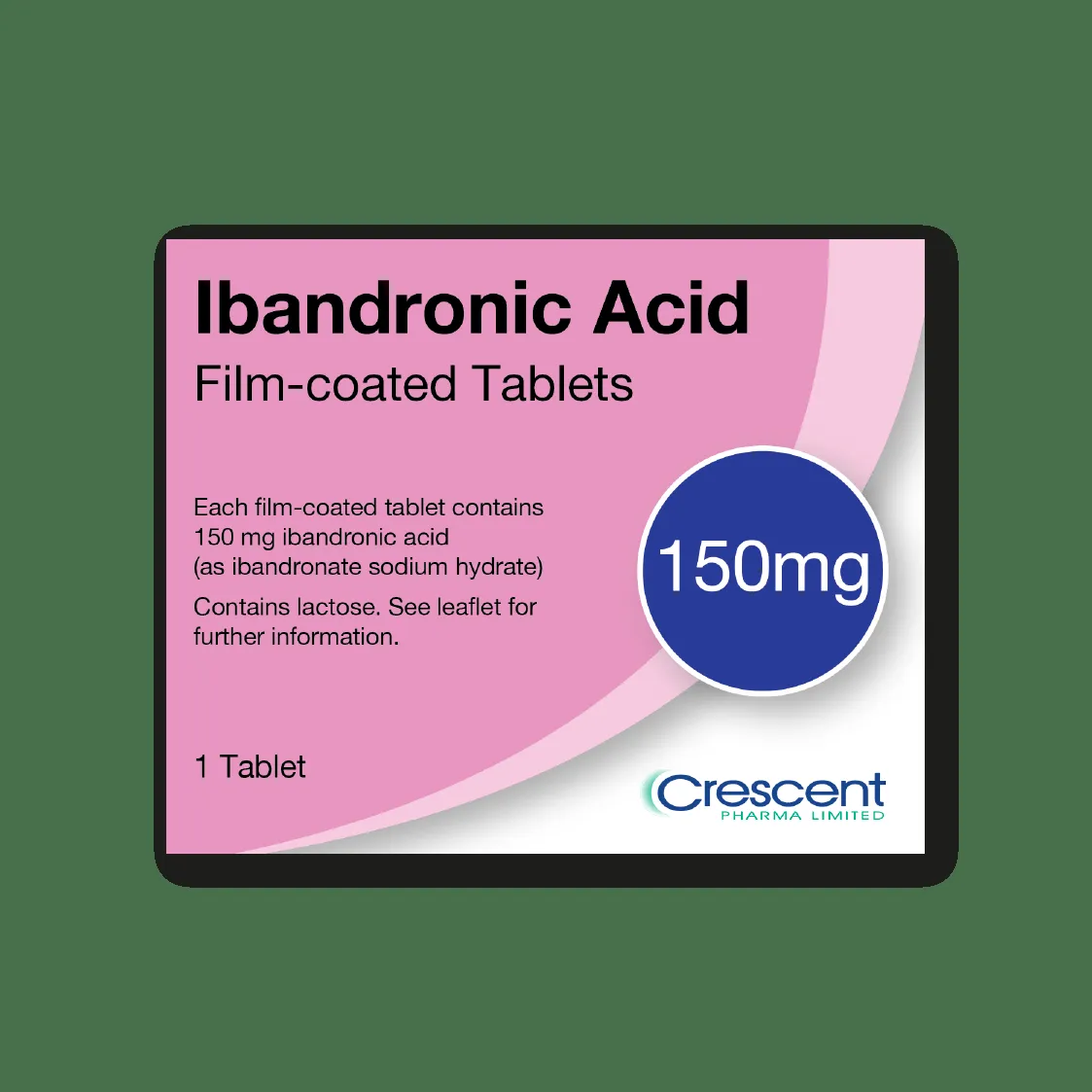
- Oral (Monthly): 150 mg tablet taken once monthly on the same day each month.
- Intravenous (Quarterly): 3 mg injection administered every 3 months by a healthcare professional.
Important Administration Rules for Oral Dosing:
* Must be taken after an overnight fast (at least 6 hours).
* Must be taken with a full glass (6–8 oz) of plain water.
* Patients must remain upright (sitting or standing) for at least 60 minutes after ingestion to prevent esophageal ulceration.
* No food, supplements (calcium, iron, magnesium), or other medications should be consumed for at least 60 minutes post-dose.
Risks, Side Effects, and Contraindications
While highly effective, ibandronic acid requires careful patient selection and monitoring.
Common Adverse Effects
- Gastrointestinal: Dyspepsia, nausea, abdominal pain, and diarrhea.
- Musculoskeletal: Arthralgia (joint pain), myalgia, and back pain.
- Systemic: Influenza-like symptoms (common with IV administration), fatigue, and headache.
Serious Risks
- Osteonecrosis of the Jaw (ONJ): Rare but serious. Risk increases with poor oral hygiene, invasive dental procedures, and concurrent corticosteroid use.
- Atypical Femoral Fractures: Long-term use (typically 5+ years) has been associated with low-energy subtrochanteric or diaphyseal femoral fractures.
- Esophageal Irritation: Severe esophagitis or esophageal ulcers can occur if the medication is not swallowed correctly or if the patient has underlying esophageal motility disorders.
- Hypocalcemia: Must be corrected before starting therapy. Patients should maintain adequate calcium and Vitamin D intake.
Contraindications
- Hypersensitivity: Known allergy to the drug or excipients.
- Esophageal Abnormalities: Stricture or achalasia that delays emptying.
- Inability to Stand/Sit: Patients unable to remain upright for 60 minutes.
- Severe Renal Impairment: Not recommended for patients with a creatinine clearance <30 mL/min.
Pregnancy and Lactation
- Pregnancy: Category C. Ibandronic acid is not recommended during pregnancy as animal studies have shown reproductive toxicity.
- Lactation: It is unknown if ibandronic acid is excreted in human milk. Due to potential risks to the infant, breastfeeding is generally discouraged during therapy.
Overdose Management
In the event of an oral overdose, the patient should drink a full glass of milk or antacids to bind the medication and reduce systemic absorption. Do not induce vomiting due to the risk of esophageal irritation. Gastric lavage or standard supportive measures may be necessary. For IV overdose, monitor serum calcium levels and treat with intravenous calcium if symptomatic hypocalcemia occurs.
Frequently Asked Questions (FAQ)
1. Why must I stay upright for 60 minutes after taking the pill?
Ibandronic acid is highly irritating to the esophageal lining. Remaining upright prevents the tablet from lingering in the esophagus or causing acid reflux, which could lead to severe esophageal ulceration.
2. Can I take my calcium supplement with my ibandronic acid?
No. Calcium, magnesium, iron, and other minerals significantly interfere with the absorption of ibandronic acid. You must wait at least 60 minutes after your dose before taking these supplements.
3. What happens if I miss a monthly dose?
If your next scheduled dose is more than 7 days away, take the missed dose the following morning. If your next dose is due within 7 days, skip the missed dose and wait for your regular scheduled date. Do not take two doses in the same week.
4. Is ibandronic acid a hormone?
No. It is a bisphosphonate. It does not mimic or alter hormonal levels; it works specifically by inhibiting the bone-resorbing cells (osteoclasts).
5. How long should I stay on this medication?
The optimal duration of therapy is typically 3 to 5 years. After this period, your physician may suggest a "drug holiday" to evaluate the risk of long-term side effects like atypical fractures.
6. Does it cause bone pain?
Some patients report transient musculoskeletal pain (joint, muscle, or bone pain) shortly after starting the medication. This is usually mild and self-limiting.
7. Should I see a dentist before starting treatment?
Yes. It is highly recommended to have a dental exam and complete any necessary invasive dental work (extractions, implants) before beginning bisphosphonate therapy to reduce the risk of osteonecrosis of the jaw (ONJ).
8. Can men take ibandronic acid?
While it is FDA-approved for postmenopausal osteoporosis, it is sometimes used off-label in men. However, other bisphosphonates like alendronate or zoledronic acid are more commonly prescribed for men.
9. Will this medication make my bones "stronger"?
Ibandronic acid increases bone mineral density (BMD) and reduces the risk of fractures. It makes the bone less likely to break, but it does not necessarily "grow" new, healthy bone structure in the same way as anabolic agents.
10. How do I know if the medication is working?
Your doctor will typically perform a DEXA scan every 1–2 years to measure changes in your bone mineral density. Blood tests may also be used to measure bone turnover markers.
Disclaimer: This guide is for educational purposes only and does not constitute medical advice. Always consult with a licensed healthcare provider or orthopedic specialist before initiating or changing any medication regimen.