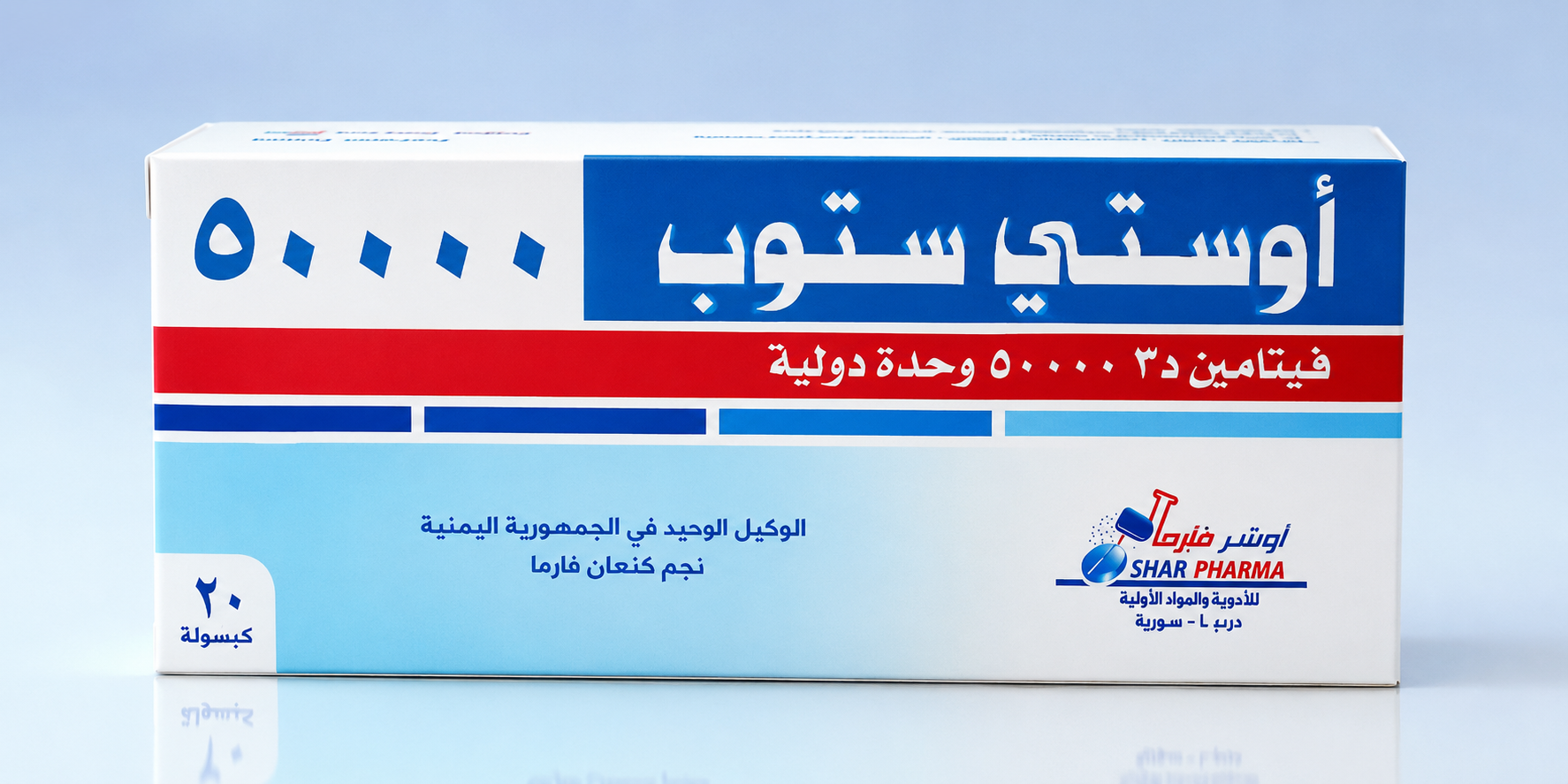
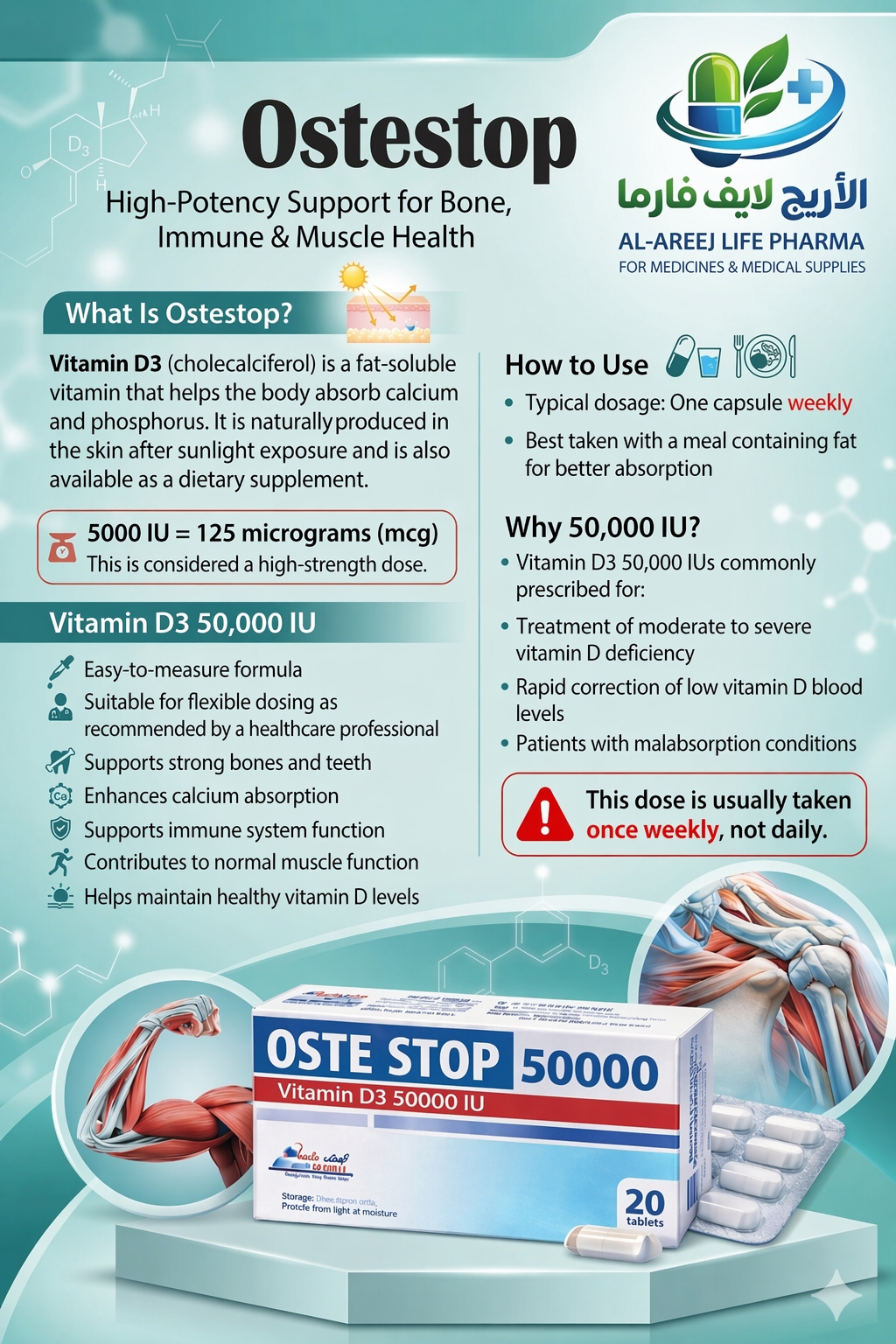

Comprehensive Clinical Guide to Ostestop Vitamin D3 50000 IU
Vitamin D3, or cholecalciferol, is a fat-soluble secosteroid essential for human health, particularly in the maintenance of musculoskeletal integrity. Ostestop Vitamin D3 50000 IU represents a high-potency therapeutic intervention designed for the rapid correction of severe vitamin D deficiency. As an orthopedic-grade supplement, its clinical application is strictly governed by medical guidelines to ensure patient safety and therapeutic efficacy.
This guide provides an exhaustive analysis of Ostestop 50000 IU, intended for healthcare professionals and patients seeking a deep understanding of its pharmacologic profile.
1. Mechanism of Action: The Molecular Pathway
Ostestop (Cholecalciferol) functions as a prohormone. Unlike standard nutritional supplements, the 50000 IU dosage acts as a pharmacological "bolus" dose to restore systemic homeostasis.
The Vitamin D Receptor (VDR) Interaction
Once ingested, cholecalciferol undergoes a two-step hydroxylation process:
1. Hepatic Hydroxylation: Cholecalciferol is converted into 25-hydroxyvitamin D [25(OH)D] (calcifediol) by the enzyme 25-hydroxylase.
2. Renal Hydroxylation: Calcifediol is converted into 1,25-dihydroxyvitamin D [1,25(OH)2D] (calcitriol), the biologically active form, by the enzyme 1-alpha-hydroxylase.
The active metabolite binds to the Vitamin D Receptor (VDR) in the intestines, bones, and kidneys. This binding facilitates:
* Increased Intestinal Absorption: Up-regulation of calcium-binding proteins (calbindin), which enhances active transport of dietary calcium.
* Bone Mineralization: Maintenance of serum calcium and phosphate levels within the normal range to prevent hypocalcemic tetany and ensure proper mineralization of the osteoid matrix.
* Parathyroid Hormone (PTH) Suppression: Negative feedback inhibition on the parathyroid glands to prevent secondary hyperparathyroidism.
2. Pharmacokinetics and Absorption
Understanding the pharmacokinetics is crucial for managing the high-dose nature of Ostestop 50000 IU.
| Parameter | Specification |
|---|---|
| Absorption | Highly dependent on dietary fat; absorption occurs in the small intestine via micellar diffusion. |
| Distribution | Stored primarily in adipose tissue and the liver. |
| Metabolism | Hepatic (CYP27A1) and Renal (CYP27B1). |
| Half-Life | Approximately 15 to 22 days (due to storage in adipose tissue). |
| Excretion | Primarily biliary (fecal), with minimal renal excretion. |
3. Clinical Indications and Therapeutic Use
Ostestop 50000 IU is not intended for daily prophylactic use. It is specifically indicated for:
A. Severe Vitamin D Deficiency
Defined as serum 25(OH)D levels below 20 ng/mL (50 nmol/L). Clinical symptoms may include bone pain, muscle weakness, and fatigue.
B. Osteoporosis Adjunct Therapy
In patients undergoing long-term treatment for osteoporosis (e.g., bisphosphonates), maintaining adequate vitamin D levels is mandatory to ensure the drug’s efficacy in bone remodeling.
C. Osteomalacia and Rickets
Used to facilitate the mineralization of the organic matrix in bones, reversing the softening associated with deficiency.
D. Pre-surgical Optimization
Orthopedic surgeons often prescribe high-dose vitamin D to optimize serum levels prior to elective orthopedic procedures (e.g., total hip or knee arthroplasty) to improve post-operative bone healing and reduce complication rates.
4. Dosage Guidelines and Administration
Standard Loading Protocol
The administration of 50000 IU is typically reserved for a "loading dose" strategy.
* Frequency: Usually once weekly for 8 to 12 weeks, depending on serum 25(OH)D levels.
* Maintenance: Once serum levels are stabilized, patients should transition to a lower, daily maintenance dose (typically 800–2000 IU).
Administration Tips
- Fat-Soluble Absorption: Always instruct patients to take Ostestop with the largest meal of the day containing healthy fats (e.g., avocado, nuts, olive oil, or dairy) to maximize bioavailability.
- Monitoring: Baseline and follow-up serum 25(OH)D levels are mandatory to prevent toxicity.
5. Contraindications and Precautions
High-potency vitamin D therapy is not suitable for everyone. Clinical vigilance is required.
Absolute Contraindications
- Hypercalcemia: Elevated serum calcium levels.
- Hypervitaminosis D: Existing toxicity.
- Nephrolithiasis: Patients with a history of calcium-based kidney stones should be monitored closely.
- Severe Renal Impairment: Patients with compromised kidney function may require specialized active vitamin D analogs (e.g., calcitriol) rather than cholecalciferol.
Drug Interactions
| Interacting Agent | Potential Effect |
|---|---|
| Digitalis/Digoxin | Increased risk of cardiac arrhythmias due to hypercalcemia. |
| Thiazide Diuretics | Increased risk of hypercalcemia due to decreased urinary calcium excretion. |
| Orlistat | Decreased absorption of fat-soluble vitamins. |
| Corticosteroids | May counteract the calcium-absorbing effects of Vitamin D. |
6. Pregnancy and Lactation
- Pregnancy: Vitamin D is essential for fetal skeletal development. However, high-dose therapy (50000 IU) should only be used if the benefit outweighs the risk, as hypercalcemia can be harmful to the fetus.
- Lactation: Cholecalciferol is excreted in breast milk. Mothers taking high-dose supplements should be monitored for potential hypercalcemia in the infant.
7. Overdose Management
Vitamin D toxicity (Hypervitaminosis D) is a serious condition. Symptoms include nausea, vomiting, polyuria, polydipsia, and, in severe cases, cardiac arrhythmias and renal failure.
Management Protocol:
1. Immediate Cessation: Stop all vitamin D intake.
2. Dietary Restriction: Limit calcium intake.
3. Hydration: Aggressive fluid replacement to promote renal calcium excretion.
4. Pharmacotherapy: In severe hypercalcemia, loop diuretics, corticosteroids, or bisphosphonates may be utilized under strict hospital supervision.
8. Frequently Asked Questions (FAQ)
1. Is Ostestop 50000 IU safe for daily use?
No. Ostestop 50000 IU is a high-potency dose intended for weekly or intermittent use. Daily use can lead to toxicity. Always follow your doctor's specific dosing schedule.
2. Can I take this with my calcium supplement?
Yes, but only if your doctor has confirmed your calcium levels are not already high. Vitamin D helps your body absorb calcium, so they are often paired.
3. How long does it take to see results?
While serum levels begin to rise within days, clinical improvements in bone pain or muscle weakness may take several weeks to months.
4. What happens if I miss a dose?
Take the missed dose as soon as you remember. If it is nearly time for your next dose, skip the missed one. Do not take two doses at once.
5. Does Ostestop interact with other medications?
Yes, it can interact with heart medications like digoxin and certain diuretics. Always disclose your full medication list to your physician.
6. Should I get my blood levels checked before starting?
Absolutely. A blood test for 25(OH)D is the only way to determine if you actually require a 50000 IU dose.
7. What are the symptoms of Vitamin D toxicity?
Common symptoms include unexplained nausea, excessive thirst, frequent urination, constipation, and confusion.
8. Is Ostestop suitable for children?
This dosage is generally too high for children unless specifically prescribed by a pediatrician for a diagnosed clinical condition.
9. Does time of day matter for taking Ostestop?
No, but taking it with your largest meal of the day is critical for proper absorption.
10. Can I stop taking it once I feel better?
You should complete the full course of treatment as prescribed by your orthopedic specialist to ensure your levels remain stable. Abruptly stopping may lead to a relapse of deficiency symptoms.
Conclusion
Ostestop Vitamin D3 50000 IU is a powerful therapeutic tool in the orthopedic arsenal. By facilitating efficient calcium absorption and maintaining skeletal health, it plays a pivotal role in the recovery and maintenance of bone integrity. However, its potency necessitates clinical oversight, regular blood monitoring, and strict adherence to dosage protocols. Patients should always consult with their healthcare provider to ensure that this high-dose intervention is appropriate for their specific clinical profile.