
Introduction to Pantodar: A Comprehensive Overview
Pantodar is a therapeutic agent widely utilized in clinical practice for the management of specific gastrointestinal conditions. As a proton pump inhibitor (PPI), it plays a critical role in controlling gastric acid secretion, thereby facilitating the healing of acid-related disorders. In the field of gastroenterology, Pantodar is frequently prescribed for conditions ranging from gastroesophageal reflux disease (GERD) to the prevention of gastric ulcers.
This guide provides a rigorous, evidence-based examination of Pantodar. It is designed for healthcare professionals, medical students, and patients seeking a deep understanding of its pharmacodynamics, clinical application, and safety profiles.
Mechanism of Action: How Pantodar Functions
At the molecular level, Pantodar acts as a potent inhibitor of the hydrogen/potassium adenosine triphosphatase (H+/K+ ATPase) enzyme system, commonly referred to as the "proton pump."
The Cellular Process
- Activation: Pantodar is a pro-drug that requires an acidic environment to become activated. Once ingested, it travels to the parietal cells of the stomach.
- Binding: Within the acidic canaliculi of the parietal cells, the drug is protonated into its active form.
- Inhibition: The active metabolite forms covalent disulfide bonds with the H+/K+ ATPase enzyme. This effectively "locks" the pump in an inactive state.
- Result: Because this enzyme is the final step in the acid secretion process, its inhibition leads to a profound reduction in both basal and stimulated gastric acid output, regardless of the stimulus (e.g., histamine, gastrin, or acetylcholine).
Pharmacokinetics
Understanding how the body processes Pantodar is essential for optimizing dosing regimens.
| Parameter | Clinical Characteristic |
|---|---|
| Bioavailability | Approximately 77% |
| Protein Binding | High (approx. 98%) |
| Metabolism | Primarily hepatic (CYP2C19 enzyme system) |
| Half-life | 1 to 2 hours |
| Excretion | Primarily renal (80%) and fecal (20%) |
Detailed Clinical Indications
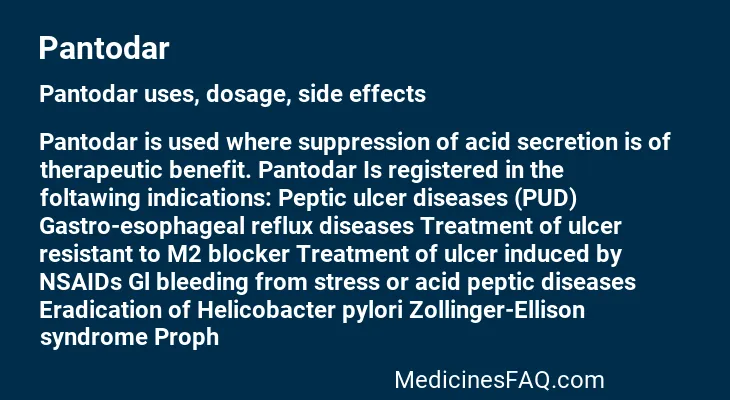
Pantodar is indicated for several specific pathologies where the suppression of gastric acid is clinically necessary.
1. Gastroesophageal Reflux Disease (GERD)
Pantodar is the gold standard for treating erosive esophagitis and managing the symptoms of GERD, including heartburn and acid regurgitation. It facilitates the healing of esophageal mucosa by maintaining an intragastric pH above 4.0.
2. Peptic Ulcer Disease (PUD)
It is used for both the treatment and maintenance of gastric and duodenal ulcers. By reducing acidity, it creates an environment conducive to natural tissue repair.
3. Zollinger-Ellison Syndrome
In cases of hypersecretory conditions like Zollinger-Ellison syndrome, Pantodar is used at higher doses to counteract excessive acid production caused by gastrin-secreting tumors.
4. Prevention of NSAID-Induced Ulcers
Patients on long-term non-steroidal anti-inflammatory drug (NSAID) therapy are at a high risk for gastric mucosal injury. Pantodar is frequently prescribed as a prophylactic measure in this cohort.
Dosage Guidelines
Dosage must be individualized based on the patient's condition and renal/hepatic function.
- Standard GERD: 20mg to 40mg once daily for 4–8 weeks.
- Peptic Ulcer: 40mg once daily for 4 weeks.
- Zollinger-Ellison Syndrome: Starting dose is typically 80mg daily, titrated based on gastric acid output.
- Pediatric Use: Generally not recommended unless specifically indicated by a specialist.
Contraindications and Risks
Contraindications
- Hypersensitivity: Known allergy to the active ingredient or any excipients.
- Concurrent Use: Should not be used with rilpivirine-containing products due to the risk of reduced efficacy of the antiviral.
Adverse Reactions
While generally well-tolerated, potential side effects include:
* Gastrointestinal: Diarrhea, constipation, nausea, and abdominal pain.
* Neurological: Headache and dizziness.
* Long-term Risks: Chronic use of PPIs like Pantodar has been associated with:
* Vitamin B12 deficiency (due to decreased absorption).
* Increased risk of Clostridioides difficile infection.
* Bone fractures (due to impaired calcium absorption).
* Hypomagnesemia.
Drug Interactions
Pantodar interacts with medications that are pH-dependent for absorption.
- Ketoconazole/Itraconazole: Reduced absorption due to increased gastric pH.
- Warfarin: Potential for increased INR and prothrombin time; monitoring is advised.
- Methotrexate: PPIs may increase serum levels of methotrexate, increasing toxicity risk.
- Clopidogrel: Potential reduction in the antiplatelet effect of clopidogrel, though clinical significance is debated.
Pregnancy and Lactation
- Pregnancy: Category B. Animal studies have not shown evidence of impaired fertility or harm to the fetus. However, it should only be used if clearly necessary.
- Lactation: Pantodar is excreted in human milk. A decision must be made whether to discontinue breastfeeding or to discontinue the drug, considering the importance of the drug to the mother.
Overdose Management
There is no specific antidote for Pantodar overdose. In the event of ingestion exceeding the therapeutic dose:
* Supportive Care: Monitor vital signs and provide symptomatic treatment.
* Elimination: Pantodar is not significantly removed by hemodialysis due to high protein binding.
* Clinical Consultation: Contact a poison control center immediately for guidance.
Frequently Asked Questions (FAQ)
1. When is the best time to take Pantodar?
It is most effective when taken 30 to 60 minutes before the first meal of the day. This aligns peak plasma concentration with the peak activation of proton pumps.
2. Can I crush or chew Pantodar tablets?
No. Pantodar tablets are typically enteric-coated to prevent degradation by stomach acid. Crushing them destroys this coating and reduces efficacy.
3. How long does it take for Pantodar to work?
Symptomatic relief is often felt within 24 to 48 hours, but it may take several weeks for complete mucosal healing to occur.
4. Can I take Pantodar with other antacids?
Yes, you can use antacids for immediate, short-term relief while waiting for Pantodar to reach its full therapeutic effect.
5. Why is my doctor monitoring my magnesium levels?
Long-term PPI use can lead to hypomagnesemia. Regular blood tests ensure that your electrolyte levels remain within a safe range.
6. Is Pantodar addictive?
No, Pantodar is not physically addictive. However, stopping it abruptly after long-term use can cause "rebound acid hypersecretion," where symptoms return worse than before.
7. Does Pantodar interact with alcohol?
Alcohol can irritate the stomach lining and worsen GERD symptoms, potentially counteracting the benefits of the medication. It is best to avoid alcohol during treatment.
8. What should I do if I miss a dose?
Take the missed dose as soon as you remember. If it is almost time for your next dose, skip the missed one. Do not take a double dose to make up for a missed one.
9. Can children take Pantodar?
Only under strict supervision by a pediatric specialist for specific, diagnosed conditions. It is not intended for routine use in children.
10. Does Pantodar cause weight gain?
Weight gain is not a documented side effect of Pantodar. If you experience unexpected weight changes, consult your healthcare provider to rule out other underlying health issues.
Conclusion
Pantodar serves as a cornerstone in modern gastroenterology, offering a reliable mechanism for acid suppression. By understanding its pharmacokinetics, indications, and the necessity for cautious, supervised use, patients and clinicians can maximize therapeutic outcomes while minimizing the risks associated with long-term proton pump inhibitor therapy. Always consult with a medical professional before initiating or modifying a regimen with Pantodar.
Disclaimer: This guide is for educational purposes only and does not constitute professional medical advice, diagnosis, or treatment. Always seek the advice of your physician or other qualified health provider with any questions you may have regarding a medical condition.