
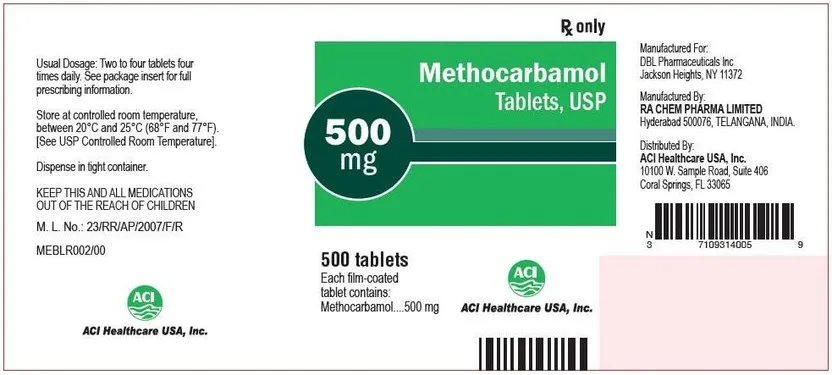


Understanding Methocarbamol: A Comprehensive Clinical Overview
Methocarbamol is a centrally acting skeletal muscle relaxant utilized extensively in orthopedic and physical medicine settings. Unlike neuromuscular blocking agents, Methocarbamol does not directly relax skeletal muscles; rather, it exerts its therapeutic effect through central nervous system (CNS) depression. It is primarily indicated as an adjunct to rest, physical therapy, and other measures for the relief of discomfort associated with acute, painful musculoskeletal conditions.
This guide provides an exhaustive look at the pharmacology, clinical application, and safety profile of Methocarbamol for healthcare professionals and patients seeking detailed medical insights.
Technical Specifications and Mechanism of Action
Pharmacodynamics
The exact mechanism of action of Methocarbamol has not been fully elucidated. However, it is generally accepted that the drug produces its effects through generalized CNS depression. It is not known to have a direct effect on the contractile mechanism of striated muscle, the motor endplate, or the nerve fiber.
Pharmacokinetics
Understanding how the body processes Methocarbamol is essential for optimal dosing:
* Absorption: Rapidly and almost completely absorbed from the gastrointestinal tract following oral administration.
* Onset of Action: Typically occurs within 30 minutes.
* Metabolism: Primarily metabolized in the liver via dealkylation and hydroxylation.
* Excretion: Excreted primarily by the kidneys as metabolites, with a small percentage excreted unchanged in urine.
* Half-life: The plasma elimination half-life is approximately 1 to 2 hours.
| Parameter | Data |
|---|---|
| Bioavailability | High |
| Protein Binding | 46%–50% |
| Elimination Half-life | 1–2 Hours |
| Primary Metabolites | Guaifenesin (inactive) |
Clinical Indications and Usage
Methocarbamol is indicated for the relief of discomfort associated with acute, painful musculoskeletal conditions. It is intended for short-term use (typically 2–3 weeks) in conjunction with physical therapy and rest.
Common Clinical Applications
- Acute Lower Back Pain: Used to manage muscle spasms resulting from strains or sprains.
- Cervical Strain: Relief of tension and spasms in the neck musculature.
- Post-Operative Orthopedic Care: Adjunctive therapy to prevent spasms during the rehabilitation phase.
- Muscle Sprains/Strains: Facilitating mobility by reducing involuntary muscle contractions.
Dosage Guidelines
Dosage must be individualized based on the severity of the condition and the patient's response.
- Adult Oral Dosage: The initial adult dose is typically 1500 mg four times a day. For maintenance, a dosage of 750 mg every 4 hours, 1000 mg every 6 hours, or 1500 mg every 8 hours is often employed.
- Maximum Daily Dose: Generally recommended not to exceed 8 grams per day in clinical practice, though clinical judgment should prevail.
- Geriatric Considerations: Lower doses are recommended for elderly patients to minimize the risk of CNS depression and falls.
Risks, Side Effects, and Contraindications
Common Side Effects
Most side effects are mild and dose-dependent, typically resolving with dosage reduction or discontinuation.
* CNS: Dizziness, drowsiness, lightheadedness, and headache.
* Gastrointestinal: Nausea, metallic taste, and upset stomach.
* Ocular: Blurred vision or nystagmus.
* Dermatological: Mild skin rash or pruritus.
Contraindications
- Hypersensitivity: Known allergy to Methocarbamol or any component of the formulation.
- Renal Impairment (Injectable): The injectable form contains polyethylene glycol 300, which may be contraindicated in patients with known or suspected renal pathology.
Drug Interactions
Methocarbamol may potentiate the effects of other CNS depressants. Patients should be cautioned against the concomitant use of:
* Alcohol: Significant risk of additive CNS depression.
* Benzodiazepines & Opioids: Increased risk of respiratory depression and excessive sedation.
* Antihistamines: Potential for increased drowsiness.
Pregnancy and Lactation
- Pregnancy: Methocarbamol is classified as a Pregnancy Category C drug. It should only be used if the potential benefit justifies the potential risk to the fetus.
- Lactation: It is not known whether Methocarbamol is excreted in human milk. Caution should be exercised when administered to a nursing woman.
Overdose Management
An overdose of Methocarbamol is usually benign but requires clinical observation. Symptoms of overdose include nausea, drowsiness, blurred vision, hypotension, and seizures.
Management Protocol:
1. Supportive Care: Maintain adequate airway, breathing, and circulation.
2. Gastric Decontamination: Consider activated charcoal if the ingestion was recent (within 1-2 hours).
3. Monitoring: Monitor vital signs and mental status.
4. Dialysis: Although Methocarbamol is dialyzable, it is rarely required unless severe underlying comorbidities exist.
Frequently Asked Questions (FAQ)
1. How long does it take for Methocarbamol to start working?
Methocarbamol usually begins to show therapeutic effects within 30 minutes of oral ingestion.
2. Can I consume alcohol while taking Methocarbamol?
No. Alcohol significantly increases the sedative effects of the medication and can lead to dangerous levels of CNS depression.
3. Is Methocarbamol a controlled substance?
In the United States, Methocarbamol is not classified as a controlled substance under the Controlled Substances Act, unlike some other muscle relaxants like carisoprodol.
4. Will Methocarbamol make me fail a drug test?
Methocarbamol does not typically show up on standard urine drug screenings, as it is not an opioid or a benzodiazepine.
5. Can Methocarbamol be used for long-term chronic pain?
It is generally indicated only for short-term use (2–3 weeks). Long-term safety and efficacy for chronic pain have not been established.
6. What should I do if I miss a dose?
Take the missed dose as soon as you remember. If it is nearly time for your next dose, skip the missed one. Do not double the dose to catch up.
7. Can I drive while taking this medication?
Because Methocarbamol can cause drowsiness and dizziness, it is advised to avoid driving or operating heavy machinery until you know how the drug affects you.
8. Does Methocarbamol interact with blood thinners?
There are no significant direct interactions with common anticoagulants like warfarin, but always consult your physician to review your full medication list.
9. Why does my urine look dark after taking Methocarbamol?
Methocarbamol can cause urine to turn a dark brown, black, or green color. This is a harmless side effect and typically resolves after the medication is discontinued.
10. Is it safe for the elderly?
Elderly patients are more susceptible to the side effects of Methocarbamol, such as dizziness and confusion, which increase the risk of falls. A lower starting dose is strongly recommended.
Conclusion
Methocarbamol remains a cornerstone in the management of acute musculoskeletal discomfort. By acting as a central nervous system depressant, it effectively breaks the cycle of pain and muscle spasm, allowing patients to participate more fully in physical therapy and recovery. However, due to its potential for sedation and drug interactions, it must be used judiciously under medical supervision. Always consult with your healthcare provider to ensure this medication is appropriate for your specific clinical history and current health status.
Disclaimer: This guide is for educational purposes only and does not constitute professional medical advice, diagnosis, or treatment. Always seek the advice of a physician or other qualified health provider with any questions you may have regarding a medical condition.