
Comprehensive Introduction to Rifampicin
Rifampicin, also known as rifampin, is a potent, semi-synthetic derivative of rifamycin B. Since its introduction into clinical practice, it has become a cornerstone of antibiotic therapy, particularly in the management of mycobacterial infections. As an orthopedic specialist, I recognize Rifampicin not only for its systemic applications in tuberculosis but also for its critical role in managing prosthetic joint infections (PJIs) and osteomyelitis in combination with other antimicrobial agents.
Belonging to the rifamycin class of antibiotics, this medication is characterized by its broad-spectrum activity, excellent tissue penetration, and the ability to kill dormant bacteria within biofilms. This guide provides an exhaustive clinical overview of Rifampicin, designed for healthcare professionals and patients seeking a deep understanding of its pharmacological profile.
Technical Specifications and Mechanism of Action
Understanding the molecular behavior of Rifampicin is essential for predicting its efficacy in complex clinical scenarios, such as biofilm-associated orthopedic infections.
Molecular Mechanism
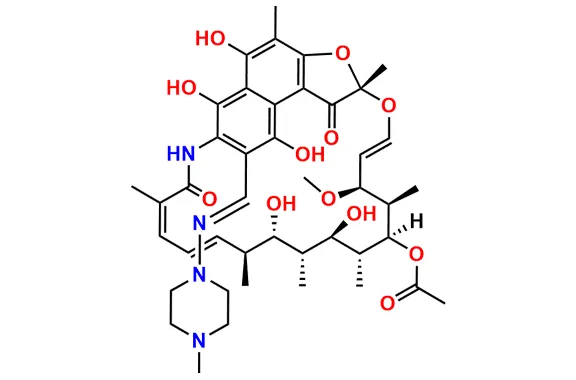
Rifampicin exerts its bactericidal effect by inhibiting DNA-dependent RNA polymerase in bacterial cells. By binding to the beta-subunit of this enzyme, it prevents the initiation of RNA synthesis.
- Target: Bacterial DNA-dependent RNA polymerase.
- Effect: Inhibition of transcription, leading to cell death.
- Selectivity: Rifampicin has a high affinity for bacterial RNA polymerase while showing negligible affinity for mammalian RNA polymerases, which contributes to its relative safety profile.
Pharmacokinetics
The efficacy of Rifampicin is heavily dependent on its unique pharmacokinetic properties:
| Property | Clinical Implication |
|---|---|
| Absorption | Rapidly and well-absorbed from the GI tract. |
| Distribution | Highly lipid-soluble; excellent penetration into tissues, including bone and CSF. |
| Metabolism | Metabolized in the liver to 25-O-desacetylrifampicin (active metabolite). |
| Excretion | Primarily biliary; urine excretion is secondary. |
| Half-life | 3 to 5 hours, but exhibits auto-induction of hepatic enzymes. |
Clinical Indications and Usage
Rifampicin is rarely used as monotherapy due to the rapid development of bacterial resistance. It is almost exclusively prescribed in combination regimens.
1. Mycobacterial Infections
- Tuberculosis (TB): A first-line medication for pulmonary and extrapulmonary TB.
- Leprosy: Used in combination with dapsone and clofazimine.
- Atypical Mycobacteria: Utilized in infections caused by M. kansasii or M. marinum.
2. Orthopedic and Surgical Applications
- Prosthetic Joint Infections (PJI): Rifampicin is the gold standard for treating staphylococcal PJIs. Its ability to penetrate biofilms on orthopedic implants is unmatched by most other antibiotics.
- Osteomyelitis: Used in chronic cases, particularly where Staphylococcus aureus is the causative pathogen.
3. Prophylaxis
- Meningococcal Meningitis: Used for the chemoprophylaxis of close contacts of patients with Neisseria meningitidis.
- Haemophilus influenzae: Prophylaxis in high-risk household settings.
Risks, Side Effects, and Contraindications
While highly effective, Rifampicin carries a specific risk profile that requires diligent monitoring.
Common Side Effects
- Discoloration of bodily fluids: Patients must be warned that urine, sweat, tears, and saliva may turn a harmless orange-red color.
- Gastrointestinal distress: Nausea, vomiting, and abdominal cramps.
- Hepatotoxicity: Elevation of liver enzymes (ALT/AST). Monitoring is required, especially in patients with pre-existing liver disease.
Serious Adverse Events
- Hypersensitivity: Anaphylaxis or "flu-like" syndrome, especially if the drug is taken intermittently rather than daily.
- Hematologic disorders: Thrombocytopenia, hemolytic anemia, and leukopenia.
Contraindications
- Hypersensitivity: Known allergy to rifamycins.
- Concurrent use with certain antivirals: Specifically, protease inhibitors (e.g., ritonavir, saquinavir) due to significant drug-drug interactions.
- Severe Liver Impairment: Requires dose adjustment and extreme caution.
Drug Interactions: The "Inducer" Effect
Rifampicin is a potent inducer of hepatic cytochrome P450 enzymes (specifically CYP3A4, 2C9, and 2C19). This leads to the accelerated metabolism and decreased efficacy of a wide array of medications.
- Oral Contraceptives: Efficacy is significantly reduced; patients should use non-hormonal contraception.
- Warfarin: Anticoagulant effect is diminished; INR monitoring is mandatory.
- Corticosteroids: Metabolism is increased, potentially leading to treatment failure in autoimmune conditions.
- Antiretrovirals: Reduced therapeutic levels, necessitating careful regimen adjustments in HIV-positive patients.
Pregnancy and Lactation
- Pregnancy: Rifampicin crosses the placental barrier. While not definitively teratogenic, it should only be used if the benefit outweighs the risk. Neonatal hemorrhage has been reported; prophylactic Vitamin K is often recommended for the newborn.
- Lactation: Rifampicin is excreted in breast milk. While generally considered compatible, the infant should be monitored for jaundice or adverse effects.
Overdose Management
There is no specific antidote for Rifampicin overdose.
* Initial Action: Gastric lavage or activated charcoal administration if the ingestion is recent.
* Supportive Care: Monitor hepatic and renal function.
* Hemodialysis: Generally ineffective due to high protein binding.
Frequently Asked Questions (FAQ)
1. Why does my urine turn orange while taking Rifampicin?
This is a benign side effect. Rifampicin is a naturally red-orange pigment that is excreted in bodily fluids. It is not harmful, but it can stain soft contact lenses.
2. Can I take Rifampicin with food?
It is recommended to take Rifampicin on an empty stomach (1 hour before or 2 hours after a meal) for optimal absorption.
3. Why is Rifampicin used for joint infections?
Rifampicin has unique "anti-biofilm" properties. It can penetrate the protective slime layer (biofilm) that bacteria form on orthopedic hardware, which most other antibiotics cannot reach.
4. What should I do if I miss a dose?
Take it as soon as you remember. If it is nearly time for your next dose, skip the missed one. Do not double the dose.
5. How long does treatment usually last?
Treatment duration varies wildly based on the infection. TB treatment lasts months, while PJI treatment in orthopedics may last 3 to 6 months depending on surgical intervention.
6. Does Rifampicin interact with birth control pills?
Yes. Rifampicin makes oral contraceptives ineffective. You must use a backup barrier method (like condoms) while on this medication.
7. Is liver monitoring necessary?
Yes, for long-term therapy, baseline and periodic liver function tests (LFTs) are standard practice to detect drug-induced hepatitis.
8. Can Rifampicin cause joint pain?
While rare, "flu-like" syndrome associated with Rifampicin can include muscle or joint aches. Consult your physician if this occurs.
9. Why can't I take Rifampicin alone for staph infections?
Bacteria develop resistance to Rifampicin extremely quickly. It must be combined with another antibiotic (like fusidic acid or a fluoroquinolone) to prevent resistance.
10. Will Rifampicin affect my other medications?
Almost certainly. Because it induces liver enzymes, it speeds up the breakdown of many drugs. Always provide your doctor with a complete list of your current medications.
Disclaimer: This guide is for educational purposes only and does not constitute medical advice. Always consult with a licensed physician or infectious disease specialist before starting or modifying antibiotic therapy.