

Comprehensive Guide to Cyclobenzaprine: Clinical Insights and Safety
Cyclobenzaprine is a skeletal muscle relaxant frequently prescribed in orthopedic and primary care settings to manage acute musculoskeletal pain. By acting on the central nervous system (CNS), it assists in relieving muscle spasms associated with acute, painful musculoskeletal conditions. This guide provides an exhaustive clinical overview of the drug’s pharmacological profile, indications, and safety considerations.
1. Mechanism of Action: How Cyclobenzaprine Works
Unlike peripheral muscle relaxants that act directly on the muscle fiber, Cyclobenzaprine is a centrally acting agent. Its chemical structure is closely related to tricyclic antidepressants (TCAs), specifically amitriptyline.
Pharmacological Pathways
- Brainstem Modulation: The primary mechanism involves the reduction of tonic somatic motor activity. It influences the motor neurons in the brainstem, specifically the gamma (γ) and alpha (α) motor systems.
- Inhibition of Descending Pathways: It acts by reducing the hyperactivity of the motor neurons, which effectively decreases muscle tone and spasms.
- Serotonergic and Noradrenergic Effects: Due to its structural similarity to TCAs, it exhibits significant anticholinergic, sedative, and serotonergic properties, which contribute to its overall therapeutic effect.
2. Pharmacokinetics and Metabolism
Understanding the pharmacokinetic profile is essential for determining dosing intervals and predicting drug-drug interactions.
| Feature | Description |
|---|---|
| Absorption | Well-absorbed following oral administration. |
| Protein Binding | Highly bound to plasma proteins (approx. 93%). |
| Metabolism | Extensive hepatic metabolism via cytochrome P450 enzymes (CYP3A4, CYP1A2, and CYP2D6). |
| Half-life | Variable, typically ranging from 8 to 37 hours (average 18 hours). |
| Excretion | Primarily renal as glucuronide conjugates; minor biliary excretion. |
3. Clinical Indications and Usage
Cyclobenzaprine is indicated for the short-term relief of muscle spasms associated with acute, painful musculoskeletal conditions. It should be used in conjunction with rest, physical therapy, and other measures to provide symptomatic relief.
Typical Indications
- Acute Lumbar Strain: Commonly used for lower back pain where muscle guarding is present.
- Cervical Spasms: Used to alleviate tension and spasms in the neck and upper trapezius.
- Post-Operative Recovery: Occasionally used to manage muscle guarding following orthopedic surgical procedures.
Dosage Guidelines
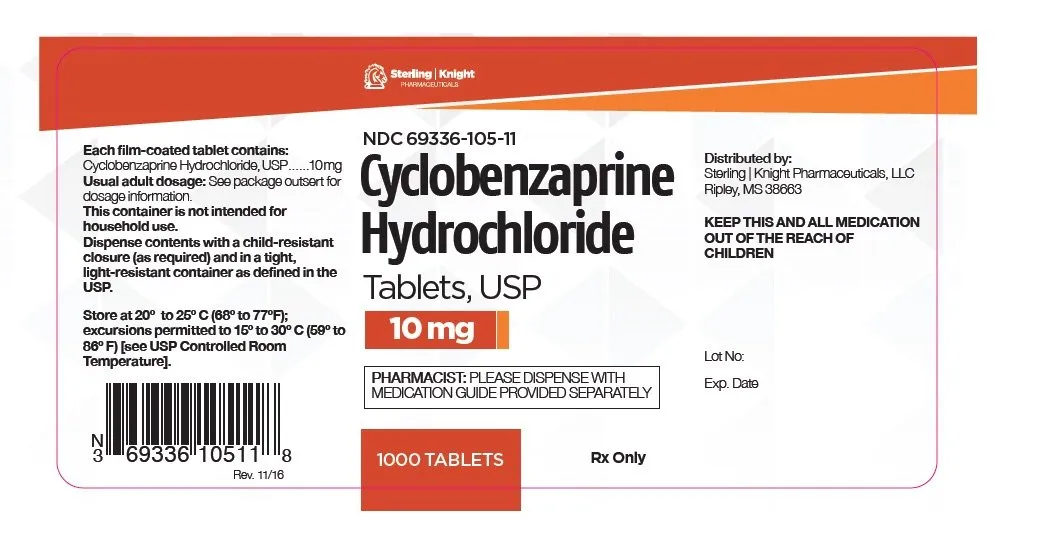
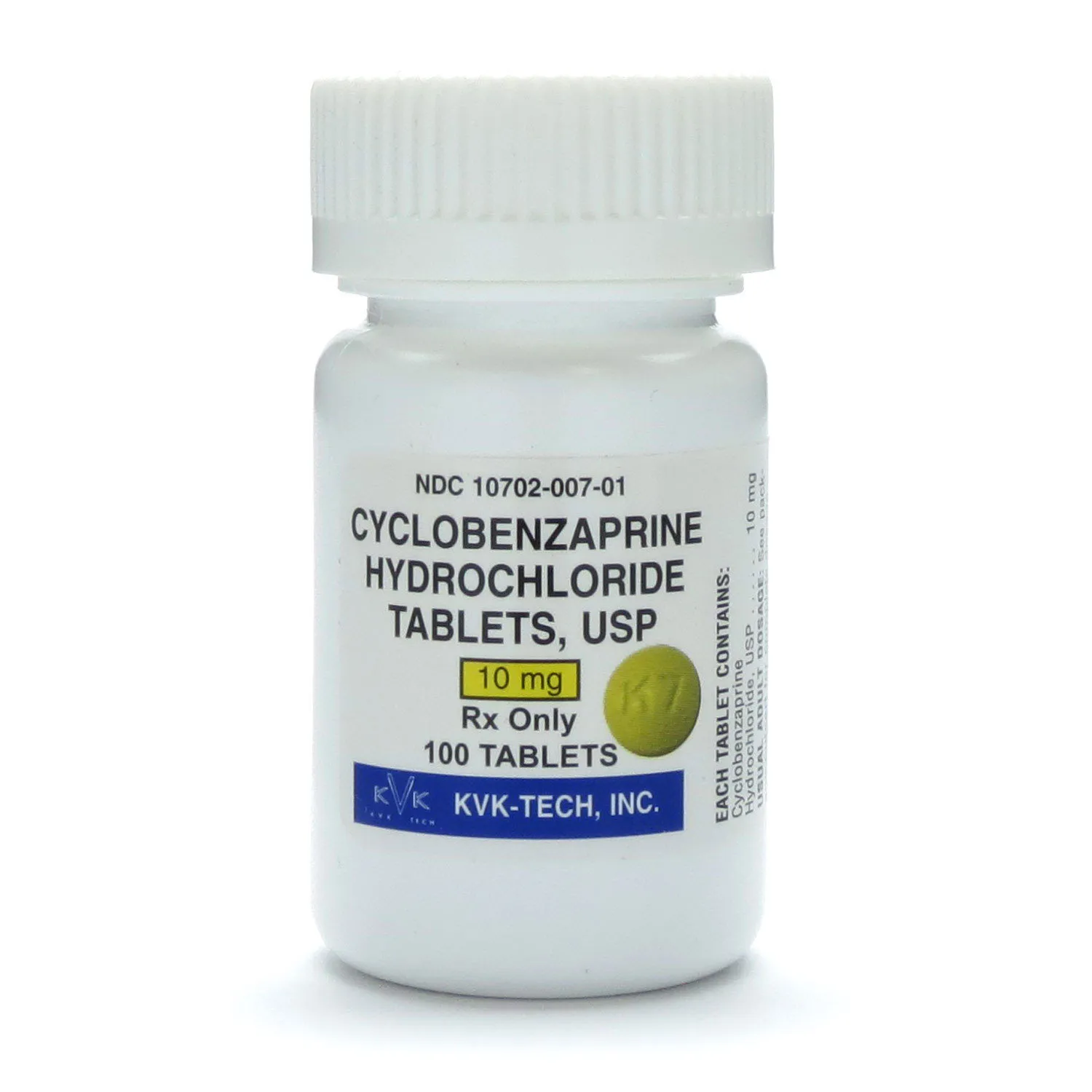
The standard adult dosage is typically 5 mg or 10 mg, taken three times daily. Due to its sedative properties, it is often recommended to start at the lowest effective dose.
- Standard Dose: 5 mg to 10 mg orally three times daily.
- Maximum Dose: Generally not to exceed 30 mg per day.
- Duration: Recommended for short-term use only, typically 2 to 3 weeks.
4. Risks, Side Effects, and Contraindications
While effective, Cyclobenzaprine carries a profile of risks that necessitates careful patient screening.
Common Side Effects
- CNS Depression: Drowsiness, dizziness, and fatigue.
- Anticholinergic Effects: Dry mouth, blurred vision, urinary retention, and constipation.
- Gastrointestinal: Nausea or dyspepsia.
Contraindications
- MAO Inhibitors: Do not use within 14 days of MAOI therapy due to the risk of serotonin syndrome.
- Cardiac Conditions: Contraindicated in patients with hyperthyroidism, heart block, conduction disturbances, or recent myocardial infarction.
- Glaucoma: Due to anticholinergic activity, it may increase intraocular pressure.
Pregnancy and Lactation
- Pregnancy: Classified as FDA Pregnancy Category B. Use only if clearly needed and the benefit outweighs the risk.
- Lactation: It is not known if Cyclobenzaprine is excreted in human milk. Caution should be exercised when administered to nursing mothers.
5. Drug Interactions
Cyclobenzaprine interacts with various substances, which can lead to adverse clinical outcomes:
- CNS Depressants: Alcohol, opioids, and benzodiazepines can potentiate the sedative effects of Cyclobenzaprine, leading to dangerous levels of impairment.
- Serotonergic Agents: SSRIs, SNRIs, and TCAs increase the risk of Serotonin Syndrome.
- Anticholinergic Agents: Concurrent use with other anticholinergics (e.g., antihistamines, atropine) increases the risk of urinary retention and cognitive impairment.
6. Overdose Management
An overdose of Cyclobenzaprine can be life-threatening. Symptoms mirror those of tricyclic antidepressant toxicity.
Signs of Overdose
- Tachycardia and arrhythmias.
- Severe hypotension.
- Confusion, hallucinations, or seizures.
- Coma.
Management Protocol
- Immediate Medical Attention: Emergency department admission is mandatory.
- Gastric Decontamination: Activated charcoal if the ingestion was recent.
- Cardiac Monitoring: ECG monitoring is critical for identifying QRS prolongation.
- Supportive Care: IV fluids for hypotension and benzodiazepines for seizure control.
7. Frequently Asked Questions (FAQ)
1. Is Cyclobenzaprine considered a controlled substance?
No, Cyclobenzaprine is not a controlled substance in the United States. However, it should only be used under the supervision of a licensed healthcare provider.
2. Can I consume alcohol while taking this medication?
It is strongly advised to avoid alcohol. Alcohol intensifies the sedative effects of the drug, increasing the risk of accidents and respiratory depression.
3. How long does it take for Cyclobenzaprine to start working?
Most patients feel the onset of effects within 60 minutes of oral administration.
4. Is it safe for long-term use?
No. Its efficacy for chronic pain has not been established, and long-term use increases the risk of side effects and dependence. It is intended for short-term (2–3 weeks) use.
5. Why does it cause dry mouth?
Cyclobenzaprine has anticholinergic properties, which inhibit the production of saliva. This is a common and typically benign side effect.
6. Can elderly patients take Cyclobenzaprine?
Use in the elderly is generally discouraged (Beers Criteria) due to the high risk of confusion, sedation, and falls.
7. Does it interact with muscle relaxants like Baclofen?
Combining multiple muscle relaxants can lead to profound sedation and should be avoided unless strictly monitored by a specialist.
8. What should I do if I miss a dose?
Take the dose as soon as you remember. If it is nearly time for your next dose, skip the missed dose. Do not double the dose.
9. Will it show up on a drug test?
Cyclobenzaprine is not typically screened for in standard 5-panel or 10-panel drug tests.
10. Can I drive while taking this medication?
Because Cyclobenzaprine causes drowsiness and impairs motor coordination, you should avoid driving or operating heavy machinery until you know how the medication affects you.
Conclusion
Cyclobenzaprine remains a cornerstone in the management of acute musculoskeletal discomfort. By understanding its pharmacological mechanisms, respecting its limitations, and being vigilant about drug interactions, clinicians can effectively utilize this medication to improve patient quality of life. Always prioritize non-pharmacological interventions such as physical therapy and ergonomic adjustments alongside pharmacological support for the best long-term outcomes.
Disclaimer: This guide is for educational purposes only and does not constitute medical advice. Always consult with a qualified healthcare provider regarding medication and treatment plans.