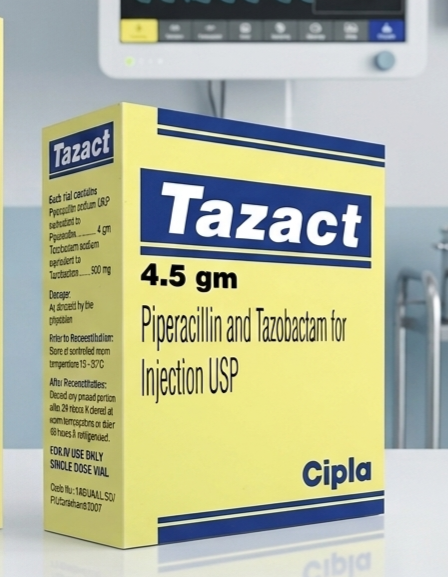

Comprehensive Overview of Tazact 4.5 (Piperacillin and Tazobactam)
Tazact 4.5 is a potent, broad-spectrum antibiotic combination medication used in clinical settings to treat severe bacterial infections. It consists of two active ingredients: Piperacillin, a semi-synthetic penicillin antibiotic, and Tazobactam, a beta-lactamase inhibitor. By combining these two, Tazact 4.5 overcomes bacterial resistance mechanisms that would otherwise render piperacillin ineffective.
In the orthopedic and surgical landscape, Tazact 4.5 is frequently utilized for the prophylaxis and treatment of deep-seated soft tissue infections, osteomyelitis, and post-operative complications where multidrug-resistant organisms are suspected.
Mechanism of Action: The Synergistic Effect
The efficacy of Tazact 4.5 lies in the synergy between its two components. Understanding this mechanism is vital for any healthcare professional managing complex infections.
Piperacillin: The Bactericidal Agent
Piperacillin is an extended-spectrum penicillin that works by inhibiting the synthesis of bacterial cell walls. It binds to penicillin-binding proteins (PBPs) within the bacterial cell wall, preventing the final transpeptidation step of peptidoglycan synthesis. This results in cell lysis and death.
Tazobactam: The Beta-Lactamase Inhibitor
Many bacteria develop resistance by producing beta-lactamase enzymes, which hydrolyze the beta-lactam ring of antibiotics, effectively neutralizing them. Tazobactam acts as a "suicide inhibitor." It binds irreversibly to the active site of these beta-lactamase enzymes, protecting the piperacillin molecule from degradation and expanding the spectrum of activity to include beta-lactamase-producing strains.
Pharmacokinetics and Pharmacodynamics
The pharmacokinetic profile of Tazact 4.5 is critical for determining dosing intervals, especially in patients with renal impairment.
| Parameter | Description |
|---|---|
| Route of Administration | Intravenous (IV) infusion |
| Protein Binding | Piperacillin (30%), Tazobactam (30%) |
| Metabolism | Piperacillin (minor), Tazobactam (low) |
| Excretion | Primarily renal (glomerular filtration and tubular secretion) |
| Half-life | Approximately 0.7 to 1.2 hours |
Detailed Clinical Indications
Tazact 4.5 is indicated for the treatment of moderate to severe infections caused by susceptible organisms. Its broad-spectrum coverage makes it a first-line choice for empirical therapy in hospital-acquired conditions.
Primary Indications
- Intra-abdominal Infections: Appendicitis (complicated by rupture or abscess) and peritonitis.
- Skin and Skin Structure Infections: Including severe diabetic foot ulcers, cellulitis, and post-surgical wound infections common in orthopedics.
- Respiratory Tract Infections: Community-acquired and hospital-acquired pneumonia.
- Gynecological Infections: Post-partum endometritis or pelvic inflammatory disease.
- Bone and Joint Infections: Used in cases of osteomyelitis or septic arthritis where polymicrobial infection is suspected.
Dosage Guidelines
The standard adult dose for Tazact 4.5 (4g Piperacillin / 0.5g Tazobactam) is typically administered every 6 to 8 hours via slow intravenous infusion (usually over 30 minutes).
Dosage Adjustment for Renal Impairment
Because the drug is renally excreted, dosage adjustments are mandatory for patients with a Creatinine Clearance (CrCl) of less than 40 mL/min.
| Creatinine Clearance | Recommended Dosage |
|---|---|
| > 40 mL/min | No adjustment needed |
| 20–40 mL/min | 2.25g every 6 hours |
| < 20 mL/min | 2.25g every 8 hours |
Note: For patients undergoing hemodialysis, an additional dose should be administered following each dialysis session.
Risks, Side Effects, and Contraindications
While highly effective, Tazact 4.5 carries risks that require diligent monitoring.
Common Side Effects
- Gastrointestinal: Diarrhea, nausea, and vomiting.
- Dermatological: Rash or localized pruritus.
- Neurological: Headache or insomnia.
- Injection Site: Phlebitis or thrombophlebitis.
Serious Adverse Reactions
- Anaphylaxis: Immediate hypersensitivity reactions, including bronchospasm and angioedema.
- Clostridioides difficile-associated diarrhea (CDAD): Can range from mild diarrhea to fatal colitis.
- Hematological: Leukopenia, neutropenia, or thrombocytopenia (especially with prolonged therapy).
Contraindications
- Patients with a known history of severe hypersensitivity to any penicillin, cephalosporin, or beta-lactamase inhibitor.
- Patients experiencing acute anaphylactic reactions to beta-lactams.
Pregnancy and Lactation
Tazact 4.5 should only be used during pregnancy if the potential benefit justifies the potential risk to the fetus. Piperacillin and tazobactam are excreted in low concentrations in breast milk; therefore, caution should be exercised when administering to nursing mothers.
Drug Interactions
- Probenecid: Prolongs the half-life of piperacillin by inhibiting renal tubular secretion.
- Aminoglycosides: Potential for inactivation if mixed in the same IV line; administer separately.
- Warfarin/Anticoagulants: May increase bleeding risk; monitor coagulation parameters (INR/PT).
- Methotrexate: May increase serum levels of methotrexate, leading to potential toxicity.
Overdose Management
In the event of an overdose, there is no specific antidote. Treatment should be supportive and symptomatic. Hemodialysis may be utilized to aid in the removal of the drug from the bloodstream in patients with renal failure.
Massive FAQ: Frequently Asked Questions
1. Is Tazact 4.5 effective against MRSA?
No. Tazact 4.5 is not effective against Methicillin-Resistant Staphylococcus aureus (MRSA). Alternative agents like Vancomycin or Linezolid are required.
2. How should Tazact 4.5 be stored?
Vials should be stored at room temperature (20°C to 25°C). Once reconstituted, the solution should be used immediately or refrigerated for no longer than 24 hours.
3. Can Tazact 4.5 be given intramuscularly?
No. Tazact 4.5 is formulated exclusively for intravenous infusion.
4. What happens if I miss a dose?
If a dose is missed, it should be administered as soon as possible. However, if it is close to the next scheduled dose, skip the missed dose and resume the regular schedule. Do not double the dose.
5. Why is the infusion time important?
Administering the drug over 30 minutes helps prevent vein irritation and ensures stable serum concentrations to combat the infection effectively.
6. Does Tazact 4.5 affect birth control?
Like many antibiotics, there is a theoretical risk that it may reduce the efficacy of oral contraceptives. Patients should be advised to use a backup barrier method during treatment.
7. Should I monitor my kidney function while on Tazact?
Yes, especially in elderly patients or those with pre-existing renal conditions, regular monitoring of creatinine levels is advised.
8. Can I take Tazact 4.5 if I am allergic to Penicillin?
No. If you have a documented history of penicillin allergy, the risk of cross-reactivity is significant. Inform your physician immediately.
9. How long is the typical course of treatment?
The duration depends on the severity and site of the infection, usually ranging from 7 to 14 days.
10. Does Tazact 4.5 cause liver damage?
While rare, transient elevations in liver enzymes (AST, ALT) have been reported. These typically resolve upon cessation of the medication.
Clinical Conclusion
Tazact 4.5 remains a cornerstone of modern antibiotic therapy. Its ability to combat resistant bacteria makes it an indispensable tool in the surgical and orthopedic arsenal. However, because of the risk of developing resistance, it must be used judiciously, strictly following clinical guidelines and antimicrobial stewardship protocols to ensure continued efficacy for future generations.
Disclaimer: This guide is for educational purposes only and does not constitute medical advice. Always consult with a licensed healthcare provider or pharmacist before initiating or modifying any medication regimen.