
Comprehensive Guide to Vicodin: Mechanism, Clinical Application, and Safety
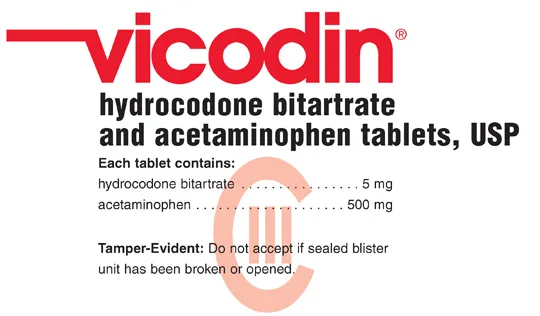
Vicodin is a pharmaceutical combination medication that has historically served as a cornerstone in the management of moderate to moderately severe pain. It is a fixed-dose combination product containing two active ingredients: hydrocodone bitartrate (a semi-synthetic opioid analgesic) and acetaminophen (a non-opioid analgesic and antipyretic).
Due to its potent analgesic properties, Vicodin is classified as a Schedule II controlled substance under the Controlled Substances Act. This guide provides an exhaustive clinical overview of its pharmacological profile, indications, and stringent safety protocols.
1. Mechanism of Action: How Vicodin Works
The efficacy of Vicodin stems from the synergistic effects of its two distinct components, which target pain through different pathways in the central nervous system (CNS).
Hydrocodone Bitartrate
Hydrocodone is an opioid agonist with relative selectivity for the mu-opioid receptor. Upon binding to these receptors in the brain and spinal cord, it mimics the action of endogenous endorphins. This binding inhibits the release of neurotransmitters involved in pain signaling, effectively altering the perception of and emotional response to pain.
Acetaminophen
While the exact mechanism of acetaminophen is not fully elucidated, it is believed to elevate the pain threshold by inhibiting prostaglandin synthesis in the central nervous system. Unlike NSAIDs, acetaminophen has minimal anti-inflammatory properties, making it an ideal partner for opioids to reduce the total dose of the opioid required for analgesia.
2. Pharmacokinetics and Technical Specifications
Understanding how the body processes these substances is critical for dosing and safety.
| Feature | Hydrocodone | Acetaminophen |
|---|---|---|
| Metabolism | Hepatic (CYP2D6) | Hepatic (Glucuronidation/Sulfation) |
| Half-life | ~3.8 hours | ~2-3 hours |
| Excretion | Renal | Renal |
| Onset | 10–30 minutes | 10–30 minutes |
| Duration | 4–6 hours | 4–6 hours |
3. Clinical Indications and Usage
Vicodin is indicated for the management of pain severe enough to require an opioid analgesic and for which alternative treatment options (such as non-opioid analgesics) are inadequate.
Common Clinical Applications
- Post-Operative Recovery: Managing acute pain following orthopedic surgeries, such as joint arthroplasty or fracture fixation.
- Musculoskeletal Injury: Short-term relief for severe sprains, strains, or trauma.
- Chronic Pain Management: Reserved for cases where non-pharmacological treatments have failed, and only under strict physician supervision.
Dosage Guidelines
Dosage must be individualized based on the severity of the pain, the patient’s response, and the patient’s prior experience with opioid analgesics.
- Standard Adult Dose: Typically 1 to 2 tablets every 4 to 6 hours as needed for pain.
- Maximum Daily Dose: The total daily dose of acetaminophen must not exceed 4,000 mg to prevent acute liver failure.
- Pediatric Use: Not generally recommended. Safety and efficacy in children have not been established.
4. Risks, Side Effects, and Contraindications
Common Side Effects
- Gastrointestinal: Nausea, vomiting, and severe constipation.
- Neurological: Drowsiness, dizziness, lightheadedness, and sedation.
- Respiratory: Potential for respiratory depression, particularly in opioid-naive patients.
Contraindications
Vicodin is contraindicated in patients with the following conditions:
1. Hypersensitivity: Known allergy to hydrocodone or acetaminophen.
2. Respiratory Depression: Patients with significant bronchial asthma or hypercapnia.
3. Gastrointestinal Obstruction: Known or suspected paralytic ileus.
4. Severe Hepatic Impairment: Due to the risk of acetaminophen-induced hepatotoxicity.
Drug Interactions
- CNS Depressants: Concomitant use with alcohol, benzodiazepines, or other opioids can lead to profound sedation, respiratory depression, coma, and death.
- MAO Inhibitors: Can cause severe adverse reactions when taken within 14 days of opioid administration.
- CYP2D6 Inhibitors: May reduce the efficacy of hydrocodone by preventing its conversion to the more potent metabolite, hydromorphone.
5. Pregnancy, Lactation, and Special Populations
- Pregnancy: Chronic use of opioids during pregnancy may result in neonatal opioid withdrawal syndrome (NOWS). Use only if the potential benefit justifies the potential risk to the fetus.
- Lactation: Hydrocodone and acetaminophen are excreted in breast milk. Caution is advised, and monitoring of the infant for sedation or respiratory depression is required.
- Geriatric Patients: Increased sensitivity to the respiratory and CNS-depressant effects of opioids necessitates lower starting doses and closer monitoring.
6. Overdose Management
An overdose of Vicodin is a medical emergency. Clinical presentation may include "the opioid triad": pinpoint pupils, depressed respiration, and unconsciousness, alongside symptoms of liver toxicity from the acetaminophen component.
- Opioid Overdose Treatment: Administer Naloxone (Narcan) as an opioid antagonist to reverse respiratory depression.
- Acetaminophen Overdose Treatment: Administer N-acetylcysteine (NAC) as the specific antidote for liver toxicity.
- Supportive Care: Maintain airway patency, provide assisted ventilation, and monitor hemodynamic stability.
7. Frequently Asked Questions (FAQ)
1. Is Vicodin a narcotic?
Yes, Vicodin contains hydrocodone, which is a semi-synthetic opioid narcotic.
2. How long does Vicodin stay in your system?
While the analgesic effects last 4–6 hours, the substances can be detected in urine for 2–4 days depending on individual metabolism and hydration levels.
3. Can I drink alcohol while taking Vicodin?
No. Alcohol significantly increases the risk of fatal respiratory depression and severe liver damage due to the acetaminophen content.
4. What should I do if I miss a dose?
Take the dose as soon as you remember, unless it is near the time for your next scheduled dose. Never double the dose to make up for a missed one.
5. Why is there a limit on acetaminophen?
Acetaminophen is metabolized by the liver. Consuming more than 4,000 mg in a 24-hour period can lead to toxic metabolite accumulation, causing irreversible liver failure.
6. Does Vicodin cause constipation?
Yes, constipation is the most common chronic side effect of opioid use. Patients are often advised to use stool softeners and increase fluid intake.
7. Can Vicodin be used for fever?
While acetaminophen reduces fever, Vicodin is not indicated for this use. Safer, non-opioid medications should be used for fever.
8. Is Vicodin addictive?
Yes, because it contains an opioid, Vicodin carries a high potential for abuse, physical dependence, and psychological addiction.
9. What is "opioid-naive"?
An opioid-naive patient is someone who has not taken opioids regularly and therefore has no tolerance to their sedative and respiratory-depressant effects.
10. How should I store Vicodin?
Store at room temperature away from moisture and heat. Most importantly, keep it in a secure, locked location to prevent accidental ingestion by children or diversion by others.
Disclaimer: This guide is for educational purposes only and does not constitute medical advice. Always consult with a licensed healthcare provider regarding medication use, dosage, or potential side effects.