
Comprehensive Overview of Xarelto (Rivaroxaban)
Xarelto, generically known as Rivaroxaban, is a potent, oral anticoagulant that has revolutionized the management of thromboembolic disorders. As a direct factor Xa inhibitor, it has largely replaced traditional vitamin K antagonists (like Warfarin) in many clinical settings due to its predictable pharmacokinetics and lack of requirement for routine laboratory monitoring.
In the orthopedic and cardiovascular fields, Xarelto is a cornerstone medication for the prevention of venous thromboembolism (VTE) following major joint replacement surgery and for the reduction of stroke risk in patients with non-valvular atrial fibrillation.
Mechanism of Action and Pharmacokinetics
Mechanism of Action
Rivaroxaban is a highly selective, direct inhibitor of factor Xa. Factor Xa is the rate-limiting enzyme in the coagulation cascade. By inhibiting factor Xa, Rivaroxaban interrupts the intrinsic and extrinsic pathways of the blood coagulation cascade, effectively preventing thrombin formation and thrombus development.
Unlike heparin, which requires antithrombin III as a cofactor, Rivaroxaban inhibits both free factor Xa and factor Xa bound within the prothrombinase complex.
Pharmacokinetics
- Absorption: Rapidly absorbed with high oral bioavailability (80-100% for 10 mg doses). Food intake increases the absorption of the 20 mg dose.
- Distribution: Highly protein-bound, primarily to serum albumin (approximately 92-95%).
- Metabolism: Primarily metabolized in the liver via cytochrome P450 enzymes (CYP3A4/5 and CYP2J2) and through non-CYP mediated hydrolysis.
- Elimination: Excreted in both urine (active drug and metabolites) and feces. The terminal half-life is approximately 5 to 9 hours in healthy young adults and 11 to 13 hours in the elderly.
Clinical Indications and Usage
Xarelto is indicated for a wide range of thromboembolic conditions. Below is a summary of primary clinical applications:
| Indication | Purpose |
|---|---|
| Non-valvular Atrial Fibrillation | Reduce risk of stroke and systemic embolism |
| Deep Vein Thrombosis (DVT) | Treatment and reduction in risk of recurrence |
| Pulmonary Embolism (PE) | Treatment and reduction in risk of recurrence |
| Post-Orthopedic Surgery | Prophylaxis of DVT following hip or knee replacement |
| Coronary Artery Disease (CAD) | Reduction of major cardiovascular events (in combination with aspirin) |
Dosage Guidelines
Dosage must be strictly individualized based on the patient's renal function (CrCl) and the specific indication.
- Atrial Fibrillation: Typically 20 mg once daily with the evening meal.
- DVT/PE Treatment: 15 mg twice daily for the first 21 days, followed by 20 mg once daily.
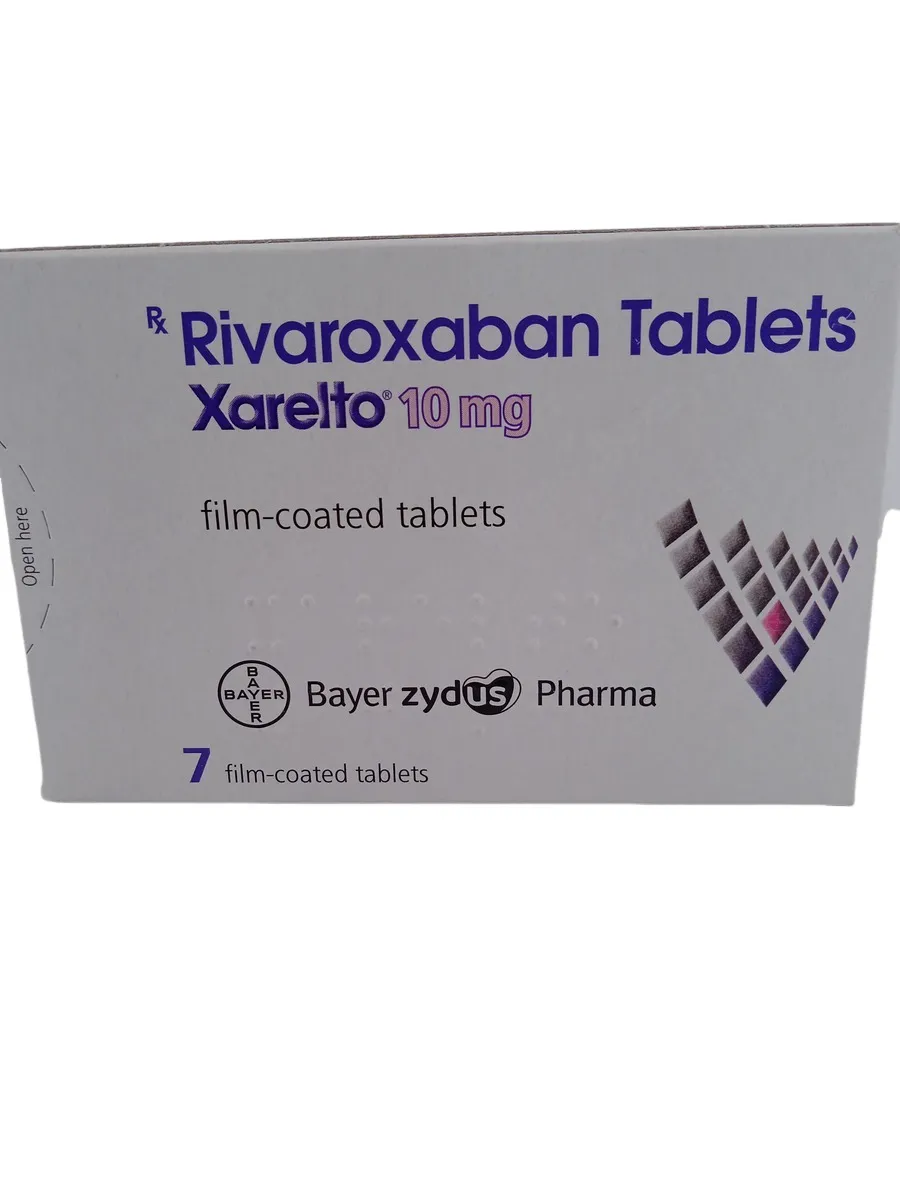
- Post-Orthopedic Prophylaxis: 10 mg once daily. Duration is typically 12 days for knee replacement and 35 days for hip replacement.
Contraindications and Safety Warnings
Absolute Contraindications
- Active Pathological Bleeding: Patients with clinically significant active bleeding.
- Hypersensitivity: Known serious allergic reactions to Rivaroxaban or any component of the formulation.
Black Box Warnings
- Premature Discontinuation: Discontinuing Xarelto increases the risk of thrombotic events. If discontinuation is necessary, consider alternative anticoagulation therapy.
- Spinal/Epidural Hematoma: Patients undergoing neuraxial anesthesia or spinal puncture are at risk of developing an epidural or spinal hematoma, which can lead to long-term or permanent paralysis.
Pregnancy and Lactation
- Pregnancy: Rivaroxaban is classified as Pregnancy Category C. There are no adequate studies in pregnant women. It should only be used if the potential benefit justifies the potential risk to the fetus.
- Lactation: It is unknown if Rivaroxaban is excreted in human milk. Breastfeeding is generally not recommended during therapy.
Drug Interactions
Xarelto is a substrate of CYP3A4 and P-glycoprotein (P-gp). Clinicians must be vigilant regarding:
* Strong Dual Inhibitors: (e.g., Ketoconazole, Ritonavir) significantly increase plasma concentrations of Rivaroxaban and should be avoided.
* Strong Dual Inducers: (e.g., Rifampin, Phenytoin, St. John’s Wort) may significantly decrease plasma levels, reducing efficacy.
* NSAIDs/Antiplatelets: Concomitant use increases the risk of major bleeding events.
Overdose Management
There is no specific antidote for Rivaroxaban for general use, although Andexanet alfa (Andexxa) is FDA-approved as a reversal agent for life-threatening or uncontrolled bleeding.
In the event of an overdose:
1. Activated Charcoal: May be administered to reduce absorption if the ingestion was recent.
2. Supportive Care: Monitor hemodynamic status and coagulation parameters.
3. Dialysis: Rivaroxaban is highly protein-bound and is not dialyzable.
Frequently Asked Questions (FAQ)
1. Does Xarelto require regular blood tests like Warfarin?
No. Unlike Warfarin, Xarelto does not require routine INR (International Normalized Ratio) monitoring because it has a predictable dose-response relationship.
2. Can I take Xarelto if I have kidney disease?
Dosage adjustments are required for patients with renal impairment. Patients with severe renal impairment (CrCl <15 mL/min) should generally avoid Xarelto.
3. What should I do if I miss a dose?
If you are on the 15 mg twice-daily regimen, take the missed dose immediately to ensure you get 30 mg per day. If you are on the 20 mg once-daily regimen, take the missed dose as soon as you remember on the same day. Do not take two doses at once.
4. Is Xarelto safe for patients with mechanical heart valves?
No. Xarelto is contraindicated in patients with mechanical heart valves due to an increased risk of valve thrombosis.
5. Does Xarelto interact with herbal supplements?
Yes. Supplements such as St. John’s Wort can decrease the effectiveness of Xarelto. Always consult your physician before starting any herbal regimen.
6. Can Xarelto cause hair loss?
While not a common side effect, some patients report thinning hair. If this occurs, consult your healthcare provider to rule out other causes.
7. How long does Xarelto stay in my system?
Generally, the effect of Xarelto wears off within 24 to 48 hours for patients with normal kidney function. However, this varies based on age and health status.
8. Can I drink alcohol while on Xarelto?
Moderate alcohol consumption is typically acceptable, but heavy drinking increases the risk of bleeding and should be avoided.
9. Will Xarelto affect my surgery?
Yes. You must inform your surgeon that you are taking Xarelto. It is usually discontinued 24 to 48 hours before elective surgery to minimize bleeding risk.
10. Is there a generic version of Xarelto?
Yes, generic versions of Rivaroxaban are now available in many markets, offering a more cost-effective alternative to the brand-name medication.
Medical Disclaimer: This guide is for educational purposes only and does not constitute medical advice, diagnosis, or treatment. Always seek the advice of your physician or qualified health provider with any questions regarding a medical condition or medication.