Clinical Assessment & Protocol
Typical Presentation (HPI)
EN: Patient often asymptomatic but discovered during routine exam. AR: المريض غالباً لا يعاني من أعراض ولكن يتم اكتشافها أثناء الفحص الروتيني.
General Examination
EN: Unremarkable or not routinely indicated. AR: طبيعي أو غير مطلوب روتينياً.
Treatment Protocol
EN: Address underlying systemic cause. AR: معالجة السبب الجهازي الكامن.
Patient Education
EN: AR:
Systemic & Specialized Examinations
EN: S1, S2 present. No murmurs. AR: صوتا القلب الأول والثاني طبيعيان. لا توجد نفخات.
EN: Lungs clear to auscultation. AR: الرئتان صافيتان عند التسمع.
EN: Abdomen soft, non-tender. AR: البطن لين ولا يوجد ألم.
EN: Alert, oriented x3. No focal deficits. AR: المريض واعي ومدرك. لا يوجد عجز عصبي بؤري.
EN: Unremarkable or not routinely indicated. AR: طبيعي أو غير مطلوب روتينياً.
EN: Unremarkable or not routinely indicated. AR: طبيعي أو غير مطلوب روتينياً.
EN: Unremarkable or not routinely indicated. AR: طبيعي أو غير مطلوب روتينياً.
EN: Slit-lamp shows characteristic whorl-shaped deposits. AR: المصباح الشقي يظهر ترسبات مميزة على شكل دوامة.
EN: Unremarkable or not routinely indicated. AR: طبيعي أو غير مطلوب روتينياً.
Comprehensive Clinical Guide: Corneal Verticillata
Corneal verticillata, also known as vortex keratopathy, represents a distinct clinical sign characterized by the deposition of material within the corneal epithelium. This condition is primarily recognized as a manifestation of systemic drug toxicity (most commonly amiodarone) or as a hallmark ocular finding in Fabry disease. Understanding its pathophysiology is essential for ophthalmologists, internists, and cardiologists alike.
1. Introduction and Clinical Overview
Corneal verticillata manifests as whorl-like, greyish-white, or pigmented opacities in the basal epithelial layer of the cornea. These opacities typically emerge from a central point just below the visual axis and radiate outwards in a spiral or vortex pattern.
While the appearance is visually striking upon slit-lamp biomicroscopy, the condition is frequently asymptomatic. Patients rarely report visual disturbances, although high-density deposits can occasionally lead to glare, halos, or blurred vision. The clinical significance of corneal verticillata lies not in its direct threat to visual acuity, but in its role as a sentinel marker for systemic pathology or pharmacological accumulation.
2. Pathophysiology and Mechanisms
The formation of corneal verticillata is rooted in the lysosomal storage of exogenous or endogenous substances. The corneal epithelium, characterized by rapid turnover and high metabolic activity, is particularly susceptible to the accumulation of amphiphilic cationic substances.
The Lysosomal Storage Mechanism
The primary mechanism involves the interaction of these substances with polar lipids within the lysosomes of corneal epithelial cells. This creates stable, non-degradable drug-lipid complexes known as "myelin bodies" or "lamellar bodies."
- Drug-Induced (Iatrogenic): The most frequent cause. Drugs like amiodarone, hydroxychloroquine, and chlorpromazine bind to phospholipids, inhibiting phospholipase enzymes. This leads to the accumulation of undigested lipids within lysosomes.
- Genetic (Fabry Disease): In Fabry disease, a deficiency in the enzyme alpha-galactosidase A prevents the breakdown of globotriaosylceramide (Gb3). These lipid deposits accumulate in the lysosomes of corneal epithelial cells, creating the characteristic vortex pattern.
Why the Vortex Pattern?
The spatial distribution of these deposits follows the centripetal movement of corneal epithelial cells. Cells originating from the limbus migrate toward the center of the cornea and eventually desquamate. The "whorl" appearance is a direct reflection of this physiological migration pattern, combined with the gradual accumulation of deposits as cells move toward the central cornea.
3. Clinical Staging and Grading
While there is no universally standardized universal grading system for corneal verticillata, clinicians often utilize the Roper-Hall or modified systems based on the density and spatial extent of the deposits.
| Grade | Description | Clinical Impact |
|---|---|---|
| Grade 0 | No detectable deposits. | Normal. |
| Grade 1 | Faint, isolated intraepithelial opacities; limited spatial extent. | Asymptomatic. |
| Grade 2 | Clear whorl pattern; moderate density; visible in the pupillary axis. | Occasional glare. |
| Grade 3 | Dense, confluent whorl pattern; full extent from limbus to center. | Possible halos, blurred vision. |
4. Differential Diagnosis
Distinguishing between drug-induced verticillata and systemic metabolic disease is the primary objective of the clinician.
Primary Differential Considerations:
- Fabry Disease: An X-linked lysosomal storage disorder. The verticillata is often the earliest ocular manifestation.
- Amiodarone Toxicity: Dose-dependent; occurs in nearly 90-100% of patients on long-term therapy.
- Other Pharmacological Agents:
- Hydroxychloroquine / Chloroquine
- Tamoxifen
- Chlorpromazine
- Indomethacin
- Tilorone
- Chronic Exposure: Rarely, heavy metal deposition (e.g., gold salts) can mimic the pattern, though the etiology is distinct.
5. Diagnostic Methodology
A clinical diagnosis is typically achieved through standard ophthalmic examination.
- Slit-Lamp Biomicroscopy: The gold standard. Use of high magnification with retro-illumination is critical for identifying the subtle, grey-white whorls.
- In Vivo Confocal Microscopy (IVCM): A non-invasive diagnostic tool that provides high-resolution imaging of the corneal layers. IVCM reveals hyper-reflective intracellular inclusions within the basal epithelial cells, confirming the lysosomal nature of the deposits.
- Systemic Workup: If a patient is not on relevant medication, a referral for Fabry disease screening (alpha-galactosidase A enzyme levels or genetic testing) is mandatory.
6. Risks, Side Effects, and Prognosis
Clinical Risks
Corneal verticillata itself is rarely vision-threatening. However, the associated systemic conditions carry significant risks:
* Amiodarone: Potential for optic neuropathy (rare) or systemic organ toxicity.
* Fabry Disease: Risk of stroke, renal failure, and cardiac hypertrophy.
Prognosis
- Drug-Induced: The condition is entirely reversible. Upon cessation of the causative agent, the deposits typically resolve within 3 to 12 months as the corneal epithelium turns over.
- Fabry Disease: Permanent. The deposits persist unless systemic enzyme replacement therapy (ERT) is initiated, though even with ERT, ocular findings may remain stable rather than resolve completely.
7. Frequently Asked Questions (FAQ)
1. Is corneal verticillata painful?
No. It is almost exclusively an asymptomatic clinical finding. Patients rarely report pain, though some report mild glare in bright light.
2. Does this condition lead to blindness?
No. Corneal verticillata does not typically compromise visual acuity to the point of blindness. It is a surface phenomenon involving the corneal epithelium.
3. If I have corneal verticillata, do I have to stop my medication?
Not necessarily. If the medication (like amiodarone) is medically necessary, the presence of corneal verticillata is generally not an indication to stop treatment, provided the patient is asymptomatic.
4. Is the whorl pattern always symmetrical?
Usually, yes. Because it is a systemic process affecting the corneal epithelial cell turnover, it typically presents bilaterally and symmetrically.
5. How long after starting amiodarone does this appear?
Deposits can begin to form as early as a few weeks to months after the initiation of therapy, depending on the dosage.
6. Can contact lenses worsen the condition?
While contact lenses do not cause the deposits, they may exacerbate irritation if the patient is experiencing any secondary dry eye symptoms associated with systemic medication use.
7. Does it affect the deeper layers of the cornea?
No. Corneal verticillata is strictly limited to the corneal epithelium. If deposits are found in the stroma or endothelium, an alternative diagnosis must be considered.
8. Is Fabry disease the only genetic cause?
Yes, Fabry disease is the primary genetic condition associated with this specific whorl-like keratopathy.
9. Can I have laser eye surgery (LASIK) with this condition?
This is a subject of clinical debate. Generally, the presence of significant epithelial deposits may interfere with the creation of the corneal flap or the laser ablation profile, making it a relative contraindication.
10. Will the deposits disappear immediately after I stop the medication?
No. The resolution process is gradual, mirroring the natural replacement cycle of the corneal epithelium, which takes several months.
8. Management Guidelines for the Clinician
Patient Counseling
Patients should be reassured that the condition is benign and does not represent a primary disease of the eye itself. If the cause is iatrogenic, emphasize that the finding is a direct result of the medication's systemic profile.
Monitoring Strategy
- Baseline Exam: Conduct a slit-lamp exam prior to starting drugs like amiodarone or hydroxychloroquine.
- Routine Follow-up: Annual exams are sufficient for stable patients.
- Symptomatic Management: If glare or halo symptoms occur, artificial tears or specialized contact lenses can be utilized.
- Interdisciplinary Communication: Always inform the prescribing physician (cardiologist or rheumatologist) of the ocular findings, as it confirms patient compliance and systemic absorption of the medication.
Summary Table: Diagnostic Decision Tree
| Finding | Likely Cause | Recommended Action |
|---|---|---|
| Patient on Amiodarone | Drug-induced | Monitor; no cessation required if stable. |
| Patient on No Meds | Fabry Disease | Order alpha-gal A enzyme test; genetic consult. |
| Patient on Chloroquine | Drug-induced | Screen for maculopathy (OCT/Visual Fields). |
| Unilateral Finding | Corneal Pathology | Rule out previous injury or topical medication use. |
Conclusion
Corneal verticillata is a classic example of how the eye serves as a window into systemic health. By recognizing the characteristic vortex pattern, the clinician can effectively differentiate between benign medication side effects and potentially life-altering genetic conditions like Fabry disease. Vigilant observation, patient education, and appropriate interdisciplinary referral remain the cornerstones of managing this unique ocular sign.
Disclaimer: This guide is intended for medical professionals and educational purposes only. It does not replace clinical judgment or official diagnostic protocols. Always refer to current institutional guidelines and systemic treatment protocols when managing patients with corneal manifestations.
Related Clinical Integration
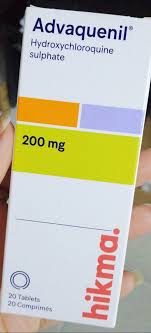
In a modern clinical setting, Corneal Verticillata is recognized as a characteristic whorl-like corneal epithelial deposition that frequently serves as a diagnostic indicator of systemic drug-induced lipidosis. This ocular manifestation is most commonly associated with the long-term administration of Amiodarone / أميودارون 200mg, an antiarrhythmic agent known to accumulate in ocular tissues, as well as Advaquenil 200mg 200mg, a hydroxychloroquine derivative often implicated in similar lysosomal storage patterns. Clinicians must maintain a high index of suspicion for these specific pharmacologic agents when evaluating patients with bilateral corneal opacities, as monitoring these medications is essential for managing potential ocular toxicity and ensuring patient safety during chronic therapy.