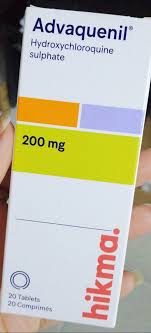

Comprehensive Clinical Guide: Advaquenil 200mg (Hydroxychloroquine Sulfate)
Advaquenil 200mg is a pharmaceutical preparation containing Hydroxychloroquine Sulfate, a 4-aminoquinoline derivative. Originally synthesized as an antimalarial agent, its clinical utility has expanded significantly within the fields of rheumatology, dermatology, and clinical immunology. Due to its potent immunomodulatory properties, it serves as a cornerstone therapy for chronic inflammatory conditions.
This guide provides an exhaustive clinical overview of Advaquenil 200mg, intended for healthcare professionals and clinical specialists.
1. Introduction and Therapeutic Overview
Advaquenil 200mg is primarily indicated for the management of systemic lupus erythematosus (SLE), rheumatoid arthritis (RA), and discoid lupus erythematosus. Unlike non-steroidal anti-inflammatory drugs (NSAIDs), which provide symptomatic relief, Advaquenil is classified as a Disease-Modifying Antirheumatic Drug (DMARD). It works by modulating the underlying immune response, thereby preventing joint damage and systemic organ involvement.
Key Pharmacological Profile
| Feature | Description |
|---|---|
| Generic Name | Hydroxychloroquine Sulfate |
| Drug Class | 4-Aminoquinoline / DMARD |
| Strength | 200mg per tablet |
| Route of Administration | Oral |
| Half-life | Approximately 40–50 days |
2. Mechanism of Action: A Deep Dive
The therapeutic efficacy of Advaquenil 200mg is rooted in its complex interaction with cellular lysosomes and immune signaling pathways.
Lysosomal pH Modulation
Advaquenil acts as a weak base that accumulates within acidic intracellular organelles, such as lysosomes. By increasing the intralysosomal pH, it inhibits the activity of lysosomal enzymes. This process prevents the processing of antigens and the subsequent presentation of self-antigens to T-cells, effectively dampening the autoimmune response.
Toll-Like Receptor (TLR) Inhibition
Hydroxychloroquine interferes with the signaling of TLR-7 and TLR-9. These receptors are responsible for recognizing nucleic acids and triggering the production of Type I Interferons (IFN-α). In patients with SLE, the overproduction of IFN-α is a primary driver of disease activity. Advaquenil blunts this production, reducing systemic inflammation.
Anti-Inflammatory and Immunomodulatory Effects
- Inhibition of Autophagy: By disrupting lysosomal function, it impairs the autophagic process, which is often hijacked by activated immune cells.
- Cytokine Suppression: It suppresses the production of pro-inflammatory cytokines, including IL-1, IL-6, and TNF-alpha.
- Antithrombotic Properties: Emerging evidence suggests it may have mild antiplatelet effects, which is beneficial for the hypercoagulable states often seen in SLE.
3. Pharmacokinetics
Understanding the pharmacokinetic profile is essential for clinical dosing and monitoring toxicity.
- Absorption: Rapidly and almost completely absorbed from the gastrointestinal tract. Peak plasma concentrations are reached within 1 to 3 hours.
- Distribution: Extensive tissue distribution. It has a high affinity for melanin-containing tissues (the eye) and parenchymal organs like the liver, lungs, and kidneys.
- Metabolism: Hepatic metabolism via the cytochrome P450 system.
- Elimination: Primarily renal excretion. Due to its extremely long terminal half-life (roughly 40–50 days), steady-state concentrations are not reached for several months.
4. Clinical Indications and Usage
Advaquenil 200mg is indicated for the following:
- Rheumatoid Arthritis (RA): Used for the treatment of acute and chronic rheumatoid arthritis. It is often used in combination with other DMARDs (e.g., Methotrexate).
- Systemic Lupus Erythematosus (SLE): Gold-standard therapy for managing skin, joint, and systemic manifestations of lupus.
- Discoid Lupus Erythematosus (DLE): Highly effective in managing cutaneous lesions.
- Malaria (Prophylaxis/Treatment): Used for the suppression and treatment of acute attacks of malaria sensitive to chloroquine.
Dosage Guidelines
- Rheumatoid Arthritis: 200mg to 400mg daily, usually taken in one or two divided doses.
- SLE/DLE: 200mg to 400mg daily. Dosing is strictly calculated based on ideal body weight (IBW) to minimize ocular toxicity risks.
- Maximum Dose: Should not exceed 5.0 mg/kg/day of actual body weight to prevent retinopathy.
5. Contraindications and Risks
Absolute Contraindications
- Retinopathy: Pre-existing maculopathy or retinal field changes.
- Hypersensitivity: Known hypersensitivity to 4-aminoquinoline compounds.
Precautions
- Ocular Toxicity: The most significant long-term risk. Patients must undergo baseline and annual ophthalmological screenings (OCT/Visual Field testing).
- Cardiac Toxicity: Rare but documented cases of cardiomyopathy and QT prolongation.
- Hypoglycemia: May cause severe hypoglycemia, even in patients without diabetes.
- Psoriasis/Porphyria: May exacerbate these conditions.
Drug Interactions
| Interacting Agent | Effect |
|---|---|
| Digoxin | Increased serum digoxin levels; monitor closely. |
| Insulin/Oral Hypoglycemics | Potentiates hypoglycemic effect. |
| Antacids/Magnesium | Decreased absorption of Advaquenil. |
| Tamoxifen | Increased risk of retinopathy. |
6. Pregnancy and Lactation
- Pregnancy: Advaquenil is considered generally safe for use during pregnancy in patients with SLE. The benefits of preventing disease flares often outweigh the theoretical risks.
- Lactation: Small amounts are excreted in breast milk. However, the American College of Rheumatology considers it compatible with breastfeeding.
7. Overdose Management
Advaquenil overdose is a medical emergency. Symptoms include headache, drowsiness, visual disturbances, cardiovascular collapse, and seizures.
- Gastric Lavage: Perform immediately if the ingestion was recent.
- Activated Charcoal: Administer to reduce systemic absorption.
- Supportive Care: Monitor electrolytes (especially potassium) and ECG.
- Specific Therapy: High-dose diazepam and epinephrine have been shown to be effective in managing the cardiovascular and neurological sequelae of chloroquine-class toxicity.
8. Frequently Asked Questions (FAQ)
Q1: How long does it take for Advaquenil 200mg to work?
Advaquenil is not a fast-acting drug. In RA and SLE, it may take 6 to 12 weeks to observe initial clinical improvement, and up to 6 months for full therapeutic effect.
Q2: Why is an eye exam required?
Long-term use can cause retinal damage (maculopathy). Screening detects changes before they affect vision.
Q3: Can I take Advaquenil with food?
Yes, it is highly recommended to take Advaquenil with a meal or a glass of milk to minimize gastrointestinal upset.
Q4: Does Advaquenil cause weight loss?
It is not a weight-loss medication, though some patients report mild nausea, which might lead to a temporary decrease in appetite.
Q5: What should I do if I miss a dose?
Take the missed dose as soon as you remember. If it is almost time for your next dose, skip the missed one. Never double the dose.
Q6: Does it interact with alcohol?
There is no direct contraindication, but alcohol may exacerbate the liver burden or stomach irritation. Moderation is advised.
Q7: Can I stop taking it if I feel better?
No. Stopping Advaquenil abruptly can lead to a "rebound" flare of your autoimmune condition. Always consult your rheumatologist.
Q8: Does it suppress my immune system entirely?
No, it is a targeted immunomodulator. It does not cause the same level of global immunosuppression as chemotherapy or high-dose corticosteroids.
Q9: Is it safe for children?
Advaquenil is used in pediatric rheumatology under strict specialist supervision, particularly for juvenile idiopathic arthritis and pediatric SLE.
Q10: What are the early signs of toxicity?
Early signs include blurred vision, difficulty focusing, muscle weakness, or skin pigmentation changes. Report these to your physician immediately.
9. Monitoring and Clinical Governance
For patients on chronic Advaquenil 200mg therapy, the following monitoring schedule is recommended:
- Baseline: Ophthalmology examination (Fundus exam, OCT, Humphrey Visual Field).
- Ongoing: Annual ophthalmological screening after 5 years of use (or sooner if high-risk factors exist, such as renal impairment or concurrent tamoxifen use).
- Laboratory: Baseline CBC, LFTs, and renal function. Periodic monitoring of blood glucose levels is prudent.
10. Conclusion
Advaquenil 200mg represents a vital therapeutic tool in the modern management of autoimmune pathologies. Its unique mechanism of action, combined with a relatively favorable safety profile when monitored correctly, makes it a preferred choice for long-term disease management. Clinicians must maintain rigorous vigilance regarding ocular health and ensure patient adherence to the standardized dosing protocols to maximize therapeutic outcomes and minimize adverse events.
DISCLAIMER: This document is for informational and educational purposes only. It does not replace professional medical advice, diagnosis, or treatment. Always seek the advice of your physician or qualified health provider with any questions regarding a medical condition or medication.