Clinical Assessment & Protocol
Typical Presentation (HPI)
EN: Itching and wheals appearing within minutes of sun exposure on covered skin. AR: حكة وظهور شرى في غضون دقائق من التعرض للشمس على الجلد المغطى.
General Examination
EN: Wheals limited to areas of light exposure. AR: شرى محدود في مناطق التعرض للضوء.
Treatment Protocol
EN: Sun protection, antihistamines, and phototherapy/desensitization. AR: الحماية من الشمس، مضادات الهيستامين، والعلاج بالضوء/إزالة التحسس.
Patient Education
EN: Strict use of broad-spectrum sunscreen and protective clothing. AR: الاستخدام الصارم لواقي الشمس واسع الطيف والملابس الواقية.
Systemic & Specialized Examinations
EN: S1, S2 present. No murmurs. AR: صوتا القلب الأول والثاني طبيعيان. لا توجد نفخات.
EN: Lungs clear to auscultation. AR: الرئتان صافيتان عند التسمع.
EN: Abdomen soft, non-tender. AR: البطن لين ولا يوجد ألم.
EN: Alert, oriented x3. No focal deficits. AR: المريض واعي ومدرك. لا يوجد عجز عصبي بؤري.
EN: Unremarkable or not routinely indicated. AR: طبيعي أو غير مطلوب روتينياً.
EN: Unremarkable or not routinely indicated. AR: طبيعي أو غير مطلوب روتينياً.
EN: Unremarkable or not routinely indicated. AR: طبيعي أو غير مطلوب روتينياً.
EN: Unremarkable or not routinely indicated. AR: طبيعي أو غير مطلوب روتينياً.
EN: Unremarkable or not routinely indicated. AR: طبيعي أو غير مطلوب روتينياً.
Clinical Comprehensive Guide: Solar Urticaria (SU)
1. Comprehensive Introduction & Overview
Solar Urticaria (SU) is a rare, chronic, and potentially debilitating physical urticaria characterized by the rapid development of wheals, pruritus, and erythema following exposure to ultraviolet (UV) or visible light. Unlike other forms of photodermatosis, such as polymorphic light eruption (PMLE), the symptoms of solar urticaria appear within minutes of exposure and typically resolve within an hour or two once the patient is removed from the light source.
While the exact prevalence of solar urticaria is difficult to quantify due to underreporting and misdiagnosis, it is recognized as a rare condition that affects both genders, though it is frequently observed in young adults. The condition significantly impairs quality of life, often forcing patients to adopt a nocturnal lifestyle or utilize extreme protective measures to avoid sunlight.
2. Deep-Dive: Etiology and Pathophysiology
The Mechanism of Action
Solar Urticaria is categorized as an IgE-mediated type I hypersensitivity reaction. The fundamental mechanism involves the formation of a "photoallergen."
- Chromophore Activation: An endogenous or exogenous chromophore (a light-absorbing molecule) present in the patient’s serum absorbs specific wavelengths of light.
- Photo-transformation: This absorption leads to a photochemical reaction that alters the structure of the chromophore, effectively turning it into an antigen (the photoallergen).
- Mast Cell Degranulation: The newly formed photoallergen triggers the cross-linking of IgE antibodies bound to the surface of cutaneous mast cells. This cross-linking signals the release of potent inflammatory mediators, most notably histamine, but also leukotrienes, prostaglandins, and platelet-activating factor.
- Vasodilation: The release of these mediators causes rapid vasodilation and increased vascular permeability, manifesting clinically as the classic "wheal and flare" response.
Spectral Sensitivity
The action spectrum (the specific wavelengths that trigger the reaction) varies significantly between patients. It is broadly classified into:
* Ultraviolet A (UVA): 320–400 nm
* Ultraviolet B (UVB): 280–320 nm
* Visible Light: 400–800 nm
Patients may be sensitive to one or multiple ranges. Notably, some patients exhibit "action spectrum shift," where exposure to one wavelength may inhibit or sensitize the skin to another.
3. Clinical Indications, Presentation, and Staging
Clinical Presentation
The presentation is highly predictable and reproducible.
* Onset: 5 to 30 minutes post-exposure.
* Symptoms: Intense burning, stinging, and pruritus.
* Morphology: Erythematous wheals that match the area of light exposure. If protected by clothing, the skin remains clear.
* Resolution: Typically within 1 to 2 hours of moving out of the light, provided no further exposure occurs.
* Systemic Symptoms: In severe, widespread cases, patients may experience systemic anaphylaxis, including syncope, bronchospasm, and hypotension.
Classification (Horio and Miyauchi System)
Solar Urticaria is categorized based on the action spectrum:
| Classification | Wavelength Range | Clinical Characteristics |
|---|---|---|
| Type I | UVB (280-320 nm) | IgE-mediated; specific to endogenous chromophores. |
| Type II | UVA (320-400 nm) | Often associated with systemic involvement. |
| Type III | Visible Light (400-500 nm) | Frequently associated with protoporphyria. |
| Type IV | UVA/Visible Light | Broad-spectrum sensitivity. |
| Type V | Visible Light | Rare; often lacks clear IgE correlation. |
4. Diagnostic Protocols and Differential Diagnosis
Key Diagnostic Tests
The gold standard for diagnosis is Phototesting.
- Photoprovocation Testing: The patient’s back is exposed to varying doses of UVA, UVB, and visible light using a monochromator or filtered lamps. A positive result is the appearance of a wheal within the irradiated area.
- Passive Transfer (Prausnitz-Küstner Test): Historically used to confirm the IgE-mediated nature, though rarely performed today due to blood-borne pathogen risks.
- Serum Testing: Evaluation for underlying conditions such as Erythropoietic Protoporphyria (EPP) using porphyrin levels in blood, stool, and urine.
Differential Diagnosis
It is critical to distinguish SU from other light-sensitive conditions:
* Polymorphic Light Eruption (PMLE): Delayed response (hours to days); papular/vesicular morphology.
* Erythropoietic Protoporphyria (EPP): Often presents with burning sensation without immediate whealing; elevated protoporphyrins.
* Lupus Erythematosus: Photosensitivity is a hallmark, but lesions are typically persistent, scaly, and not transient wheals.
* Drug-Induced Photosensitivity: Must review patient medication history (e.g., tetracyclines, NSAIDs).
5. Risks, Contraindications, and Management
Management Strategy
There is no "cure" for Solar Urticaria; management focuses on symptom suppression and desensitization.
- Pharmacotherapy:
- First-line: Non-sedating H1-antihistamines at up to 4x the standard dose.
- Second-line: H2-antihistamines (e.g., famotidine) as an adjunct.
- Biologics: Omalizumab (anti-IgE) has shown significant efficacy in refractory cases.
- Phototherapy/Photochemotherapy: "Hardening" the skin using controlled, incremental exposure to narrow-band UVB or PUVA (psoralen + UVA) to induce tolerance.
- Contraindications:
- Avoidance of systemic corticosteroids for long-term management due to metabolic side effects.
- Avoidance of non-shielded light sources in clinical settings.
6. Massive FAQ Section
1. Is Solar Urticaria a permanent condition?
It is considered a chronic condition, but it can fluctuate in intensity. Some patients experience spontaneous remission after several years, while others require lifelong management.
2. Can I use regular sunscreen to prevent symptoms?
Standard SPF sunscreens are often insufficient because they are designed to block UVB/UVA, but many SU patients are sensitive to visible light, which passes through standard chemical filters. Physical blockers containing zinc oxide or titanium dioxide are superior.
3. Is there a connection between Solar Urticaria and allergies?
Yes, it is a true physical allergy. The "allergen" is created by the interaction of light with your own skin proteins.
4. Can this lead to skin cancer?
There is no direct evidence suggesting that Solar Urticaria increases the risk of skin cancer, unlike chronic UV exposure from tanning beds or excessive sunbathing.
5. What is the "Hardening" process?
Hardening involves exposing the patient to small, calculated amounts of light in a clinical setting to build up a tolerance, allowing the skin to resist the formation of wheals for a short period.
6. Does the color of my clothes matter?
Yes. Dark, tightly woven fabrics provide better protection than light-colored or thin fabrics. UV-protective clothing (UPF-rated) is highly recommended.
7. Can Omalizumab (Xolair) cure me?
Omalizumab is highly effective at reducing the frequency and severity of attacks by neutralizing IgE, but it is not a permanent cure. Symptoms may return if the medication is discontinued.
8. Can I go to the beach if I have Solar Urticaria?
It is generally not advised unless you are in a medically managed "hardened" state. The intensity of reflected light from sand and water is extremely high and can trigger a reaction even in the shade.
9. Are there any dietary triggers?
While not a food allergy, some patients find that certain photosensitizing foods (like celery or citrus) can exacerbate their general light sensitivity, though this is not the primary cause of SU.
10. What should I do if I have a severe reaction?
If you experience difficulty breathing, throat swelling, or dizziness, seek emergency medical care immediately. You may be experiencing anaphylaxis, which requires epinephrine.
7. Prognosis and Long-term Outlook
The long-term prognosis for patients with Solar Urticaria is variable. While the condition is medically benign in terms of mortality, the psychosocial impact is profound. Patients often experience social isolation and anxiety regarding their environment.
Modern management with high-dose antihistamines and, more recently, Omalizumab, has shifted the outlook from "avoidance-only" to a much more manageable state. Most patients who adhere to a strict photoprotection regimen and prophylactic medication can lead relatively normal lives, though careers involving outdoor labor are generally contraindicated. Future research into targeted immunotherapy remains the most promising frontier for achieving long-term remission.
Disclaimer: This guide is intended for educational and professional reference only and does not replace the advice of a board-certified dermatologist or immunologist. Clinical decisions should be based on individual patient assessment.
Related Clinical Integration
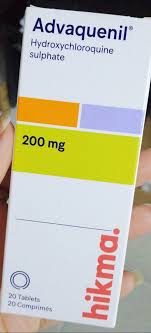
In the clinical management of Solar Urticaria, a multidisciplinary approach is essential to mitigate hypersensitivity to ultraviolet radiation and improve patient quality of life. Therapeutic intervention often begins with the administration of Advaquenil 200mg 200mg, which serves as a critical pharmacological agent to modulate the immune response and reduce the severity of cutaneous reactions. Furthermore, patients may be candidates for controlled desensitization protocols utilizing Phototherapy (Bili Lights) / العلاج الضوئي (أضواء البيليروبين) (برنامج إعادة التأهيل), a specialized procedure designed to gradually increase the patient's tolerance to specific light wavelengths under strict medical supervision, thereby minimizing the risk of acute urticarial flares.