Clinical Assessment & Protocol
Typical Presentation (HPI)
EN: Night blindness and dry eyes. AR: عشى ليلي وجفاف في العين.
General Examination
EN: Unremarkable or not routinely indicated. AR: طبيعي أو غير مطلوب روتينياً.
Treatment Protocol
EN: Vitamin A supplementation. AR: مكملات فيتامين أ.
Patient Education
EN: Regular ophthalmologic screening. AR: فحص العيون الدوري.
Systemic & Specialized Examinations
EN: S1, S2 present. No murmurs. AR: صوتا القلب الأول والثاني طبيعيان. لا توجد نفخات.
EN: Lungs clear to auscultation. AR: الرئتان صافيتان عند التسمع.
EN: Bitot's spots on the conjunctiva. AR: بقع بيتو على الملتحمة.
EN: Alert, oriented x3. No focal deficits. AR: المريض واعي ومدرك. لا يوجد عجز عصبي بؤري.
EN: Unremarkable or not routinely indicated. AR: طبيعي أو غير مطلوب روتينياً.
EN: Unremarkable or not routinely indicated. AR: طبيعي أو غير مطلوب روتينياً.
EN: Unremarkable or not routinely indicated. AR: طبيعي أو غير مطلوب روتينياً.
EN: Unremarkable or not routinely indicated. AR: طبيعي أو غير مطلوب روتينياً.
EN: Unremarkable or not routinely indicated. AR: طبيعي أو غير مطلوب روتينياً.
Comprehensive Clinical Guide: Vitamin A Deficiency (Xerophthalmia)
1. Introduction and Clinical Overview
Vitamin A (retinol) is a fat-soluble retinoid essential for vision, immune function, cellular differentiation, and embryonic development. Vitamin A deficiency (VAD) remains a leading cause of preventable blindness in children globally and is a significant public health concern in developing nations.
Xerophthalmia is the collective term for the ocular manifestations of VAD, ranging from night blindness to permanent corneal scarring and total blindness. Beyond the ocular surface, VAD induces systemic pathology, including increased susceptibility to infectious diseases (notably measles) and impaired epithelial integrity. This guide serves as an authoritative clinical resource for the identification, staging, and management of VAD-related ocular complications.
2. Etiology and Pathophysiology
Etiological Factors
VAD typically arises from a sustained imbalance between intake and metabolic demand.
* Dietary Insufficiency: Lack of preformed vitamin A (retinol, found in animal products) or provitamin A carotenoids (β-carotene, found in yellow/orange vegetables).
* Malabsorption Syndromes: Chronic fat malabsorption (e.g., Celiac disease, Crohn’s disease, cystic fibrosis, or chronic cholestatic liver disease).
* Increased Metabolic Demand: Periods of rapid growth, pregnancy, lactation, or chronic systemic infection.
* Liver Disease: Impaired storage or mobilization of vitamin A stores.
Pathophysiological Mechanisms
The hallmark of VAD is the loss of specialized epithelial cells and their replacement by keratinized squamous epithelium (squamous metaplasia).
1. Vision: Retinal photoreceptors (rods) require 11-cis-retinal to form rhodopsin. Deficiency results in impaired dark adaptation (nyctalopia).
2. Ocular Surface: Retinoic acid is required for the maintenance of goblet cells in the conjunctiva. Loss of these cells leads to a decrease in mucin production, resulting in tear film instability and subsequent keratinization of the corneal and conjunctival epithelium.
3. Systemic: VAD disrupts the differentiation of epithelial cells in the respiratory, gastrointestinal, and genitourinary tracts, leading to "barrier failure" and increased risk of bacterial and viral colonization.
3. Clinical Staging and Grading (WHO Classification)
The World Health Organization (WHO) provides a standardized classification system for clinical xerophthalmia, essential for epidemiological tracking and clinical triage.
| Stage | Code | Clinical Sign |
|---|---|---|
| Night Blindness | XN | Impaired dark adaptation |
| Conjunctival Xerosis | X1A | Dry, hazy, pigmented conjunctiva |
| Bitot’s Spots | X1B | Foamy, triangular patches of keratinized epithelium |
| Corneal Xerosis | X2 | Dull, hazy, or "dry" appearance of the cornea |
| Corneal Ulceration | X3A | Ulceration involving less than 1/3 of the cornea |
| Corneal Necrosis | X3B | Keratomalacia (liquefactive necrosis of >1/3 of cornea) |
| Xerophthalmic Fundus | XF | Retinal punctate lesions |
| Corneal Scarring | XS | Permanent opacification |
4. Clinical Presentation and Diagnostic Evaluation
Standard Presentation
Patients often present with a history of night blindness, followed by a sensation of "dry eyes," foreign body sensation, and eventually, if untreated, acute visual decline. In pediatric populations, parents may report the child stumbling in low-light environments.
Key Diagnostic Tests
- Serum Retinol Levels: The gold standard for assessing subclinical deficiency. Levels <0.70 µmol/L (20 µg/dL) indicate deficiency.
- Dark Adaptation Testing: Objective measurement of the time required to regain sensitivity in low-light conditions.
- Impression Cytology: A minimally invasive method to detect squamous metaplasia and loss of goblet cells on the ocular surface.
- Electroretinography (ERG): Used to assess the functional integrity of the rod and cone photoreceptors.
Differential Diagnosis
- Dry Eye Syndrome (KCS): Typically associated with aging or autoimmune conditions (Sjögren’s).
- Corneal Dystrophies: Can mimic corneal clouding but lack the systemic history of VAD.
- Bacterial/Viral Keratitis: Usually presents with pain, photophobia, and discharge, whereas VAD-related xerosis is often surprisingly "quiet" (less inflammatory).
- Stevens-Johnson Syndrome: Presents with severe conjunctival scarring but has an acute, blistering onset.
5. Therapeutic Management and Risks
Standard Treatment Protocol
The WHO recommended regimen for Vitamin A supplementation is designed to replenish hepatic stores rapidly.
- Immediate Dose: 200,000 IU of Vitamin A (retinyl palmitate) orally on Day 1, Day 2, and Day 14.
- Pediatric Adjustments:
- Infants <6 months: 50,000 IU.
- Infants 6–12 months: 100,000 IU.
- Acute Keratomalacia: Treated as an ocular emergency. Topical antibiotics are indicated to prevent secondary bacterial infection of the necrotic cornea.
Contraindications and Risks
- Hypervitaminosis A (Toxicity): Excessive intake can lead to intracranial hypertension (pseudotumor cerebri), hepatotoxicity, and bone resorption.
- Pregnancy: High doses of Vitamin A (preformed retinol) are teratogenic. Supplementation in pregnancy should be limited to doses below 10,000 IU/day unless treating active deficiency.
- Renal Impairment: Requires careful monitoring of dosage to avoid accumulation.
6. Prognosis and Long-term Management
The prognosis for VAD is excellent if intervention occurs before the development of corneal ulceration. Nyctalopia and conjunctival xerosis are typically reversible within days to weeks of therapy. However, once corneal necrosis (keratomalacia) occurs, the risk of permanent blindness due to scarring or phthisis bulbi is significant. Long-term management requires addressing the underlying dietary or malabsorptive cause and ensuring periodic follow-up for visual rehabilitation (e.g., keratoplasty for corneal scarring).
7. Massive FAQ: Frequently Asked Questions
1. Is night blindness the first symptom of Vitamin A deficiency?
Yes. Night blindness (nyctalopia) is the earliest clinical symptom because the rod cells in the retina are highly sensitive to the depletion of rhodopsin.
2. What are Bitot’s spots, and are they permanent?
Bitot’s spots are white, foamy, triangular patches of keratinized epithelium found on the bulbar conjunctiva. They are a classic sign of VAD and are generally reversible with appropriate Vitamin A supplementation.
3. Can Vitamin A deficiency be cured with diet alone?
In cases of mild deficiency, dietary adjustment (e.g., increasing intake of liver, eggs, spinach, and carrots) is sufficient. However, active xerophthalmia requires high-dose pharmacological supplementation to prevent permanent ocular damage.
4. Why is Vitamin A deficiency more common in children?
Children have higher metabolic demands for growth and are more susceptible to the systemic effects of VAD, such as increased morbidity from measles and respiratory infections.
5. What is Keratomalacia?
Keratomalacia is the final, most severe stage of ocular VAD. The cornea undergoes liquefactive necrosis, often leading to rapid perforation and permanent blindness.
6. Are there any interactions with other medications?
Yes. Vitamin A can interact with tetracyclines (increasing the risk of pseudotumor cerebri) and may have additive toxicity with other retinoids used in dermatology (e.g., isotretinoin).
7. How do I distinguish VAD from standard dry eye?
VAD is usually associated with malnutrition, malabsorption, or specific dietary history. Standard dry eye is more often related to inflammation, meibomian gland dysfunction, or environmental factors.
8. Is it possible to have "subclinical" Vitamin A deficiency?
Yes. Many individuals may have low serum retinol levels without obvious ocular symptoms. This subclinical state is still associated with increased risk of mortality from infectious diseases.
9. Can Vitamin A supplementation cause eye pain?
Supplementation itself does not cause pain. However, if a patient is experiencing extreme light sensitivity (photophobia) or pain, it may indicate that the VAD has progressed to corneal ulceration, which requires immediate ophthalmological intervention.
10. What is the role of zinc in Vitamin A deficiency?
Zinc is required for the synthesis of Retinol-Binding Protein (RBP), which transports Vitamin A in the blood. In cases where Vitamin A supplementation fails to resolve symptoms, concurrent zinc deficiency should be investigated.
8. Clinical Summary Table: Management Quick Reference
| Feature | Clinical Action |
|---|---|
| Suspected VAD | Serum Retinol Test + Clinical Exam |
| Confirmed XN/X1 | Oral Vitamin A (200k IU) x 3 doses |
| Corneal Involvement | Ocular emergency; Topical antibiotics + high-dose oral Vitamin A |
| Prevention | Food fortification, breastfeeding promotion, and periodic supplementation |
| Follow-up | Re-evaluate at 2 weeks for symptom resolution |
Disclaimer: This guide is for educational purposes for healthcare professionals and does not replace professional clinical judgment. Always consult current regional health guidelines for specific dosage protocols and local public health mandates.
Related Clinical Integration
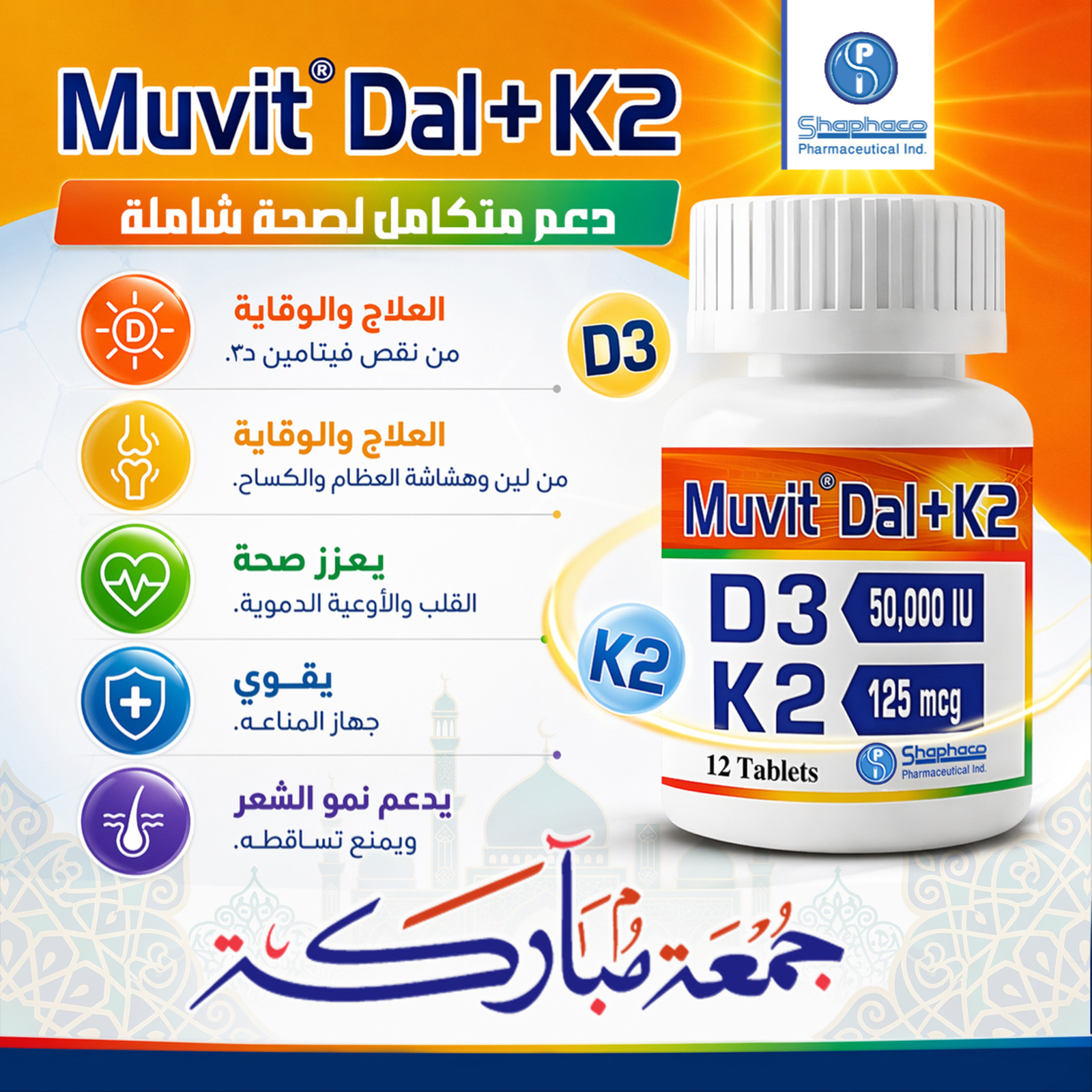
In a modern clinical setting, the management of Vitamin A deficiency (Xerophthalmia) requires a comprehensive approach that extends beyond ocular health to address broader systemic nutritional deficits often seen in patients with metabolic bone disease. Clinicians should consider the patient's overall micronutrient status by utilizing Multivitamin with Minerals / فيتامينات متعددة مع معادن Varies by formulation or targeted supplementation such as Muvit dal +k2 50000 /125 to correct concurrent deficiencies that may complicate recovery. Furthermore, understanding the interplay between fat-soluble vitamins and skeletal integrity is essential, as highlighted in our educational resources on Boost Bone & Joint Health: Your Guide to Nutrition in Orthopedic Health and Nutritional Rickets: Epidemiology, Pathophysiology, and Orthopedic Surgical Management. By integrating these clinical protocols with foundational knowledge found in AAOS Basic Science Orthopedic MCQs (Set 3): Bone Metabolism, Biomechanics & Cartilage Biology | Board Review, healthcare providers can ensure a holistic, evidence-based strategy for patients presenting with complex nutritional deficiencies.