
Understanding Lantak (Lansoprazole): A Comprehensive Clinical Overview
Lansoprazole, frequently marketed under brand names such as Lantak, is a potent proton pump inhibitor (PPI) that has become a cornerstone in the management of acid-related gastrointestinal disorders. By effectively suppressing gastric acid secretion, Lantak plays a critical role in treating conditions ranging from simple heartburn to complex erosive esophagitis and hypersecretory states.
This guide provides a deep dive into the pharmacology, clinical application, and safety protocols surrounding Lantak, serving as a resource for healthcare professionals and patients seeking detailed medical insights.
1. Mechanism of Action: How Lantak Works
Lantak belongs to the substituted benzimidazole class of drugs. Unlike H2-receptor antagonists, which block specific histamine receptors, Lansoprazole acts directly on the final step of gastric acid production.
The Proton Pump Inhibition
The gastric parietal cell contains a specialized enzyme system known as H+/K+-ATPase (the proton pump). Lantak functions through the following mechanism:
- Activation: Lansoprazole is a prodrug. It remains inactive at neutral pH. Upon reaching the acidic environment of the parietal cell's secretory canaliculi, it undergoes acid-catalyzed conversion into active sulfonamide derivatives.
- Binding: These active derivatives form covalent disulfide bonds with the cysteine residues of the H+/K+-ATPase enzyme.
- Inhibition: This binding leads to irreversible inhibition of the proton pump. Because the pump is inactivated, the parietal cell cannot secrete hydrogen ions into the gastric lumen, effectively halting acid production until new enzyme molecules are synthesized by the cell.
2. Pharmacokinetics and Metabolism
Understanding the pharmacokinetic profile of Lantak is essential for optimizing dosing schedules and predicting drug efficacy.
| Feature | Description |
|---|---|
| Bioavailability | 80% to 90% after oral administration. |
| Peak Plasma Time | 1.5 to 2.2 hours. |
| Protein Binding | 97% bound to plasma proteins (primarily albumin). |
| Metabolism | Hepatic via Cytochrome P450 system (primarily CYP2C19 and CYP3A4). |
| Half-life | Approximately 1.5 to 2 hours (though duration of action is longer due to irreversible binding). |
| Excretion | Primarily via urine (metabolites) and feces. |
3. Clinical Indications and Usage
Lantak is indicated for a variety of acid-related pathologies. Its clinical utility is backed by extensive evidence-based research.
Primary Indications
- Gastroesophageal Reflux Disease (GERD): Treatment of symptomatic GERD and the healing of erosive esophagitis.
- Peptic Ulcer Disease (PUD): Treatment of active duodenal and gastric ulcers.
- H. pylori Eradication: Used in triple or quadruple therapy regimens to eradicate Helicobacter pylori and reduce the risk of duodenal ulcer recurrence.
- Zollinger-Ellison Syndrome: Management of pathological hypersecretory conditions.
- NSAID-Induced Ulcer Prophylaxis: Prevention of gastric ulcers in patients requiring chronic non-steroidal anti-inflammatory drug (NSAID) therapy.
Dosage Guidelines
Note: Dosage must be determined by a qualified physician based on the specific condition.
- GERD/Erosive Esophagitis: 15–30 mg once daily for 4–8 weeks.
- Duodenal Ulcer: 15 mg once daily for 4 weeks.
- H. pylori Eradication: 30 mg twice daily in combination with antibiotics (e.g., clarithromycin and amoxicillin).
- Maintenance: 15 mg daily for long-term GERD management.
4. Risks, Side Effects, and Contraindications
While generally well-tolerated, the long-term use of PPIs like Lantak requires clinical vigilance.
Common Side Effects
- Diarrhea or constipation
- Abdominal pain
- Nausea and vomiting
- Headache
Serious Adverse Effects (Associated with Long-term Use)
- Vitamin B12 Deficiency: Chronic acid suppression may reduce the absorption of B12.
- Hypomagnesemia: Long-term use (usually >1 year) may lead to low magnesium levels, requiring monitoring.
- Bone Fractures: Potential increased risk of osteoporosis-related fractures in high-dose, long-term users.
- Clostridioides difficile Infection: Alteration of gastric pH may increase susceptibility to enteric infections.
Contraindications
- Hypersensitivity: Known allergy to Lansoprazole or any component of the formulation.
- Co-administration with Rilpivirine: PPIs significantly decrease the absorption of Rilpivirine, potentially causing treatment failure.
5. Pregnancy, Lactation, and Special Populations
- Pregnancy: Category B. Animal studies have shown no evidence of impaired fertility or harm to the fetus. However, use should be limited to cases where the benefit outweighs the risk.
- Lactation: It is unknown if Lansoprazole is excreted in human milk. Caution is advised.
- Hepatic Impairment: Dosage adjustment may be required for patients with severe liver disease, as hepatic clearance is the primary route of metabolism.
6. Drug Interactions
Lantak interacts with several medications due to its effect on gastric pH and its hepatic metabolic pathway.
- pH-Dependent Absorption: Drugs requiring an acidic environment for absorption (e.g., Ketoconazole, Atazanavir, Iron salts) will have reduced bioavailability.
- CYP2C19 Inhibitors/Inducers: Drugs like Fluvoxamine or St. John’s Wort can alter the plasma concentration of Lansoprazole.
- Methotrexate: PPIs may increase serum levels of methotrexate, potentially leading to toxicity.
7. Overdose Management
Overdose with Lansoprazole is rare and generally not associated with severe toxicity. Because the drug is highly protein-bound, hemodialysis is unlikely to be effective in removing it from the system.
Management Protocol:
* Symptomatic and supportive care.
* Monitor vital signs.
* In case of massive ingestion, consider gastric lavage or activated charcoal if the patient presents early.
8. Frequently Asked Questions (FAQ)
1. Is Lantak the same as Omeprazole?
Both are PPIs, but they are different molecules. Some patients respond better to one than the other based on their individual CYP2C19 enzyme metabolism.
2. Should I take Lantak before or after food?
For maximum efficacy, Lantak should be taken on an empty stomach, preferably 30–60 minutes before breakfast.
3. Can I crush or chew the tablets?
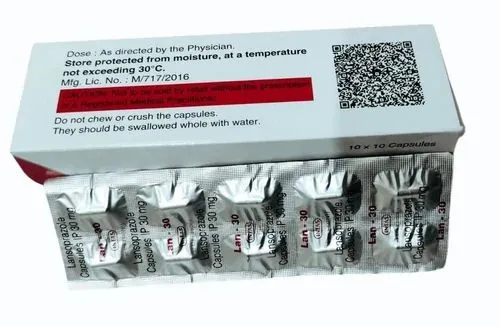
Most Lansoprazole formulations are enteric-coated to protect the drug from stomach acid. Crushing or chewing destroys this coating, rendering the drug ineffective.
4. How long does it take for Lantak to work?
Symptom relief for heartburn often occurs within 1–3 days, but full healing of erosive esophagitis may take 4–8 weeks.
5. Can I stop taking Lantak suddenly?
For short-term use, yes. However, for long-term users, sudden cessation can lead to "rebound acid hypersecretion." Tapering is recommended under medical supervision.
6. Does Lantak cause weight gain?
No, there is no clinical evidence suggesting that Lansoprazole causes weight gain.
7. Is it safe to take Lantak during pregnancy?
Generally, yes, if prescribed by a doctor. It is often used to treat pregnancy-related heartburn when lifestyle changes fail.
8. What should I do if I miss a dose?
Take it as soon as you remember. If it is almost time for the next dose, skip the missed one. Do not take two doses at once.
9. Can Lantak cause kidney problems?
Rare cases of acute interstitial nephritis have been reported with PPI use. Inform your doctor if you notice changes in urination.
10. Does Lantak interact with alcohol?
Alcohol can irritate the stomach lining and worsen the conditions Lantak is treating. It is generally advised to limit alcohol consumption while on therapy.
Conclusion
Lantak (Lansoprazole) remains a highly effective and reliable tool for managing acid-related disorders. By understanding its mechanism of action, adhering to prescribed dosages, and being mindful of potential drug interactions and long-term side effects, patients can safely manage their gastrointestinal health. Always consult with a healthcare professional before starting or altering a regimen of proton pump inhibitors.
Disclaimer: This guide is for informational purposes only and does not constitute medical advice. Always consult with a licensed physician or pharmacist for clinical diagnosis and treatment.