
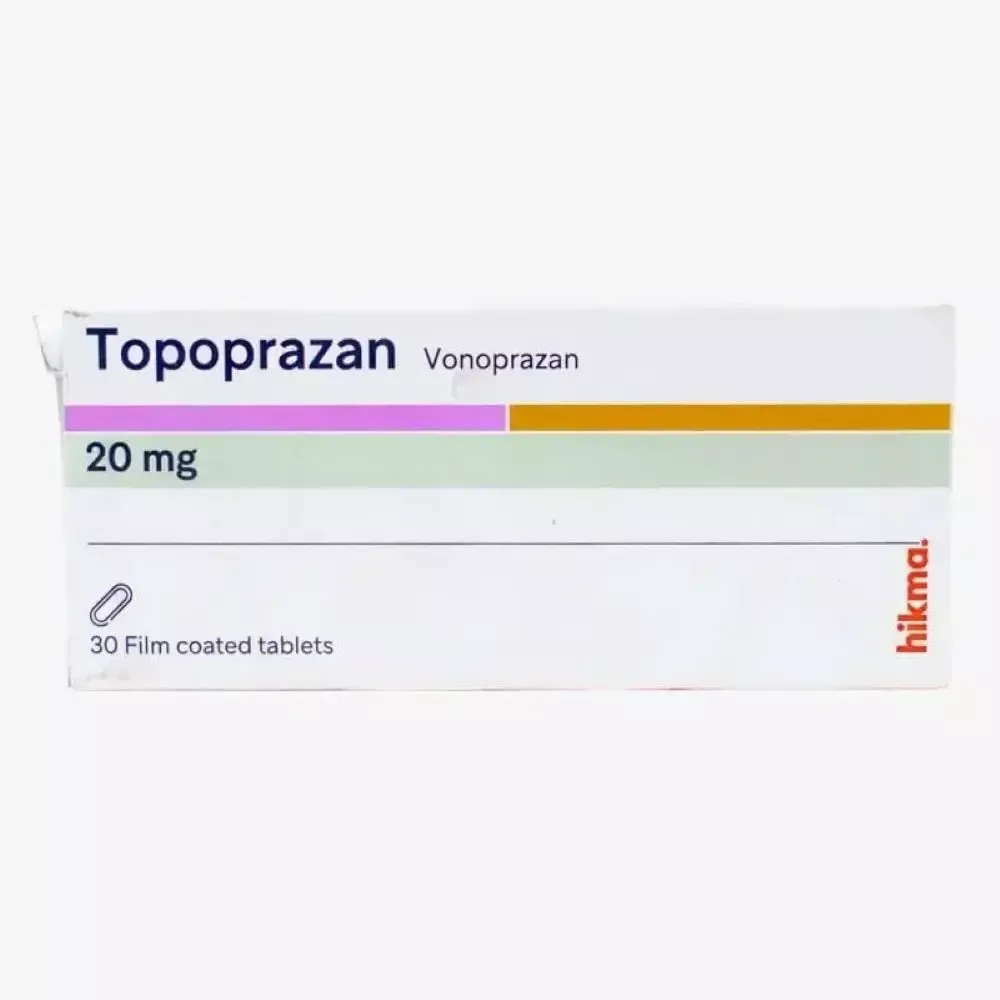

Comprehensive Introduction to Topoprazan
Topoprazan represents a significant evolution in the field of acid-related gastrointestinal pharmacotherapy. Classified as a Potassium-Competitive Acid Blocker (P-CAB), it is designed to overcome many of the inherent limitations associated with traditional Proton Pump Inhibitors (PPIs).
As medical science continues to refine the treatment of acid-peptic disorders, the shift from irreversible H+/K+-ATPase inhibition to reversible, potassium-competitive inhibition has allowed for faster onset of action and more predictable acid suppression. Topoprazan is specifically engineered to maintain a stable intragastric pH, providing a robust therapeutic option for patients suffering from conditions ranging from erosive esophagitis to peptic ulcer disease.
This guide serves as an authoritative resource for healthcare professionals, providing a granular look at the biochemical, clinical, and safety profiles of Topoprazan.
Deep-Dive: Mechanism of Action and Pharmacokinetics
The P-CAB Mechanism
Unlike traditional PPIs (such as omeprazole or esomeprazole), which require an acidic environment to become activated and bind covalently to the H+/K+-ATPase enzyme, Topoprazan acts as a potassium-competitive acid blocker.
- Reversible Binding: Topoprazan binds to the K+-binding site of the H+/K+-ATPase enzyme in a reversible, non-covalent manner.
- Independence from Activation: It does not require gastric acid activation. This allows for immediate inhibition of the proton pump regardless of the pump's state.
- Potassium Competition: By competing with potassium ions for the binding site, it effectively blocks the final step of acid secretion in the gastric parietal cells.
Pharmacokinetic Profile
Understanding the absorption, distribution, metabolism, and excretion (ADME) of Topoprazan is crucial for clinical dosing efficacy.
| Parameter | Description |
|---|---|
| Absorption | Rapidly absorbed with high oral bioavailability. |
| Onset of Action | Immediate; significant acid suppression observed on day one. |
| Metabolism | Primarily hepatic via the Cytochrome P450 (CYP) system. |
| Half-life | Optimized to provide 24-hour coverage with once-daily dosing. |
| Excretion | Primarily excreted via renal pathways and feces. |
Clinical Indications and Usage
Topoprazan is indicated for a spectrum of acid-related disorders. Its primary utility lies in its ability to provide rapid symptom relief and mucosal healing.
Primary Indications
- Erosive Esophagitis (EE): Treatment and maintenance of healing for esophageal mucosal damage.
- Gastroesophageal Reflux Disease (GERD): Management of symptomatic GERD, including non-erosive reflux disease (NERD).
- Peptic Ulcer Disease (PUD): Healing of gastric and duodenal ulcers.
- Helicobacter pylori Eradication: Used in combination with appropriate antibiotic regimens to eradicate H. pylori.
- Zollinger-Ellison Syndrome: Management of hypersecretory conditions.
Dosage Guidelines
Dosage must be individualized based on the underlying pathology and patient response.
- Standard GERD: 20mg – 40mg once daily.
- Erosive Esophagitis: 40mg once daily for 4 to 8 weeks.
- Maintenance Therapy: 20mg once daily.
- H. pylori Eradication: 40mg twice daily in conjunction with dual or triple antibiotic therapy for 7–14 days.
Note: Always consult the latest clinical guidelines and local prescribing information before initiating therapy.
Risks, Side Effects, and Contraindications
While Topoprazan is generally well-tolerated, clinicians must remain vigilant regarding potential adverse effects and drug interactions.
Common Side Effects
- Gastrointestinal: Diarrhea, nausea, abdominal pain, and constipation.
- Neurological: Headache and dizziness.
- Hepatic: Occasional elevation in liver enzymes (ALT/AST), which usually resolves upon discontinuation.
Contraindications
- Hypersensitivity: Known allergy to Topoprazan or any excipients in the formulation.
- Severe Hepatic Impairment: Requires dose adjustment or avoidance due to altered metabolism.
- Concomitant use with Atazanavir: Due to potential for reduced absorption of the antiviral agent.
Pregnancy and Lactation
- Pregnancy: Data remains limited. It should only be used if the potential benefit justifies the risk to the fetus.
- Lactation: It is unknown if Topoprazan is excreted in human milk. Caution is advised for breastfeeding mothers.
Drug Interactions
Topoprazan’s interaction profile is generally favorable, but caution is necessary with medications dependent on gastric pH for absorption:
- pH-Dependent Drugs: Ketoconazole, itraconazole, and certain antivirals may see reduced efficacy.
- CYP450 Inhibitors/Inducers: While less prone to interaction than some PPIs, monitoring is recommended when co-administered with strong inhibitors of CYP3A4.
- Warfarin/Clopidogrel: Monitor INR and antiplatelet efficacy closely, though clinical significance is generally low.
Overdose Management
There is limited experience with Topoprazan overdose. In the event of an overdose:
1. Supportive Care: Monitor vital signs and provide symptomatic treatment.
2. Gastric Decontamination: Consider activated charcoal if the ingestion is recent.
3. Dialysis: Due to high protein binding, hemodialysis is unlikely to be effective in removing the drug from the systemic circulation.
Frequently Asked Questions (FAQ)
1. How does Topoprazan differ from Omeprazole?
Topoprazan is a P-CAB, which means it blocks the acid pump directly and reversibly, whereas Omeprazole is a PPI that requires acid activation and binds irreversibly to the pump.
2. Does Topoprazan require food intake?
It can typically be taken with or without food, though consistency is recommended to maintain steady-state plasma concentrations.
3. Can I crush or chew the tablet?
No. To ensure proper release and absorption, Topoprazan tablets should be swallowed whole.
4. How long does it take to start working?
Topoprazan typically provides significant acid suppression within the first dose, offering faster relief than traditional PPIs.
5. Is Topoprazan safe for long-term use?
Long-term use should be under medical supervision. Periodic monitoring of bone density and vitamin B12 levels may be recommended for chronic users.
6. What should I do if I miss a dose?
Take the missed dose as soon as you remember. If it is close to the time for your next dose, skip the missed dose and resume your regular schedule. Do not double the dose.
7. Does it interact with alcohol?
Alcohol may exacerbate acid reflux symptoms; while there is no direct chemical interaction, avoiding alcohol is advised to improve treatment outcomes.
8. Is it safe for the elderly?
Yes, but dosage adjustments may be necessary based on renal or hepatic function common in geriatric populations.
9. Can I take Topoprazan with antacids?
Yes, short-term use of antacids for breakthrough symptoms is generally acceptable.
10. Does Topoprazan cause "rebound" acid hypersecretion?
While less common than with PPIs, sudden discontinuation of any potent acid-suppressing agent can lead to transient increases in gastric acid. Tapering is recommended for long-term users.
Conclusion
Topoprazan represents a sophisticated advancement in gastroenterology. By providing rapid, potent, and reversible acid inhibition, it offers a superior clinical profile for patients who have failed traditional PPI therapy or require faster symptom resolution. As with any potent medication, adherence to prescribed dosages and regular clinical monitoring are the keys to successful patient outcomes.
Disclaimer: This guide is intended for educational purposes only and does not constitute professional medical advice, diagnosis, or treatment. Always seek the advice of your physician or qualified health provider with any questions regarding a medical condition.